Saturday, 19 September 2026

Category » Articles

The House Of Lords – Should It Stay Or Should It Go? Part 5
.

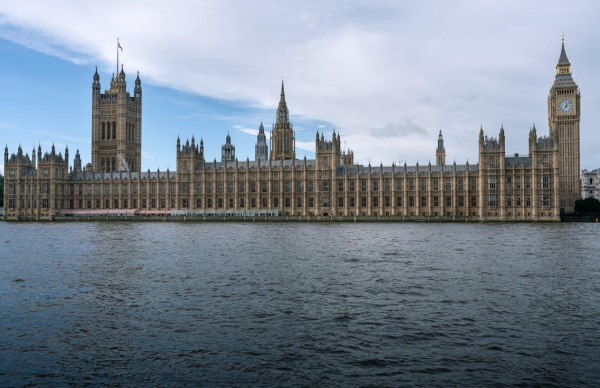
Most of what we recognise today as the Houses of Parliament – officially known as the Palace of Westminster – was constructed in the nineteenth century. The House of Lords was completed in 1847 & the House of Commons was finished in 1852. Many people believe that the Houses of Parliament stand as a symbol of British democracy – but is the Lords, in particular, truly democratic? (Picture credit: Free image from pixabay.com https://www.pexels.com/photo/london-28111450/)

QUESTIONS RELATING to the future of the House of Lords simply won’t go away. 

 
We feel that most people accept that there needs to be a body that can scrutinise legislation passed by the House of Commons.
.
However, as we’ve previously noted, opinion is sharply divided.  Some want to keep the Lords as it is.  Others want to see a measure of reform – or to do away with it altogether.
.
In March, we examined the main arguments put forward by those who support the House of Lords as it currently stands.
.
We now look the three main arguments against the House of Lords.
.
Hereditary Privilege: Critics argue that the hereditary peers in the House of Lords represent an outdated & undemocratic vestige of feudalism. The idea that individuals can inherit political power is viewed as fundamentally unjust and contrary to the principles of meritocracy and equal opportunity.
.
Lack of Democratic Accountability: Opponents contend that the House of Lords lacks democratic legitimacy – as its members are not elected by the public. This unelected body has significant legislative power, which is seen as undermining the democratic process and the sovereignty of the electorate.
.
Impediment to Modernisation: Many believe that the House of Lords hinders the modernisation of the British political system. They argue that reforming or abolishing this institution is essential to creating a more equitable and representative democracy, where power is based on merit (and the collective will of the people) rather than on birthright or appointment.
.
•  To be continued.
.
•  THIS ARTICLE should be read in conjunction with the following:
.
The House Of Lords – Should It Stay Or Should It Go? Part 1  https://nationalliberal.org/the-house-of-lords-should-it-stay-or-should-it-go-part-1
.
The House Of Lords – Should It Stay Or Should It Go? Part 2  https://nationalliberal.org/the-house-of-lords-should-it-stay-or-should-it-go-part-2
.
The House Of Lords – Should It Stay Or Should It Go? Part 3  https://nationalliberal.org/the-house-of-lords-should-it-stay-or-should-it-go-part-3
.
The House Of Lords – Should It Stay Or Should It Go? Part 4 https://nationalliberal.org/the-house-of-lords-should-it-stay-or-should-it-go-part-4
Share:
  • Print
  • Digg
  • StumbleUpon
  • del.icio.us
  • Facebook
  • Yahoo! Buzz
  • Twitter
  • Google Bookmarks
  • Add to favorites
  • blogmarks
  • Blogosphere
  • Google Buzz
  • PDF
  • email
  • Live
  • MSN Reporter
  • MyShare
  • MySpace
  • Technorati
  • Webnews.de

Free Speech – A Personal View

.

Free Speech – A Personal View

.
DEBATE ABOUT free speech rages on and on, so I’ll add my halfpenny’s worth to it.
.

A POSTER produced by the National Liberal Party in support of Free Speech.

Over the last few years, there have been extremists (from all groups, be they religious, far right or far left) whose prime focus is to close debate.

.
The reason such groups do this is not just to air an opinion, but to ensure their respective opinions are translated into law.  And if such opinions are of an intolerant nature this is where the problem arises.
.
The philosopher Karl Popper once made the shrewd comment that if we are tolerant on the intolerant, then the intolerant will always win.  So, to my small mind, we shouldn’t let the views of such extremists go unchallenged (no matter where such views emanate from).
.
The answer is not to close down debate but to open it up.
.
Everyone should be free to air their views.  To do otherwise will give a free meal ticket to those who wish to impose their respective narrow-minded views/laws on us all.
.
If we don’t open debate to all, democracy will just wither and die a slow death.
.
No group (or individual) should dictate what books, films, plays, music we should or shouldn’t read, view or listen to. I believe that we should be given a choice & decide for ourselves as to the merits – or otherwise – of any given point of view.
.
We shouldn’t allow any arrogant third party decide (on our behalf) what is right or what is wrong and what is the correct viewpoint.  Let folks decide for themselves.
.
In effect, what such extremists are claiming is that they are superior to the rest of mankind.  They believe that we’re all too stupid to make valid conclusions for ourselves.
.
We should never forget that there’s no clear demarcation line between religion, culture and politics.  All should be open to a critique.
.
The old Medieval blasphemy laws that were brought about to stop debate were abolished in England and Wales in 2008, and in Scotland in 2024. (They remain in force in Northern Ireland.)  However, it seems to me that the likes of Facebook are trying to bring back blasphemy laws via the backdoor as they are desperate to close debate.  They even have a special button to press if you think any comment is offensive to your religion.  (It should be noted that it doesn’t matter if any such comment is factual – but just might give offence.)
.
We’re allowed to give offence to our political parties.  So why should any religion feel they are exempt?
.
We live in a dangerous world.  We shouldn’t allow any group to close debate in the name of any cause.  I fear the sands of time may be against us, but we should try and make a moral stand whilst we can! 
.
Cllr Brent Cheetham (National Liberal Party), Cuffley, Hertfordshire.
Share:
  • Print
  • Digg
  • StumbleUpon
  • del.icio.us
  • Facebook
  • Yahoo! Buzz
  • Twitter
  • Google Bookmarks
  • Add to favorites
  • blogmarks
  • Blogosphere
  • Google Buzz
  • PDF
  • email
  • Live
  • MSN Reporter
  • MyShare
  • MySpace
  • Technorati
  • Webnews.de

The House Of Lords – Should It Stay Or Should It Go? Part 4
 

THE HOUSE OF LORDS remains a subject of contention.


John Francis McFall, The Lord McFall of Alcluith, is the current Lord Speaker of the House of Lords. He is elected by the members of the House of Lords & is expected to be politically impartial. His position is similar to that of the Speaker of the House of Commons.
(Picture Credit: https://en. wikipedia.org/wiki/John_McFall%2C_Baron_ McFall_of_Alcluith Fair Use)

Critics argue that it is an outdated and undemocratic institution, pointing to the presence of hereditary peers as evidence of elitism and inherited privilege.

 
On the other hand, supporters highlight the valuable role it plays in examining legislation and providing a counterbalance to the House of Commons. (This is particularly so when the government of the day has an overwhelming majority & can steamroller legislation through the House of Commons.)
.
The debate over whether to reform or abolish the House of Lords often reflects broader philosophical discussions about tradition versus modernisation and meritocracy versus aristocracy.
.
With the above in mind, the first three articles in this series have examined the history & purpose of the House of Lords.
.
This is because deciding the future of the Lords requires deep analysis, thought and debate. Indeed, the very last thing we need are decisions based on kneejerk reactions.
.
We now turn to look at the three main arguments in favour of retaining the House of Lords.
.
Historical Tradition:  Proponents argue that the House of Lords represents a cherished historical institution that provides continuity and stability within the British parliamentary system. It embodies centuries of tradition and a unique British heritage, which adds a layer of depth and legitimacy to the legislative process.
.
Expertise and Experience:  Supporters claim that the House of Lords benefits from the diverse expertise and experience of its members, many of whom are appointed life peers with distinguished careers in various fields. This expertise allows for more thorough and informed scrutiny of legislation, contributing to more refined and effective laws.
.
Checks and Balances:  The House of Lords serves as a critical check on the power of the House of Commons, ensuring that proposed legislation undergoes rigorous examination and debate. This dual-chamber system is seen as a safeguard against hasty or poorly considered laws, enhancing the overall quality of governance.
. 
•  To be continued.
.
•  THIS ARTICLE should be read in conjunction with the following:
 
The House Of Lords – Should It Stay Or Should It Go? Part 1  https://nationalliberal.org/the-house-of-lords-should-it-stay-or-should-it-go-part-1
 
The House Of Lords – Should It Stay Or Should It Go? Part 2  https://nationalliberal.org/the-house-of-lords-should-it-stay-or-should-it-go-part-2
 
The House Of Lords – Should It Stay Or Should It Go? Part 3  https://nationalliberal.org/the-house-of-lords-should-it-stay-or-should-it-go-part-3
Share:
  • Print
  • Digg
  • StumbleUpon
  • del.icio.us
  • Facebook
  • Yahoo! Buzz
  • Twitter
  • Google Bookmarks
  • Add to favorites
  • blogmarks
  • Blogosphere
  • Google Buzz
  • PDF
  • email
  • Live
  • MSN Reporter
  • MyShare
  • MySpace
  • Technorati
  • Webnews.de

Sausage Machine
.
SUZANNE LOCKHART has spent over 20 years working with government agencies, global food manufacturers, farming groups and grocery retailers. During this time she has gained in-depth (& inside) knowledge relating to the politics and production of our food.
 
Her book, Mad Diet: Easy Steps to Lose Weight and Cure Depression (published in 2016) is informative, well-researched and easily read. It lifts the lid on the food-production/processing industry.
 
Like other female independent free-thinkers – such as Eva Karene Bartlett, Vanessa Beeley & Caitlin Johnstone – she is a breath of fresh air.
 
Like ourselves, Suzanne Lockhart is a non-conformist & not into groupthink. She also has an interesting take on politics & world affairs, which largely coincides with our own.
 
The following article, which is well worth reading, appeared on her Facebook page – https://www.facebook.com/Maddiet.co – four days ago. (If you want to read the original, hurry up as we’ve noticed that there’s a tendency for some of her articles to disappear without warning & presumably on the behest of the FB police!)
 
The author is Scottish which explains some of the colloquialisms & terms she uses. Also, she doesn’t name names in this article, but you’ll get the gist!  She has an entertaining & unique writing style. And we really like the way she makes sometimes very complex and complicated information easy to understand. This includes the situation in Ukraine, the subject of this article.
 
We publish this article to promote free thought & debate. And, as the old saying goes, Before We Conform, Or Condemn, Let Us At Least Be Curious.
 
It goes without saying that there are no links between Suzanne Lockhart, Mad Diet & the National Liberal Party.
.

US President Dondald Trump (left) & Ukrainian President Volodymyr Zelenskyy (right). Was their disagreement at the White House all a show? If you really want to know what’s going on in Ukraine, don’t obsess over the optics. Simply follow the money & ask yourself one question: who gains?


Sausage Machine

 
HUMANS HAVE been scrapping over land and resources since the beginning of time. Driven by lack of food or fuel, but sometimes greed and a thirst for power.
.
Today’s bunfights are no different, although the facts of such matters are rarely discussed on the box. We prefer to lambast pantomime puppets yet ignore the men behind the curtain.
.
When I worked in Kiev sampling grain for illegal GM contaminants, it was pretty clear they were heading for trouble. A mongrel nation like ours, but deeply divided with vultures circling overhead.
.
Long prized as the breadbasket of Europe, the land of blue and yellow was the second largest wheat exporter in the world. With its magic black soil and minerals aplenty, the usual suspects have been eyeing it up for years.
.
In 2011 the Verkhovna Rada (their parliament) held its first hearing on The Law on Land Market. They came up with a plan on who could and couldn’t buy farmland, but the World Bank wasn’t happy. The new Bretton Woods mob had assured Western banks and corporations a piece of the action and piled on pressure to deliver that promise.
.
Local people and some politicians were quite rightly worried about foreign entities controlling their food supply. But as officials bickered over which way to turn, movers and shakers were already making ground.
.
Cargill (the company I was paid to keep tabs on) bought up 30% of their largest commercial bank and invested big time in ports. ADM, Bunge and other Western agrifood giants set up shop, soon followed by Monsanto and DuPont waiting for the cards to fall their way.
.
Meanwhile, there was all sorts of jiggery-pokery going on to push and pull the people. MSM and social media jockeying – dividing ranks to weaken social cohesion and sovereignty.
.
By the time that comedian came to power the scene was already set. Money masters from East and West primed to slug it out. Not just for land and resources, but to destabilise Europe.
.
Global finance is a bit like the Highlander movie – remember that cheesy 1986 film with Christopher Lambert and Sean Connery? When it comes to the reserve currency, “there can be only one”, and today that’s the US dollar.
.
A lot has happened since the Treaty of Rome when six European countries clubbed together in 1957. Today the EU is the largest trading bloc in the world – one of three ‘Orwellian’ superstates vying for supremacy. Our penchant for cheap tat has transformed Mao’s China into an economic powerhouse chomping at Western heels.
.
The US economy is joined at the hip to China, so no matter what the big orange jobbie says, that won’t be sorted anytime soon. Derailing Europe is a far easier option to squeeze out the competition. Bomb the sh*t out of MENA, force mass migration across the Med, orchestrate a bunfight in their back yard and job’s a good’un.
.
Of course, none of this is decided by presidents or prime ministers – past or present. They are just players at the table hoping for a decent hand. But the croupier is bent, the deck is rigged, and the eye in the sky has dirt on everyone so even if they win, they still need to pony up.
.
This is why I don’t get my knickers in a twist about party politics and refrain from taking sides. That big drama in the White House last week had everyone in a tizzy but I just watched and sighed. Anyone paying attention may have noticed the wee snorter had already signed over his minerals to sausage fingers!
.
Defending that asset is of prime importance for those set to benefit from the spoils. So, now us minions are being conditioned to fork out more, see the needy go without, and send our boys off to the sausage machine?
.
They’ll likely soften us up with VE day celebrations, patriotic promotions and the like. Brainwashing us into thinking conscription or national service is a good idea. Our dads and granddads did it, so why not us?
.
The thing is, nobody is threatening to bomb Clydebank and why would they want to? In fact, the peace talks three years ago might have been sorted if Bojo hadn’t swooped in to scupper the deal!
.
It’s all super murky and you need to get up early to see the wood through the trees. But we must keep in mind what sparked this fire in the first place…
.
… a divided nation, manipulated by media, and elected patsies selling off farmland and natural resources.
.
Let’s ca’ canny and not fall for the ruse.
.
Suzanne.x
.
PS – we must support our farmers – not just for food security but to keep our land in trusted local hands. x
 
Share:
  • Print
  • Digg
  • StumbleUpon
  • del.icio.us
  • Facebook
  • Yahoo! Buzz
  • Twitter
  • Google Bookmarks
  • Add to favorites
  • blogmarks
  • Blogosphere
  • Google Buzz
  • PDF
  • email
  • Live
  • MSN Reporter
  • MyShare
  • MySpace
  • Technorati
  • Webnews.de

Immigration: How Workers Can Respond
.
IT’S WELL KNOWN that the National Liberal Party has a long-standing policy of looking at a diverse range of opinions that might be of interest to our readers. 
 
This involves printing articles from right across the political spectrum.  Many of these articles come from unlikely sources.  And this is particularly so of this article which comes from the January/February 2025 issue of Workers, the journal of the Communist Party of Britain (Marxist-Leninist).
 
The CPB(ML) are completely different from other ‘leftist’ organisations that we’ve come across.  For a start, they note that they ‘are not “left” or “right”’ & they ‘don’t divide our class into progressives and reactionaries’.  This is interesting as groups like the Socialist Workers Party (SWP) just seem to want to ‘smash’ all those they regard as ‘reactionaries’. 
 
The CPBML also want to talk about immigration in a calm & sane way.  Contrast this to the SWP position of insulting workers – by accusing them of islamophobia, racism & so on – without listening to their genuine concerns about mass immigration.
 
With the above in mind, we’ve reprinted an article (about immigration) from their January/February 2025 issue of Workers.  We think that readers will find it balanced, nuanced & very thought-provoking.  You can find the original article here:
https://www.cpbml.org.uk/news/immigration-how-workers-can-respond
Once read, we’d encourage everyone to debate it via the National Liberal Party Facebook page here https://www.facebook.com/NationalLiberalParty or the National Liberals Facebook page here https://www.facebook.com/groups/52739504313
 
It goes without saying that there are no links between the CPBML, Workers and the National Liberal Party.
.

It is a precious thing when workers are able to talk to one another – and listen to the ideas of others.  Nowhere is this discussion more needed than over the movement of labour across borders …

.

Immigration: How Workers Can Respond

.
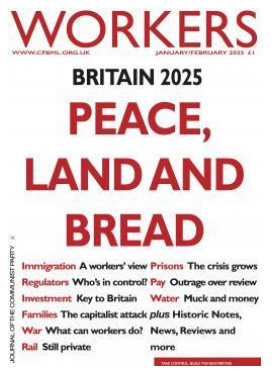
The January/February 2025 issue of Workers, the magazine of the Communist Party of Britain (Marxist-Leninist). It contains an excellent article on immigration. The magazine itself is balanced, nuanced & very thought-provoking. And the CPB(ML) are completely different from other ‘leftist’ organisations that we’ve come across.
Picture Credit: https://www.cpbml.org.uk

IT IS a precious thing when workers are able to talk to one another, and more importantly listen to the ideas of others, and understand the issues faced by workers in other industries and regions.

.
Open dialogue has never been more needed than in dealing with the issue of immigration, but is routinely suppressed for fear of the label “racist” – usually unfounded. Only through this discussion can our class build the unity and strength to exercise control.
.
The working class knows this issue is important but is frustrated in clarifying its real cause and impact, and in formulating an appropriate response.
.
We have first to understand the drivers of mass immigration in today’s capitalist Britain; secondly, we have to identify the impact that it has on the country and its working class; and finally, we must determine how we should respond.
.
No doubt every British worker has at some time been grateful to a migrant worker for a service they have received. For instance, it would be almost impossible in most parts of the health service not to be cared for by a member of staff who is either from a recent migrant background, or is a first-generation migrant.
. 
ATTACK ON WAGES
.
At the same time workers can recognise that mass immigration is used as a means to attack the working class through the lowering of wages and deskilling, and impacts on other areas, such as housing and public services. So our first question is, Why has immigration increased to such high levels? What are the drivers?
.
Net mass immigration took off with the election of the Labour government in 1997. It was 48,000 but rose extremely rapidly, almost trebling in one year to 140,000 in 1998; it was not to fall below 100,000 again. Between 1997 and 2010, the “New Labour” years, net migration averaged 200,000 per year, five times higher than under the Conservative Major government of 1990-1996.
. 
It is now clear that overall foreign immigration between 1997 and 2010 was 3.6 million, while nearly a million British citizens emigrated giving total net migration of 2.6 million (https://www.migrationwatchuk.org/briefing-paper/355). A further boost happened when the Labour government introduced unrestricted immigration from the EU in 2004.
.
In 2015 net immigration was 330,000 a year, the vast majority EU citizens from Eastern Europe. This more than doubled in 2022, to 764,000. These were no longer EU nationals but came mainly from Asia and Africa. The year to June 2023 was higher still, last November revised up to 906,000 (https://www.bbc.co.uk/news/articles/c3degx4029ko). That is an astonishing one and a half million added to our population in just two years.
.
What then are the arguments given to support this mass immigration? “There are too few workers to do the work needed.” It is true that Britain is in desperate need of workers doing the work we need doing. But capitalism chooses not to use this valuable resource available here.
.
NEVER CHEAP ENOUGH
.
The cheapness of labour promoted through immigration encourages capitalism to use labour in the most marginal of activities. No matter what the level of immigration, it will not satisfy the thirst of capital to seize the chance to use cheap labour requiring little investment and minimum risk. The hunger for this labour will never be satisfied.
.
The impact of mass immigration is the creation of an available pool of cheap labour which then suppresses the wages of all workers. It results in the plunder of talent from around the world – a new form of imperialism.
.
Globalisation means the free movement of labour, and of capital, and capital now views the whole world as its “reserve army of labour”, a concept that Karl Marx identified as an essential feature of capitalism.
.
Those who might think that they should leave their own countries should instead stay and fight for their countries’ own independence, and build socialism at home. The solution is not to desert their own countries and become rootless victims of capitalism.
.
Labour power is a commodity traded like any other. In effect Job Centres no longer need to be in Brixton and Liverpool to have the required impact – they can just as well be in Bangalore and Lagos.
Since 2020 when EU workers could no longer move freely to work in Britain, the number of work visas issued has exploded from 80,000 to 340,000 a year. The health and care sectors, by far the largest group of workers, have seen the biggest increase – 135 per cent last year.
.
How often do we hear that we need immigration to fill the skills shortage? There is no skills shortage other than that deliberately created by capitalism. Unable and unwilling to invest in skill, capitalism prefers to import skills from abroad, denying yet another generation the skills we need to rebuild Britain.
.
Another argument is that we need immigration to expand our economy. Recently, when immigration has been at its highest, the limited increase in GDP has been due to mass immigration expanding the population, not from any economic improvement. There is no improvement in productivity, rather a stagnating share of GDP per worker.
.
PROFITS
.
Immigration has encouraged capital to avoid investment and innovation, while still increasing its profits. Instead of economic improvements, we see a race to the bottom of low wages and low skill.
.
This is a desperate attempt to delay capitalism’s terminal decline, but in the end is no solution at all. Such short termism and lack of forward planning produce an increasingly unsustainable economy that will eventually collapse under its own contradictions into another financial crisis.
.
How then should the working class respond?
.
Firstly, by talking about it. So concerned are the ruling class and their allies at the strength of the evidence that they are trying to silence legitimate discussion amongst workers, dismissing genuinely held concerns as racism, bigotry and xenophobia.
.
This reached a peak during the Brexit debate, but the tactic failed, as it was bound to, when a confident working class holds its ground. The lies and abuse just strengthened workers’ resolve.
.
Riots last summer after the murder of three children in Southport, Merseyside have not made things easier. The actions of a few have been used to damn the legitimate criticisms made by many workers about the impact of mass immigration.
.
There has been an unholy alliance between those who call for the free movement of labour and those who call for mass deportation. Both undermine the security of people living here. Both sow confusion and disarray to stifle the clear voicing of legitimate concerns about mass immigration.
.
POSTURING
.
Posturing by successive governments over reducing immigration is purely for show. Their abuse of the Skilled Worker Visa system shows that they do not want to take control. Well, if the ruling class won’t take control, who will? In the end it can only be workers.
.
What are our trade unions doing about mass immigration? For the most part, not much. Although they may pay lip service to the issues of pay and training, they are frightened to tackle the related issue of immigration. For example, the TUC General Council at this year’s congress, in its statement on racism and the ‘far right‘ – https://congress.tuc.org.uk/2024-general-council-statements/#sthash.XBARRBkd.dpbs – failed to address workers’ very real concerns.
.
The class knows that this is something that needs to be dealt with and will talk about it one way or the other. When a confident working class frames its opposition to mass immigration as a fight for our jobs, for wages and for skills to rebuild Britain, it stands on solid ground and others will have to take note.

Share:
  • Print
  • Digg
  • StumbleUpon
  • del.icio.us
  • Facebook
  • Yahoo! Buzz
  • Twitter
  • Google Bookmarks
  • Add to favorites
  • blogmarks
  • Blogosphere
  • Google Buzz
  • PDF
  • email
  • Live
  • MSN Reporter
  • MyShare
  • MySpace
  • Technorati
  • Webnews.de

The House Of Lords – Should It Stay Or Should It Go? Part 3
.

Sir Keir Starmer led the Labour Party to a landslide victory at the general election held on 4th July last year. They won with a majority of 174 seats. The House of Lords acts as a check & balance to any party that holds a super majority. (Picture Credit:
https://en.wikipedia.org/ wiki/Keir_Starmer Fair use.)

IN ANY attempt to decide the future of the House of Lords, the upper chamber of the UK Parliament, it’s essential to avoid kneejerk reactions.  Indeed, any decision (on any subject matter) requires deep analysis, thought and debate.

.
To this end, early last month we looked at what oversight body preceded the House of Lords (which was formally established in the early 14th century).
.
We found that its origins can be traced back to the medieval councils and assemblies that advised the monarch.  Comprised of nobles, bishops, and other high-ranking official, their main role was to both advise the monarch and provide consent for legislation.
.
Over time, these gatherings evolved into a more structured body with defined powers. Thus, the main role of the House of Lords was to offer counsel to the king and to act as a judicial authority.
.
Various reforms (such as introducing life peers, reducing the number of hereditary peers, including women & reducing the power of the Lords to veto legislation, allowing them only to delay bills) have been introduced over the years.
.
However, the question remains, is the House of Lords still fit for purpose?  Should it stay or should it go?
.
Before looking at the various arguments for & against retaining the House of Lords, we need to be clear what its purpose is.  With this in mind, the following is a fairly comprehensive summary:
.
Basically, the House of Lords is the upper chamber of the UK Parliament, the lower chamber being the House of Commons. The Lords perform several key functions.
.
Its primary role is to review, amend/revise, and scrutinise legislation proposed by the House of Commons.  This ensures that a brake can be applied to any hasty legislation.
.
It also acts as a check and balance on the government.  The House of Lords ensures that bills are thoroughly examined and debated before becoming law.
.
Additionally, it also contributes to the expertise in various fields.  Here, it draws upon the experience of its members, which includes life peers, bishops, and appointed experts. This body plays a crucial part in upholding democratic principles by preventing hasty legislation – as noted above – and promoting informed decision-making.
.
•  To be continued.
.
•  THIS ARTICLE should be read in conjunction with the following:
.
The House Of Lords – Should It Stay Or Should It Go? Part 1  https://nationalliberal.org/the-house-of-lords-should-it-stay-or-should-it-go-part-1
.
The House Of Lords – Should It Stay Or Should It Go? Part 2  https://nationalliberal.org/the-house-of-lords-should-it-stay-or-should-it-go-part-2
Share:
  • Print
  • Digg
  • StumbleUpon
  • del.icio.us
  • Facebook
  • Yahoo! Buzz
  • Twitter
  • Google Bookmarks
  • Add to favorites
  • blogmarks
  • Blogosphere
  • Google Buzz
  • PDF
  • email
  • Live
  • MSN Reporter
  • MyShare
  • MySpace
  • Technorati
  • Webnews.de

By continuing to use the site, you agree to the use of cookies. more information

The cookie settings on this website are set to "allow cookies" to give you the best browsing experience possible. If you continue to use this website without changing your cookie settings or you click "Accept" below then you are consenting to this.

Close