Saturday, 19 September 2026

Free Speech: How Do We Protect It? – Gab Turns 10: Ten Years of Free Speech and Building for the Future
.
THE ATTENTION of our friends at Free Speech: How Do We Protect It? –https://www.facebook.com/groups/1607711629485795 – was drawn to the following article which originally appeared on 15th August.  It featured on Gab News, an alternative social media platform (dedicated to free speech) owned and operated by Christians.  It was written by Andrew Torba, the CEO of Gab who describes himself as a Christian Nationalist.  
 
Free Speech: How Do We Protect It? found it very interesting.  It mirrors much of their thinking – especially when it comes to the relationship between Government & private technology companies.  Here, instead of protecting free speech for all, the Government seems happy to allow private companies to determine who can say what & when.
 
Free Speech: How Do We Protect It? opposes this form of contracting out & believes that the UK should have a formal constitution and bill of rights, based on the concept of civil and religious liberties for all. They also feel that a civil rights watchdog should be established to protect the people’s ability to make use of these rights.
 
It should also be noted that whilst Gab is a Christian organisation & Andrew Torba is a Christian Nationalist, both Free Speech: How Do We Protect It? and the NLP welcomes members & supporters from all religions and none.  Also, it goes without saying that there are no links between Gab, Andrew Torba, Free Speech: How Do We Protect It? & the National Liberal Party.  Please note that we’ve kept the original US spellings as they are. 
 
The original article can be found here:  https://news.gab.com/2026/08/gab-turns-10-ten-years-of-free-speech-resistance-and-building-for-the-future/
.

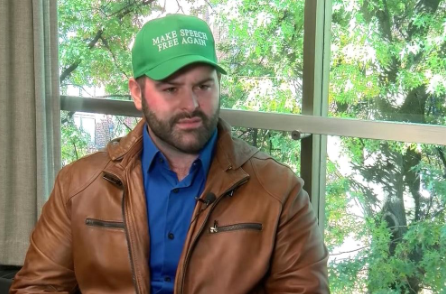
Andrew Torba, the CEO of Gab. Picture Credit: YouTube/PAHomepage.com (Fair Use)

TEN YEARS ago today Gab began with a simple conviction: ordinary people should be able to speak freely online without asking permission from governments, political activists, corporate gatekeepers, or a handful of unaccountable Silicon Valley executives. At the time that conviction seemed almost obvious. The Internet was still routinely described as this great decentralized force for human freedom, yet by 2016 it was becoming increasingly clear that the digital public square was consolidating in the hands of a small number of companies whose executives had tremendous power over what billions of people could say, see, share, and ultimately believe. Gab was our answer to that problem.

.
I don’t think any of us could have fully appreciated what the next ten years would bring. Gab has been banned from app stores, removed by hosting providers, cut off by payment processors, denied access to critical infrastructure, smeared relentlessly by the corporate press, targeted by activist organizations, dragged into congressional investigations, and pressured by governments both at home and abroad. There have been many moments when the conventional wisdom was that Gab was finished, and there were plenty of opportunities when surrendering would have been easier, safer, and probably much more profitable. We could have changed our rules, apologized to the right people, banned whoever we were told to ban, and slowly transformed ourselves into another sanitized corporate platform.
.
We chose to build instead and that decision has defined the first decade of Gab.
.
Gab’s history cannot be separated from deplatforming because deplatforming forced us to understand technological sovereignty years before most people were even thinking about it. In the early days of the Internet economy, the standard advice for building a technology company was to outsource practically everything that wasn’t your core product. You used somebody else’s cloud infrastructure, somebody else’s payment processor, somebody else’s app store, somebody else’s distribution network, and dozens of somebody else’s APIs and services. That model was efficient and convenient, but it contained an enormous hidden assumption: all of these supposedly neutral infrastructure providers would continue doing business with you.
.
We learned the hard way that this assumption was wrong. When companies decided they could remove Gab from their services because they disliked our mission, our users, or the speech taking place on our platform, we discovered that you don’t really control something when another company can shut it off with the flip of a switch. Free speech could not survive indefinitely on rented infrastructure controlled by people who were hostile to the very reason Gab existed, so we had to become more independent. We built systems ourselves, developed our own technology, established new relationships, eliminated dependencies where we could, and became more resilient with every attack.
.
Looking back, many of the things intended to destroy Gab ultimately made the company stronger. Every provider that abandoned us exposed another weakness we needed to address. Every coordinated pressure campaign taught us something about how technological power actually works. Every attempt to silence our community reinforced the importance of owning more of our infrastructure and reducing the number of institutions capable of exercising veto power over our existence. Out of those experiences emerged a principle that continues to shape everything we build today: never allow a single gatekeeper to become a single point of failure.
.
There is a fantastic recent essay called The Closure of the Internet – https://arctotherium.substack.com/p/the-closure-of-the-internet – that I encourage everyone to read because it documents, in extraordinary detail, the transformation we lived through during the years when Gab was fighting its hardest battles. The author traces how the Internet of the early 2010s where major platforms generally permitted almost anything lawful rapidly changed beginning around 2015 into an Internet governed by sprawling moderation systems, increasingly expansive definitions of “hate” and “misinformation,” pressure from governments and NGOs, demonetization, algorithmic suppression, and coordinated deplatforming.
.
Free speech is very easy to support when everyone agrees with what is being said. The principle becomes meaningful when speech is controversial, unpopular, politically inconvenient, offensive, or directed at people with enough power to make you suffer for permitting it. Gab has spent ten years living in that second category. We have defended the principle that lawful speech should remain free even when governments, journalists, activist organizations, corporations, and powerful interest groups demand otherwise, and doing so has come with tremendous costs.
.
We weren’t trying to build Twitter with a green logo. We were trying to demonstrate that Americans could still build institutions committed to the principle that free speech should not require ideological permission, and that mission inevitably meant accepting costs that companies without such a conviction would never tolerate.
.
•  To Be Continued.
Share:
  • Print
  • Digg
  • StumbleUpon
  • del.icio.us
  • Facebook
  • Yahoo! Buzz
  • Twitter
  • Google Bookmarks
  • Add to favorites
  • blogmarks
  • Blogosphere
  • Google Buzz
  • PDF
  • email
  • Live
  • MSN Reporter
  • MyShare
  • MySpace
  • Technorati
  • Webnews.de

Petition: Hold A Referendum To Bring The Water Industry Into Public Ownership (Part 2)
.

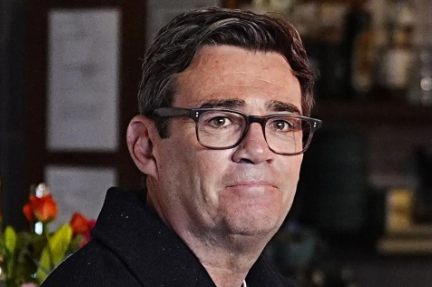
Parliament will debate a petition – on 14th September – calling for the water industry to be returned to public ownership. Given the strength of public feeling, and with one eye on a future General Election, we feel that Andy Burnham (pictured above) could be swayed. However, it’s vital to contact your MP to turn up & speak at the debate. Contact them demanding that they do just this! Picture Credit: uk.news.yahoo.com (Fair Use)

FOUR MONTHS AGO, we published an article –https://www.nationalliberal.org/petition-hold-a-referendum-to-bring-the-water-industry-into-public-ownership – promoting a petition which called for the water industry to be returned to public ownership.

 
We did this because we believe that any industry (that could be said to be vital to the national interest) should initially be publicly owned.  (At a later date it could be run on co-operative or on syndicalist lines – whereby workers, who are completely unionised, control industry.)
.
The National Liberal Party – NLP – feels that the water industry is vital to the national interest.  Therefore asked our readers to support the petition.
.
We thought it stood a very good chance of gaining 100,000 signatures.  This would kick start a debate in Parliament over the issue.
.
GOOD OPPORTUNITY
.
The prospect of a debate would’ve presented a good opportunity for the electorate to exert its power to ensure that all MPs turned up to vote.
.
As of today, we’ve discovered that the petition has gained 173,000 signatures.  This means that it’ll be debated in the House of Commons next month (on 14th September).
.
That’s the good news.  The not so good news is that there won’t be a parliamentary vote in September.
.
We had anticipated this.  Indeed, in our April article we noted that change ‘will not happen overnight, but this petition & any subsequent debate is a step in the right direction.’
.
RIGHT DIRECTION
.
One step in the right direction would be to use the debate to put pressure on the Government to act & actually return the water industry to public ownership.
.
However, as we noted earlier, we need MPs to turn up & speak at the debate.  Therefore, we’re asking all readers to contact their local MP demanding that they do just this.
.
We all know how unpopular the privatised water industry is.  Given the strength of public feeling, and with one eye on a future General Election, we feel that Andy Burnham & Co. could be swayed. .
 Watch this space!
Share:
  • Print
  • Digg
  • StumbleUpon
  • del.icio.us
  • Facebook
  • Yahoo! Buzz
  • Twitter
  • Google Bookmarks
  • Add to favorites
  • blogmarks
  • Blogosphere
  • Google Buzz
  • PDF
  • email
  • Live
  • MSN Reporter
  • MyShare
  • MySpace
  • Technorati
  • Webnews.de

What Future For British Steel?
.

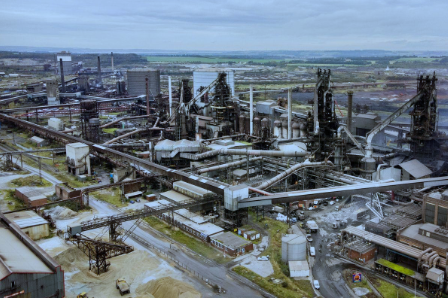
The British Steel steelworks in Scunthorpe, North Lincolnshire. (Image: PA Archive/PA Images)

IT‘S NOT OFTEN that the National Liberal Party agrees with the government of the day. 

.
However, for once, we do.  Why?
.
Because three days ago – on Thursday 16th – British Steel was brought into public ownership.  This happened because the Steel Industry (Nationalisation) Act 2026 received Royal Assent from the King, having passed through Parliament on Wednesday.  This new law allows ministers to transfer steel businesses’ shares or property into public ownership.
.
SECURED JOBS
.
The move has secured nearly three thousand jobs at the Scunthorpe Steelworks in North Lincolnshire.
.
(British Steel was previously owned by the China’s Jingye Group.  They had previously planned to close its Scunthorpe plant.  However, Parliament was recalled in April last year to approve special measures legislation to keep the plant open.  An independent assessor will determine whether Jingye should be compensated for the nationalisation based on the value of the company.)
.
The announcement was made by the Department for Business and Trade.  It noted that:
.
“Maintaining steel production at British Steel’s Scunthorpe site is considered essential to preserving the UK’s ability to make steel domestically.
.
“After assessing the impact on the country’s economy, critical infrastructure and national security, the Business Secretary concluded that government ownership was the best way to secure the company’s future and protect the UK’s steelmaking capability and supply chains.
.
This follows wider support for the UK steel sector including the first ever Steel Strategy, published in March and backed by up to £2.5bn of investment, which set an ambition for up to 50% of steel used in the UK to be made in the UK. “
.
LONG OVERDUE
.
It’s a long overdue move which recognises British Steel vital role in building and maintaining the nation’s railways, infrastructure and manufacturing base.
.
We national liberals are generally opposed to centralisation.  We stand in opposition to capitalism – where property & assets are in the hands of a few – and socialism and communism – where property & assets are in the hands of the state (and party bosses).
.
We favour a distributist system.  Here, distributism advocates a more widespread distribution of property and productive assets among individuals.
.
NATIONAL INTEREST
.
With the above in mind, however, we believe that any industry – that could be said to be vital to the national interest – should initially be owned by the public. This obviously applies to British Steel – hence our support for it being brought back under public control.
.
It remains to be seen what the government will do with British Steel in the future.  Will it remain under public ownership, or will it be sold?  If the Prime Minister was still Sir Keir Starmer it probably would’ve have been sold.    What Andy Burnham will do is open to debate.
.
As we mentioned earlier, we favour a distributist economic system.  Worker-owned cooperatives (alongside small businesses & family farms) form a cornerstone of such a system.
.
Therefore, we believe that the future of British Steel could be as a co-operative or be run syndicalist lines (whereby workers, who are completely unionized, control industry).
Share:
  • Print
  • Digg
  • StumbleUpon
  • del.icio.us
  • Facebook
  • Yahoo! Buzz
  • Twitter
  • Google Bookmarks
  • Add to favorites
  • blogmarks
  • Blogosphere
  • Google Buzz
  • PDF
  • email
  • Live
  • MSN Reporter
  • MyShare
  • MySpace
  • Technorati
  • Webnews.de

National Liberal Trade Unionists – Marking The Centenary Of The 1926 UK General Strike (Part 2)
.

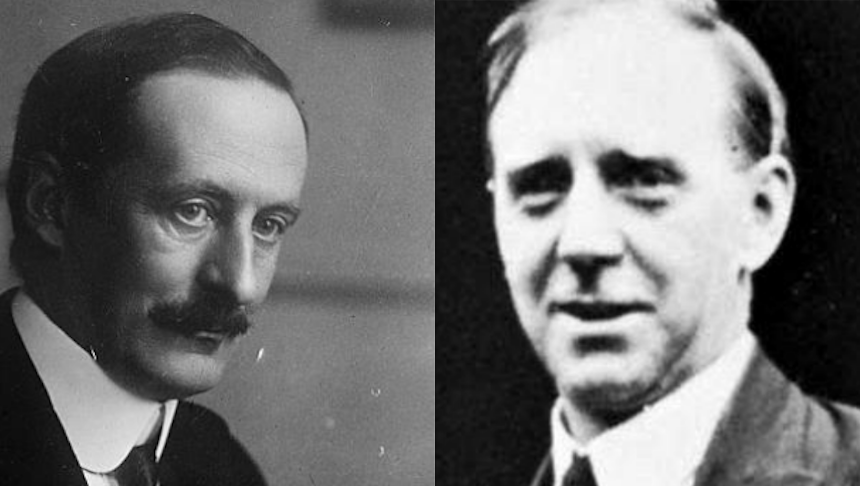
Baldwin’s Conservative government successfully framed the 1926 UK General Strike as a revolutionary threat to the constitution and democracy – as opposed to a labour dispute relating to longer working hours & and significant pay cuts. This led to thousands of middle- and upper-class volunteers joining the Organisation for the Maintenance of Supplies. It was chaired by Lord Hardinge (left). Arthur James Smith (right), General Secretary of the Miners’ Federation of Great Britain is thought to have coined the slogan “Not a penny off the pay, not a minute on the day.”

AT THE START of this month we outlined the background to (and causes of) the UK General Strike of 1926.  Taking place from 4th to 12th May 1926, it involved up to 1.75 million workers.

.
The catalyst for the strike was the dire situation of the coal industry.  The remedy favoured by mine owners involved cutting wages & increasing working hours.  Obviously, the Miners’ Federation of Great Britain – the MFGB was active from the late 19th century until it formed part of the National Union of Mineworkers on 1st January 1945 – totally opposed the idea.
.
They campaigned under the slogan “Not a penny off the pay, not a minute on the day” to express the resistance to this proposed idea.  (It’s widely believed that Arthur James Cook, General Secretary of the MFGB coined the slogan).  The scene was therefore set for industrial action.
.
As we’ve previously noted, the strike brought much of Britain to a standstill.  The events of 4th to 12th May 1926 remain one of the largest coordinated labour-related actions in UK history.  These nine days also represent the only general strike in UK history.
.
GOVERNMENT RESPONSE
.
So, what was the government response to the strike?
.
The UK government, led by Conservative Prime Minister Stanley Baldwin, appears to have anticipated the strike.  Therefore, they were well-prepared for widespread industrial action.
.
As we noted in the first part of this series there had been earlier disputes in 1921 and a near-strike in 1925 (sometimes known as ‘Red Friday’).
.
In response to these events, the government provided a nine-month subsidy to maintain miners’ wages.  A Royal Commission (Samuel Commission, chaired by Sir Herbert Samuel, who later became leader of the Liberal Party) was also appointed to investigate the coal industry.
.
The Commission – which started work on 15th October 1925 & ended on 14th January 1926 – reported in March 1926.  This gave the government adequate time to prepare for any future strike action.
.
GOVERNMENT PREPARATIONS
 
These preparations included building up around five months’ supply of coal stocks, the creation of the Organisation for the Maintenance of Supplies (OMS), the recruitment of special constables, and planning in respect of transport and essential services.
.
Baldwin’s government also declared a state of emergency – which came into effect from 30th April 1926 – under the Emergency Powers Act 1920. This allowed regulations to secure food, fuel, transport, and public safety.
.
Essential services were kept going by hundreds of thousands of middle- and upper-class volunteers. They ran trains, buses, docks, and other services. Many drove vehicles or acted as special constables.
.
The military (in the form of the army & navy) protected key sites like docks and power stations. (However, troops were used sparingly to avoid provocation.)  Food distribution was also organized centrally with armed convoys where needed.
.
The Trades Union Council – TUC – produced 11 issues of British Worker, which had a daily peak circulation of one million copies.
.
THE BRITISH GAZETTE
. 
To counter this, the government published The British Gazettewhich was edited by Winston Churchill.  At its height, two million copies were produced a day.  It sold for one penny, but given government resources, many copies given out for free.
. 
The British Gazette also successfully described the strike as a revolutionary threat to the constitution and democracy – as opposed to a labour dispute relating to longer working hours & and significant pay cuts.  (Framing the strike in these terms no doubt led to the huge numbers of middle- and upper-class volunteers who flocked to the government’s ranks.)
.
Baldwin’s government also had a propaganda advantage in that it controlled paper supplies which significantly hindered production of the TUC’s British Worker.
. 
Baldwin himself used radio broadcasts to appeal for calm and frame the strike as an unconstitutional challenge.  This echoed the message & reinforced the stance taken by The British Gazette.
.
LEGALITY
. 
The government were also able to question the legality of the strike.  However, it was never formally ruled illegal. Police & volunteers from the Organisation for the Maintenance of Supplies (chaired by Lord Hardinge) helped to maintain order. There were limited instances of violence, but the TUC were more than keen to avoid trouble.  Indeed, as we noted in our previous article, strikers organised community efforts like volunteer services and football matches with police.
.
The government also took an extremely hard line when it came to negotiations. Here, they refused to talk (about the miners’ issues) until the TUC unconditionally ended the strike.
.
• In part 3 we will look at the overall impact of the 1926 UK General Strike.
.
 
Picture Credits:
. 
Arthur James Smith (Fair Use)
https://www.britannica.com/biography/Arthur-James-Cook
Lord Hardinge
https://commons.wikimedia.org/wiki/File:Charles_Hardinge01.jpg
Share:
  • Print
  • Digg
  • StumbleUpon
  • del.icio.us
  • Facebook
  • Yahoo! Buzz
  • Twitter
  • Google Bookmarks
  • Add to favorites
  • blogmarks
  • Blogosphere
  • Google Buzz
  • PDF
  • email
  • Live
  • MSN Reporter
  • MyShare
  • MySpace
  • Technorati
  • Webnews.de

National Liberal Trade Unionists – Marking The Centenary Of The 1926 UK General Strike (Part 1)
.

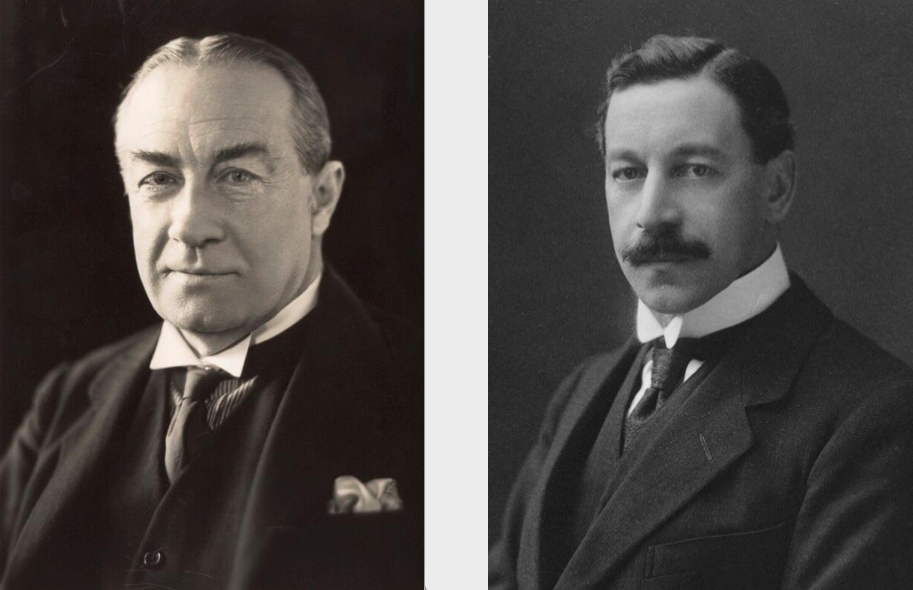
Stanley Baldwin (above left) was the Conservative Prime Minister during the period of the 1926 UK General Strike. Sir Herbert Samuel (above right) chaired the Royal Commission which looked into the coal industry.
Picture credits can be found under our article.

THE GENERAL STRIKE of 1926 was the only general strike in UK history. It took place from 4th to 12th May 1926 (nine days) and involved around 1.5 – 1.75 million workers. (However, it’s been estimated that – by the end of the strike – up to three million or more had downed tools in solidarity with the coal miners.)

.
The strike was called by the Trades Union Congress (TUC) in support of over a million coal miners who had been locked out by mine owners. Key sectors like transport, heavy industry, printing, docks, electricity, and gas joined the strike. It remains one of the largest coordinated labour-related actions in UK history.
.
BACKGROUND & CAUSES
.
So, what was the background to (and causes of) this massive & unprecedented industrial unrest?  The strike originated in the declining British coal mining industry, which faced severe post-World War I challenges.  They included:
.
  • WWI factor:  During the war, coal mines operated at high intensity (often under government control). This depleted reserves while demand was artificially high.
  • Declining demand and exports: Post-war, Britain’s coal faced competition from oil and other fuels. For instance, the Royal Navy shifted from coal to oil.  This reduced domestic demand.  Coal exports had also fallen.
  • Foreign Competition: As we noted above, wartime production had depleted reserves, and intense foreign competition grew (from Germany, Poland, and the US).  Cheaper coal from reparations deals (Germany supplied free coal to France and Italy under the Treaty of Versailles) was also available.
  • Post-war slump: British mine owners were slow to modernise compared to competitors, and the industry was fragmented with many inefficient pits. The result was high unemployment with falling prices hitting the industry hard.
.
These factors led to lower production, falling prices, and profitability pressures. Mine owners sought to cut costs mainly by reducing wages and increasing working hours, while miners faced already tough conditions (dangerous work & poor pay).
.
During the war, the mines had been nationalised.  However, they returned to private ownership in 1921.  This only heightened tensions. Earlier disputes in 1921 and a near-strike in 1925 (sometimes known as ‘Red Friday’) showed how volatile the situation was.
.
1925 TENSIONS
.
As we noted earlier, the mine owners sought to reduce wages whilst instituting longer working hours.  (They demanded longer working hours (from 7 to 8 hours) and significant pay cuts, varying by region.)
.
The government under Conservative Prime Minister Stanley Baldwin (1867 – 1947) provided a temporary nine-month subsidy to maintain wages and avoid an immediate strike.
.
A Royal Commission (Samuel Commission, chaired by Sir Herbert Samuel, who later became leader of the Liberal Party) was appointed to investigate the industry.
.
It reported in March 1926.  It recommended reorganising the industry (via amalgamations), nationalising royalties, and — crucially — a 13–13.5% wage reduction plus ending the government subsidy.  The Commission didn’t fully endorse owners’ demands but gave them leverage.
.
The mine owners, seemingly emboldened by the Samuel Commission, demanded significant pay cuts, an eight-hour day (up from seven), and district-level agreements (which could worsen variations). They rejected national negotiations.
.
WAGE REDUCTIONS & LONGER WORKING HOURS
.
It should come as no surprise that the Miners’ Federation of Great Britain (the forerunner to the National Union of Mineworkers – NUM) opposed the idea of wage reductions alongside longer working hours.  Indeed, the MFGB coined the famous slogan “Not a penny off the pay, not a minute on the day.”
.
On 1st May 1926, owners locked out over one million miners when they refused the new terms. Negotiations between the TUC, government, and owners broke down (partly exacerbated by incidents like printers refusing to print an anti-strike article in the Daily Mail).
.
The Trades Union Congress (TUC), representing broader unions, supported the miners and called for a general strike in solidarity to begin at one minute to midnight on 3rd May.
.
THE STRIKE
.
The TUC viewed the miners’ fight as a test case for the broader labour movement. They called the strike not as a revolutionary move but to force the government to intervene and prevent wage cuts spreading across industries. It was framed as solidarity against an attack on workers’ living standards amid high unemployment and economic hardship in the 1920s.
.
TUC involvement saw many other key industrial sectors involved in the dispute.  They included:
.
  • Transport (railways, docks, road transport)
  • Heavy industry (iron, steel, electricity, gas)
  • Printing and other essential services
.
The strike brought much of Britain to a standstill: trains stopped, newspapers were limited, food deliveries delayed, and public services disrupted.
.
The strike remained peaceful overall, with no major violence.  Indeed, strikers organising community efforts like volunteer services and football matches with police.
.
 • In part 2 we will look at the government response & the overall impact of the strike.
.
 Picture Credits:
.
Stanley Baldwin (Fair Use)
.
Sir Herbert Samuel (Fair Use)
Share:
  • Print
  • Digg
  • StumbleUpon
  • del.icio.us
  • Facebook
  • Yahoo! Buzz
  • Twitter
  • Google Bookmarks
  • Add to favorites
  • blogmarks
  • Blogosphere
  • Google Buzz
  • PDF
  • email
  • Live
  • MSN Reporter
  • MyShare
  • MySpace
  • Technorati
  • Webnews.de

Oil Wars: Speeding The Transition To Renewable Energy
.
WE BELIEVE that the vast majority of – if not all – wars are economic in nature.  Various arms companies obviously make a small fortune in selling weapons to those involved in conflicts.  However, maybe not so obvious is the money to be made by the oil companies.
 
This article – the original of which you can find here https://www.counterpunch.org/2026/03/26/oil-wars-speeding-the-transition-to-renewable-energy/ – looks at the profits made by US oil companies in the wake of the Israeli/US attack on Iran. 
 
It highlights the dangers of relying ‘on distant resources that threaten their security and safety.’  Interestingly, it goes on to suggest that renewable energy could be the answer to these dangers & that ‘self-sufficiency should be the goal and the promise for all. ‘
 
Written John K. White – see details below – the article appeared towards the end of last month on the Counterpunch website.  Counterpunch is a US news site which operates ‘from an independent left-leaning perspective.’
 
We present this article as part of our ongoing efforts to promote debate, particularly between those who hold alternative & non-conformist points of view.
 
It goes without saying that there are no links between John K. White, Counterpunch & the National Liberal Party.
.

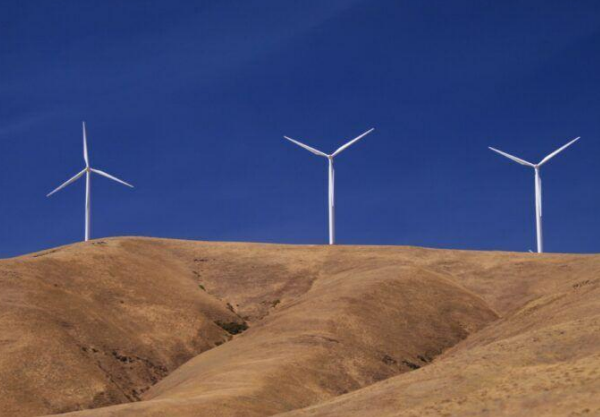
Wind turbines, Columbia River Gorge. Photo: Jeffrey St. Clair.

.

Oil Wars: Speeding The Transition To Renewable Energy

ONE SIMPLE observation since the US-Israel attack on Iran on February 28 is that solar panel prices have not risen, staying at around $300 for an off-the-shelf, 400-watt commercial panel (7 cents/W for an industrial solar cell). But oil prices have risen, reaching $116 per barrel in the first week of hostilities, a 65% increase from the pre-war mark of $70/barrel, raising energy prices for everyone including American consumers at the pump.

.
US gasoline prices are roughly the same as in 2000 (adjusted for inflation), primarily because of an increased domestic supply of petroleum from hydraulic fracturing (the so-called “shale gale”), despite many known dangers (earthquakes, water poisoning, toxic air). But war in the Middle East has once again raised oil prices around the world, similar to the OPEC oil embargo after the Yom Kippur War in 1973 (First Oil Shock) and the 1979 Iranian Islamic Revolution (Second Oil Shock), although long car lines have not yet formed as in the ‘70s.
.
Attempting to calm the fears about more shocks, Donald Trump stated that higher oil prices “is a very small price to pay for U.S.A., and World, Safety and Peace.” In his usual tone-deaf way, he added “The United States is the largest Oil Producer in the World, by far, so when oil prices go up, we make a lot of money.” Indeed oil companies do, but not consumers.
.
In purely economic terms, the big winners since the start of the US-Israel attack are American oil companies, such as Exxon, Chevron, and Occidental, seeing increased profits on safe domestic supplies without having to pay a war surcharge. As noted by the Financial Times, oil groups will reap a $63 billion windfall “from Gulf war disruption” if 2026 crude prices average $100/barrel. Companies without holdings in the Middle East, traders without tankers needing to transit the narrow Strait of Hormuz, and global arms dealers also benefit.
.
Venezuela, which holds the world’s largest petroleum reserve (300 billion barrels), will also benefit as old contracts are renewed, although extraction can’t be ramped up overnight in its rusted industry, while the thicker Orinoco crude requires more refining. Canadian oil sands and US fracking (already at historic highs) will also fill the gap with increased extraction.
.
Russia may be the biggest winner, able to sell previously sanctioned supplies, mostly to China and India, thanks to a temporary one-month US waiver given to calm energy markets. We will see how temporary. The Russia bump is especially damaging to Ukraine, which will suffer more aggression just as Russia’s war chest was being depleted by sanctions. The floating Russian tanker fleet will also finally be able to dock. Increased Russian sales alone, however, will not lower prices as the global oil market was already oversupplied, absorbing the initial shock, while springtime in the northern hemisphere lessens the need for heating oil. Nonetheless, a $100+/barrel market is here for a while.
.
The main losers are consumers and taxpayers everywhere. The US Pentagon estimated the first six days of war cost American taxpayers $11.3 billion, while Russia could receive an additional $10 billion per month from increased sales at higher prices, a US-Russian money pipeline. Blood money. Higher inflation and increased immigration will follow. The Gulf states have been left to fend for themselves despite a large US military presence. The environment will also suffer from increased heavy-oil refining, dirty oil-sands extraction, fracking, and toxic fouling. And, of course, millions of war-stricken citizens across the Middle East and Ukraine.
.
Believing Donald Trump is a fool’s game as many are still learning. His “no wars” Big Lie duped the world. The consequences for Iran include widespread death and destruction, but the US has also been damaged. What negotiator would trust the US again? Which countries would change policy based on US assurances? Fool me once, shame on you, fool me twice (thrice, …), shame on me. Expect more unpredictability and mistrust from already spooked allies. And more blowback.
.
Price volatility will increase throughout the war and longer if large sections of petroleum infrastructure are destroyed in the Persian Gulf or the Strait of Hormuz remains impassible, if only to American shipping. Saudi Arabia can divert some Strait of Hormuz exports (6 million barrels/day) overland via pipeline to Yanbu on the Red Sea, but other Gulf countries won’t be able to secure the world’s most vulnerable chokepoint, where 20% of daily oil and liquefied natural gas (LNG) exports once flowed.
.
Releasing strategic reserves (US, 400 million barrels) and lowering taxes in western countries can help lower prices (or keep them rising further). Spain, Germany, and Ireland have already started offering tax rebates, fuel allowances, and lower excise duties, while Ireland has fast-tracked plans for more renewable energy to reduce the demand on foreign petroleum supplies. Other countries will soon follow.
.
Expect more senseless tit-for-tat oil manipulations (destroying infrastructure, blocking exports). The potential for a catastrophic event at any of the Gulf oil depots is high, including Iran’s main storage hub on Kharg Island that holds 90% of Iranian oil (85% of which is sent to China). An explosion there or at any of the other Gulf export depots – Ras Tanura in Saudi Arabia is the world’s largest – would cause more environmental damage than in the 1991 Gulf War (450 million gallons), many times worse than the 2010 Deepwater Horizon spill from a faulty blowout protector (200 million gallons) or the 1989 Exxon Valdez punctured hull caused by human error (11 million gallons).
.
Damage to the South Pars-North Dome natural gas field – the world’s largest, shared between Iran and Qatar – is also a major environmental worry, already hit by a targeted Israel-US airstrike, about which Trump initially denied knowing. After Iran retaliated with an airstrike on Qatar’s LNG production at Ras Laffan, which processes 20% of the world’s LNG supply, Trump threatened to “massively blow up” the South Pars field if Iran continued to attack Qatari LNG sites.
.
Trump has also threatened to “obliterate” Iran’s power plants if tanker traffic is not allowed to freely transit the Gulf, which would likely cause excessive civilian damage. In response, Iran threatened to “irreversibly destroy” infrastructure in the Middle East if the United States attack its energy installations. Food shortages and lack of fertilizer are now increasing. Madness upon madness.
.
The purpose of the February 28 US attacks still hasn’t been made clear, other than to support Israel. But the resultant US participation may be to reduce Iran’s oil exports to increase American and Russian sales or weaken the NATO defence alliance and Ukraine. The motives could be that craven. Trump has already threatened NATO with a “very bad future” for not supporting his “short-term excursion.”
.
Whatever the goal, the rush to renewables will grow. There may be no alternative to stop more oil shocks. Or get the world back on a path to peace and curb global warming. The countries most impacted by reduced oil supplies will turn to safer alternatives, especially China, India, Japan, South Korea, and Australia. American influence will continue to wane.
.
Perhaps we are finally seeing the end of oil after eight decades of conflict, ever since Franklin Roosevelt secretly met the Saudi king Ibn Saud in 1945 aboard the USS Quincy on Great Bitter Lake in the Suez Canal on Roosevelt’s return home from the Big Three Yalta Conference. The resultant arrangement to develop the vast Saudi Arabian oil fields would become known as “solidification,” code for American aid in exchange for oil. At the same time, British colonial power was eroded across the region. The US effectively carved up the world, ensuring American companies would control the best oil.
.
The Venezuela and Iran spectacles show the world that the US can do whatever it wants whenever it wants. There needn’t be a reason, although Jimmy Carter did state in his 1980 State of the Union address after the 1979 Iranian Revolution, “An attempt by any outside force to gain control of the Persian Gulf region will be regarded as an assault on the vital interests of the United States of America and such an assault will be repelled by any means necessary including military force.” Knowingly or not, Trump has put those words into action in the bluntest way possible.
.
There is nothing good about war, but more countries will think seriously about speeding the transition from oil to renewables. With renewable energy, no environmental damage from extraction, transportation, refining, filling, and burning; no need of foreign military bases to protect supply chains; no outsized top-down energy management. The world now sees that “Drill baby, drill” means “Kill baby, kill.”
.
There is plenty to do, but we are on the way. New energy installations last year were 85% renewables. Storage capacity and load sharing continues to grow to manage intermittency. Everywhere, the world is turning to renewables, from the small (shared neighborhood geothermal heating, bladeless wind turbines, plug-in balcony solar panels) to the big (60-GW green hydrogen electrolyzer in Texas, €1 trillion North Sea offshore wind farm, 2-GW Indian photovoltaic solar farm).
.
The potential is limitless: electric buses, ferries, short-haul planes, solar shingles, windows, awnings, cladding, parking lots, rotating sunflowers, water heating, floating, canal canopies, agrivoltaics, expanded bi-directional rooftop solar, P2P trading, household electrical storage, networked microgrids, smart buildings, home retrofits, district heating, and induction stoves, along with more sharing, the circular economy, zero-waste programs, right-to-repair, no to plastic, and decentralization. The steel and cement industries are also slowly being decarbonized, while electric vehicle sales are rising despite a recent slow-down other than in China (half of all new car sales) as are gasmobile-electric refits.
.
As American imperial control loosens, the United States will regret not leading the way to a greener future. China is surpassing the US in new thinking and new technology, especially renewables (wind, solar, storage). But every country has the potential to create their own energy without depending on distant resources that threaten their security and safety. Self-sufficiency should be the goal and the promise for all. The light at the end of the tunnel isn’t the light of an oncoming train. It is the sun.
.
John K. Whitea former lecturer in physics and education at University College Dublin and the University of Oviedo. He is the editor of the energy news service E21NS and author of The Truth About Energy: Our Fossil-Fuel Addiction and the Transition to Renewables (Cambridge University Press, 2024) and Do The Math!: On Growth, Greed, and Strategic Thinking (Sage, 2013). He can be reached at: johnkingstonwhite@gmail.com
Share:
  • Print
  • Digg
  • StumbleUpon
  • del.icio.us
  • Facebook
  • Yahoo! Buzz
  • Twitter
  • Google Bookmarks
  • Add to favorites
  • blogmarks
  • Blogosphere
  • Google Buzz
  • PDF
  • email
  • Live
  • MSN Reporter
  • MyShare
  • MySpace
  • Technorati
  • Webnews.de

By continuing to use the site, you agree to the use of cookies. more information

The cookie settings on this website are set to "allow cookies" to give you the best browsing experience possible. If you continue to use this website without changing your cookie settings or you click "Accept" below then you are consenting to this.

Close