







Saturday, 19 September 2026

The House Of Lords – Should It Stay Or Should It Go? Part 2.
.
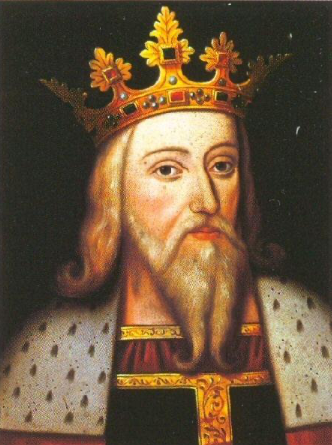
The House of Lords has its origins in the early medieval period, around the 14th century. During this time, the monarch on the throne was King Edward III of England, who reigned from 1327 to 1377. (Picture credit: Free image from alchetron.com)

IN DECEMBER we noted that opinions about the future of the House of Lords can be sharply divided.

.
There are those who’re in awe of its history & uniqueness. They also (quite reasonably) question what would replace it. Others believe that the House of Lords is an anachronism and should be replaced.
.
Despite these differences, we believe that most people would agree that there needs to be a system of checks & balances available to act as a counterweight to the House of Commons. (This is particularly so when a government has an overwhelming majority & can easily steamroller legislation through.)
.
With all the above in mind, it’s clear that any decision about the future of the House of Lords shouldn’t be based on kneejerk reactions.  Indeed, any decision requires deep analysis, thought and debate.
.
To this end, it’d be useful to know what oversight body preceded it (if any) and when & why the House of Lords came into being.
.
To examine this in forensic detail will require a completely new series of historically-based articles – and we hope to do this soon. However, for the purposes of this series, the following brief history lesson will suffice.
.
The House of Lords, the upper chamber of the UK Parliament, was formally established in the early 14th century. Its origins can be traced back to the medieval councils and assemblies that advised the monarch.
.
These assemblies were comprised of nobles, bishops, and other high-ranking officials. The primary role here was to both advise the monarch and provide consent for legislation.
.
Over time, these gatherings evolved into a more structured body with defined powers. Thus, the main role of the House of Lords was to offer counsel to the king and to act as a judicial authority.
.
During its early years, the Lords played a crucial role in the legislative process, reviewing and amending bills proposed by the House of Commons. It also served as the highest court of appeal in the land.
.
The 19th century saw significant reforms which began to shape the House of Lords into its modern form.
.
It was originally dominated by hereditary peers – nobles who inherited their titles and seats from their ancestors. However, reforms in the 20th and 21st centuries introduced life peers, appointed based on merit, and bishops representing the Church of England.
.
Also, the Parliament Act of 1911 marked a pivotal point, reducing the power of the Lords to veto legislation, allowing them only to delay bills.
.
Further reforms in 1958 and 1999 introduced life peers and significantly reduced the number of hereditary peers (although they didn’t eliminate them entirely). These reforms aimed to make the House more reflective of contemporary society while still retaining a connection to its historical roots.
.
A significant milestone in the history of the House of Lords was the inclusion of women. In 1958, with the passing of the Life Peerages Act. Here women were allowed to become life peers and, thus, members of the House of Lords for the first time. This was a transformative step towards gender equality within the British legislative system, marking the beginning of a more inclusive approach to governance.
.
The first woman to join the House of Lords was Baroness Irene Curzon in 1958. She was one of the first life peers appointed following the passage of the Life Peerages Act 1958, which allowed women to be appointed to the House of Lords.
.
•  To be continued.
.
•  THIS ARTICLE should be read in conjunction with The House Of Lords – Should It Stay Or Should It
Go? Part 1 https://nationalliberal.org/the-house-of-lords-should-it-stay-or-should-it-go-part-1
Share:
  • Print
  • Digg
  • StumbleUpon
  • del.icio.us
  • Facebook
  • Yahoo! Buzz
  • Twitter
  • Google Bookmarks
  • Add to favorites
  • blogmarks
  • Blogosphere
  • Google Buzz
  • PDF
  • email
  • Live
  • MSN Reporter
  • MyShare
  • MySpace
  • Technorati
  • Webnews.de

Single Authorities = Less Accountability!
 
IT APPEARS that the government has plans to get rid of district, borough and county councils (across England at least). 
.
In their place will be a unitary system.  Here one single authority will cover all local government responsibilities in an area.
.
Labour have talked for a long time about devolution.  But their proposal is an oxymoron, as it’s the opposite of devolution!
.
A simple rule of thumb is that as any group or organisation grows larger, it becomes more amorphous and less accountable.
.
The government reconsiders this policy because if implemented, it could make people feel even more detached from the political system than they do today.
.
A county like Hertfordshire – with a population of over 1.2 million – provides a perfect example of how daft the government’s scheme is.
.
It has large towns like Watford (population 100.000 plus) and small villages like Cuffley, with a population of just over 4,000 people.  Large parts of the county are used for agriculture.
.
How on earth is one single authority cover all local government responsibilities in a county as diverse of Hertfordshire?
.
A tinpot dictator in waiting may dream of such a gargantuan authority.  However for ordinary people it’ll be an absolute nightmare.
.
Instead of concentrating power in fewer hands, we should be devolving power & authority down to the lowest common denominator.
Share:
  • Print
  • Digg
  • StumbleUpon
  • del.icio.us
  • Facebook
  • Yahoo! Buzz
  • Twitter
  • Google Bookmarks
  • Add to favorites
  • blogmarks
  • Blogosphere
  • Google Buzz
  • PDF
  • email
  • Live
  • MSN Reporter
  • MyShare
  • MySpace
  • Technorati
  • Webnews.de

The House Of Lords – Should It Stay Or Should It Go? Part 1.
.

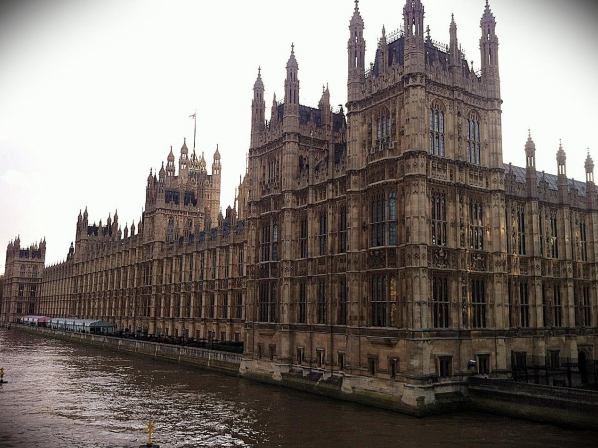
The Houses of Parliament in London. The House of Lords acts as a check and balance to the House of Commons. But does the Lords have a future? (Picture credit: Free image from pixabay.com)

EVERY SO OFTEN a debate about the future of the House of Lords flares up.  Opinion can be sharply divided.

.
Some believe that the House of Lords is an anachronism and belongs to an earlier age. Allegations of elitism – especially in respect of hereditary peers – are also commonplace.
.
Others seem to venerate the Lords. They point to its history & the unique nature of the institution.  They also question what would replace it.
.
National Liberals are committed to free thought & free speech.  Therefore, any debate relating to the future of the Lords is one that interests us.
.
Like many people, we’re in favour of a body that can effectively act as a check and balance to the House of Commons. This is particularly so when one party has such a majority that it can literally bulldoze legislation through.
.
We should point out that National Liberals believe that governments need to be able to act decisively. But some form of checks & balances are essential to prevent – what could be termed – even a ‘benign’ form of dictatorship emerging.
.
(As an aside, we believe that serious questions must also be asked about the UKs version of ‘democracy’.
.
One question relates to the status of both government & opposition.
Here, the opposition appears to spend all its time & energy deliberately trying to derail what the government has been elected to do. This is irrespective of whether the government’s proposal is in the national interest or not!
.
We know that this is an age-old political tactic to make the government look weak and inept. However, it ignores the fact that action is urgently needed to solve the many social & economic problems we face.  Many folks are suffering hardships, so is it right that the opposition seems happy enough to play a game of political point scoring.)
.
Returning to the status of the House of Lords, we think that the whole question of – to paraphrase The Clash – should it stay, or should it go? requires deep analysis, thought and debate.
.
However, before we even start to think about the future of the House of Lords, we must examine its past.  We need to know what oversight body preceded it, if any, and when & why the House of Lords came into being.
.
A truly informed debate can only proceed once we know the constitutional & historical context (in respect of the Lords).  These facts will then shape any future debate.
.
•  To be continued.
Share:
  • Print
  • Digg
  • StumbleUpon
  • del.icio.us
  • Facebook
  • Yahoo! Buzz
  • Twitter
  • Google Bookmarks
  • Add to favorites
  • blogmarks
  • Blogosphere
  • Google Buzz
  • PDF
  • email
  • Live
  • MSN Reporter
  • MyShare
  • MySpace
  • Technorati
  • Webnews.de

Christmas 2024 – Support Your Local Shops!
.
.
YES, it’s that time of year again – Christmas is coming! But in your haste to do the shopping, don’t forget the local shops and businesses in your area. Give them an early Christmas present by shopping locally today.
.
The National Liberal Party knows that times are hard, and price considerations are obviously very important, but many small shops depend on their Christmas trade to see them through much of the following year.  And this is particularly true of the money they make in the fortnight just before Christmas itself.
.
Many shopkeepers recall the recession of the late 2000s – which was brought on by ‘casino capitalism’ – a mixture of greed and mistakes made by the politicians, bankers, ‘fat cats’ and speculators.  To add insult to injury, shopkeepers are also hit hard by high interest rates, the criminal bank debt-system, out-of-town outlet centres and on-line shopping.
.
The shopkeeper, as a self-employed businessman or woman, plays a vital role in the local economy. (And don’t forget that these small shops collectively employ hundreds of thousands of workers throughout the length and breadth of Britain). Local shops are not only important for the elderly and young mothers but are part of the glue that helps to maintain community spirit – a place to bump into friends, neighbours and relatives.
.
If we don’t support our local shops and businesses today, we may lose them forever. Then people will have no other choice to travel directly into the nearest city or town centre for the smallest of items. This may be ok if you have your own transport and are fit and healthy. However, the elderly or young mothers wouldn’t really look forward to beating a path through the massive Saturday shopping crowds found in our large towns and cities.
.
The message is clear. For the community spirit to survive and prosper, we must give local shops as much trade as possible. The National Liberal Party says support your local shops, shopkeepers and shop workers. Shop locally this Christmas!
Share:
  • Print
  • Digg
  • StumbleUpon
  • del.icio.us
  • Facebook
  • Yahoo! Buzz
  • Twitter
  • Google Bookmarks
  • Add to favorites
  • blogmarks
  • Blogosphere
  • Google Buzz
  • PDF
  • email
  • Live
  • MSN Reporter
  • MyShare
  • MySpace
  • Technorati
  • Webnews.de

A Death Knell for Civilisation: Today’s vote is a dark day for Britain
.
LAURA DODSWORTH is an author, journalist and photographer.  She is probably best known for her book A State of Fear: How the UK government weaponised fear during the Covid-19 pandemic. 
 
This ground-breaking book demonstrated how the government manipulated people – using fear, anxiety, and isolation – during Covid-19.
 
The article that we’re reproducing below – A Death Knell for Civilisation: Today’s vote is a dark day for Britain – was written on 29th November, the day that Westminster voted to legalise assisted dying in England and Wales. 
 
It appears that Doddsworth holds what could be called a ‘culturally conservative’ view on the whole matter of life & death.  She is totally opposed to assisted dying & uses the term ‘assisted suicide’ instead.  (She also touches on other subjects, in passing, such as gender, the winter fuel allowance & the conflict in Gaza.)
 
You can find out more about her other views at the Free Mind substack:  https://www.thefreemind.co.uk
 
We’re reproducing her article as part of our overall strategy to promote free thought & debate.  This involves looking at a diverse range of opinions that might be of interest to our readers. 
 
It’s important to note that this is just but one view.  We’re more than happy to publish any opposing view – in respect of the Terminally Ill Adults (End of Life) Bill – as debate is always free with the NLP.
 
It goes without saying that there are no links between Laura Doddsworth & the National Liberal Party.
.

A Death Knell for Civilisation: Today’s vote is a dark day for Britain


TODAY is a dark day for Britain.
.
In a historic vote, the House of Commons has turned its back on the sanctity of life. By 330 votes to 275, MPs have approved draft legislation that allows terminally ill adults, expected to die within six months, to seek help to end their lives.
.
Palliative care consultant Dr Dominic Whitehouse begged MPs – https://www.youtube.com/watch?v=M4srDS0SmSs – to vote with ‘wisdom and courage’. They did not. A 55-vote majority has declared that life is cheap.
.
Let us be clear: this is not ‘assisted dying’. That phrase belongs to the noble art of palliative care, which cherishes life even in its final moments. This is assisted suicide—a deliberate act to extinguish life. It is a seismic shift that should alarm anyone who values the moral fabric of our society.
.
History and modern examples alike offer lessons we are too blind or arrogant to heed. Take Oregon, often cited as a exemplary model for assisted suicide due to its so-called ‘Death with Dignity Act’. Oregon’s journey  – https://spcare.bmj.com/content/14/4/455?utm_source=substack&utm_medium=email – should give us pause. In 1998, just 16 assisted deaths were recorded; by 2022, that number had soared to 278. Over time, trends emerged that reveal the cost of this policy, not in pounds but in humanity.
.
Patients’ funding shifted from predominantly private to mostly state-funded healthcare (65% private in 1998; 79.5% government-supported in 2022). More patients reported feeling like a burden or struggling with financial worries as reasons for choosing death. Relationships between doctors and patients became transactional — shrinking from 18 weeks in 2010 to just five weeks in 2022. Psychiatric evaluations, designed to protect those in vulnerable states, remained astonishingly rare, hovering at just 1%.
.
What is dignified about this conveyor belt to death?
.
And Oregon has taken things one step further. It is one of the places in the world where people can opt for aquamation, a chemical process that reduces human remains to liquid and bone fragments, marketed as ‘soil transformation’. Once complete, the liquefied remains can be used as fertiliser. Of course, we all become soil in the end. Ashes to ashes, dust to dust. But our rituals are sacralised and respectful, they give time not just for the body but for the mourners. This haste is soulless, clinical and dehumanising. And note it is not human transformation but soil transformation. The human is lost — the humanity is lost.
.
Societies that treat life as disposable are doomed to collapse. We have seen it before. Under the Soviet regime and Mao’s China, life was cheapened to the point of irrelevance. Individuals were sacrificed to ideology; human worth was measured by utility to the state. Millions perished as the machinery of death rolled on.
.
It is easy to dismiss these as extreme examples, but the seeds of such devaluation are sown when we begin to tamper with the inviolability of life. Legalising assisted suicide in Britain invites us to tread the same path. We assure ourselves it will be different here, that we are more compassionate, more advanced. But compassion twisted into expedience is no longer compassion. It is abandonment.
.
Today’s vote marks a death knell for civilisation
.
But the bells have been ringing for decades. Today, they are deafening.
.
We are a society rotting from within. Girls are told they can become boys, and boys are told they can become girls, as if biological reality is an inconvenience to be rewritten. Pensioners are denied their winter fuel allowance despite knowing that thousands will perish from the cold. In our streets, metropolitan elites wrapped in keffiyas chant for intifada on their own streets while ignoring their own moral hypocrisies. Ours is a culture of contradiction and decay.
.
We worry about barbarians at the gates, but the real rot is internal. Our civilisation is riddled with maggots. And here’s the uncomfortable truth: we are the maggots, gnawing away at the decaying flesh of our own culture.
.
‘Assisted dying’ is dressed up in the language of autonomy and choice, but the underlying message is clear: you are not worth saving. Britain is becoming a death cult, which can only happen when life is cheap.
.
True dignity lies in care, love, and support, even when the path is difficult. True compassion requires us to stand firm in the face of suffering, not to eliminate the sufferer. When we legalise assisted suicide, we do not affirm life — we betray it.
.
This vote is a tragedy — not just for those who will be affected by the legislation, but for our society as a whole. We are told this is progress, but it is a step into darkness and decay. Legalising assisted suicide doesn’t just end lives; it erodes the very foundations of civilisation.
Share:
  • Print
  • Digg
  • StumbleUpon
  • del.icio.us
  • Facebook
  • Yahoo! Buzz
  • Twitter
  • Google Bookmarks
  • Add to favorites
  • blogmarks
  • Blogosphere
  • Google Buzz
  • PDF
  • email
  • Live
  • MSN Reporter
  • MyShare
  • MySpace
  • Technorati
  • Webnews.de

The Poppy – To Wear Or Not To Wear?
.

GIVEN THE time of year, it’s probably inevitable that James McClean is in the news again. For those who don’t know, McClean is the current captain of Wrexham AFC who play in the English Football League One, (also known as Sky Bet League One).

.
What marks McClean out – and what gets him in the news – is that he’s one of the very few players who refuse to wear any football shirt that features the remembrance poppy around this time of year.  For this, he gets plenty of flack.
.
McClean has stated that he’s not opposed to people wearing the poppy.  Indeed, he’s also noted that he’d wear one himself if it were restricted to only honouring soldiers who died in the two World Wars.  (If this was the case, he has noted that he would wear the poppy ‘every day of the year.’)
.
However, having been brought up in the pro-Irish Republican Creggan estate in Londonderry (commonly known as Derry), he finds it difficult to display a poppy.
.
This is because – according to the Royal British Legion – ‘we remember those who lost their lives on active service in all conflicts; from the beginning of the First World War right up to the present day, as well as all those who have served and their families.’
.
This potentially could relate to those members of the Parachute Regiment who shot & killed 13 men on Bloody Sunday (with another dying four months after the event on 30th January 1972).  Of these fatalities, six came from the Creggan.
.
Given the context it’s probably understandable – from McClean’s point of view – why he would find it somewhat uncomfortable wearing a poppy.  (He’s also reiterated that his position is one of peace & isn’t part of any wider political, religious or anti-British campaign.)
.
We noted earlier that he gets plenty of flack for his position.  However, one organisation that would support his stance is the RBL itself.  They oppose compelling people to wear the poppy.
.
Our position is similar.  We wholeheartedly support the concept of civil and religious liberties for all.  This means the right to hold & voice opinions that are considered controversial, unconventional or unpopular.  In the context of this article, we hold view that people have the absolute right to wear – or not wear – the poppy.
Share:
  • Print
  • Digg
  • StumbleUpon
  • del.icio.us
  • Facebook
  • Yahoo! Buzz
  • Twitter
  • Google Bookmarks
  • Add to favorites
  • blogmarks
  • Blogosphere
  • Google Buzz
  • PDF
  • email
  • Live
  • MSN Reporter
  • MyShare
  • MySpace
  • Technorati
  • Webnews.de

By continuing to use the site, you agree to the use of cookies. more information

The cookie settings on this website are set to "allow cookies" to give you the best browsing experience possible. If you continue to use this website without changing your cookie settings or you click "Accept" below then you are consenting to this.

Close