





Saturday, 11 July 2026

Category » Articles

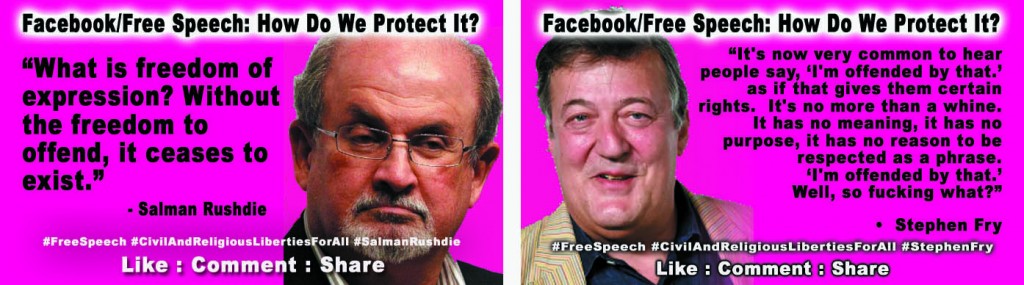
From The Liberty Wall – Free Speech: How Do We Protect It? – The Freedom To Offend

A BELFAST-BASED Free Speech advocate recently sent us an article from the Belfast Telegraph of 2nd January. The article – by Fionola Meredith – mirrors our view that, and as Salman Rushdie has noted, “What is freedom of expression? Without the freedom to offend, it ceases to exist.”


Fionola Meredith’s article was based on an interview given to the Times of London by Sir Alan Moses towards the end of last year. Here Sir Alan – a Former Lord Justice of Appeal and outgoing chairman of the Independent Press Standards Organisation (IPSO) – defended freedom of speech, and insisted that the media should be allowed to discuss sensitive subjects, such as religion.


As advocates for free thought, free Free & free assembly for all, we welcome Sir Alan’s comments and Fionola Meredith’s article. This is particularly so when one thinks of the suffocating (yet powerful) woke and Politically Correct times in which we live.


We’d appreciate it if other supporters would keep an eye out for articles which especially appear in the mainstream media (MSM) that support the general idea of free thought, free speech and free assembly for all.


It goes without saying that there are no official links between Fionola Meredith, the Belfast Telegraph and Free Speech: How Do We Protect It?

.


There is no right not to be offended: why we must heed the outgoing Ipso chief


Sir Alan Moses is correct, says Fionola Meredith. Freedom of speech is more important than hurt feelings


There is no right not to be offended: that’s according to Sir Alan Moses, the outgoing chairman of the UK’s main press regulator, Ipso. Moses stated that it was vital for democracy that the media be allowed to discuss sensitive subjects such as religion and gender without fear of being censored.


Hurray for Sir Alan! Somebody had to stand up and say it.

We live in a world where people act as if being offended is like kryptonite to Superman: deadly for their personal wellbeing.

Frequently this victim mentality is attributed to snowflakey millennials who have been brought up with an unprecedented level of privilege, entitlement and an overweening sense of their own importance.

There’s no doubt that this toxic seam of intolerance – for that is what it is – runs like a sore through many British and Irish universities, with absurd attempts to ‘no-platform’ speakers that certain students dislike.

However, I’ve seen many old geezers get just as exercised about repressing, shunning or otherwise obliterating stuff they don’t approve of.

If I don’t like it, ban it: that’s the prevailing message.

To be fair to Sir Alan, a former lord justice of appeal, he didn’t come out and say ‘suck it up, cry-babies’.

Admitting that dealing with complaints about offence was one of the most difficult aspects of the Ipso role, he said: “If you’re the victim of something that is deeply offensive, it is the most unpleasant, uncomfortable thing that you can imagine. But what we have to acknowledge is that, in striking the right balance in this country, there is no right not to be offended.”

This message cannot be repeated too often. The novelist Salman Rushdie has more reason than most to take a personal interest in it, given that a fatwa – or execution order – was declared on him in 1989 by Iran’s Ayatollah Khomeini, after the publication of his book, The Satanic Verses.


Mass book burnings, bannings and death threats followed. It was nine years before the author came out of hiding, but Index on Censorship has noted that as recently as 2016, funds were being raised to add to the fatwa.


Rushdie said: “Nobody has the right to not be offended. That right doesn’t exist in any declaration I have ever read. If you are offended it is your problem and frankly lots of things offend lots of people. I can walk into a bookshop and point out a number of books that I find very unattractive in what they say. But it doesn’t occur to me to burn the bookshop down.”


Similarly, if somebody writes, says or tweets something that conflicts with your own beliefs, you don’t have to go into public meltdown and immediately try to organise a huge social media pile-on, where reason and balance gets trampled into the dirt by the howling mob.


You have options. You could express your disagreement. You could enter into a discussion. Or hey, here’s a radical idea, how about simply ignoring it and walking away?


True, Rushdie’s persecution is an extreme example. Here in Northern Ireland, where offence-taking is practically a national sport, there are numerous instances of self-indulgent huffing about them’uns on the other side. Most of this is low-level yapping and whataboutery.


But one of the most astounding examples that came to light last year was the case of Lee Hegarty.


According to the former Ulster Unionist MP Ken Maginnis, speaking in the House of Lords, Hegarty – previously a Northern Ireland Office (NIO) worker, who then took up a role with the Parades Commission – made a complaint under human rights legislation because he was so offended by portraits of the Queen adorning the walls of his workplace.


The alleged price of poor Mr Hegarty’s hurt feelings? Ten grand in compensation.


That’s a hell of a lot of money to salve Mr H’s wounded emotions. I really hope he didn’t get PTSD or anything from having to see pictures of HRH every day.


If I got a tenner for each time I’ve been insulated or offended as a result of the work I do, I’d be an extremely rich woman. Maybe not as rich as Mr Hegarty though.


I’m no royalist, but to me there’s something almost obscene – yet entirely typical of the way such things are done in la-la-land Northern Ireland – about pandering to outraged political sensibilities in such an extreme way.


There is no right not to be offended. As we enter not just a new year but a new decade, we must reaffirm this fundamental democratic truth.


• READ the original Belfast Telegraph article here: https://www.belfasttelegraph.co.uk/opinion/columnists/fionola-meredith/fionola-meredith-there-is-no-right-not-to-be-offended-why-we-must-heed-the-outgoing-ipso-chief-38829708.html


• READ the original interview with Sir Alan Moses in the Times here: https://www.thetimes.co.uk/article/sir-alan-moses-free-speech-means-freedom-to-offend-press-watchdog-insists-nzcsfzj6z?wgu=270525_73669_15797131443162_a22283a29e&wgexpiry=1587489144&utm_source=planit&utm_medium=affiliate&utm_content=30828


• CHECK OUT the Independent Press Standards Organisation (IPSO) here: https://www.ipso.co.uk/


• ALSO CHECK OUT Index on Censorship here: https://www.indexoncensorship.org/


• SUPPORT Free Speech: How Do We Protect It? here: https://www.facebook.com/groups/1607711629485795/


Share:
  • Print
  • Digg
  • StumbleUpon
  • del.icio.us
  • Facebook
  • Yahoo! Buzz
  • Twitter
  • Google Bookmarks
  • Add to favorites
  • blogmarks
  • Blogosphere
  • Google Buzz
  • PDF
  • email
  • Live
  • MSN Reporter
  • MyShare
  • MySpace
  • Technorati
  • Webnews.de

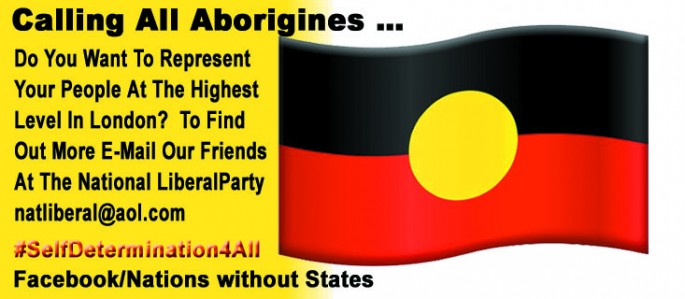
From The Liberty Wall – Nations without States – Calling All Aborigines …

.

NATIONS WITHOUT STATES – NwS – is a pressure group which seeks to highlight the plight of peoples who aspire to nationhood. Its raison d’être can be summed up in one simple slogan: Self-Determination For All!

Those who seek nationhood may be peoples or tribes based within a state or even across borders that may or may not have been independently organised in the past. They might have a linguistic or historical separateness from their neighbours or fellow citizens. All will aspire to recognition, autonomy or independence.

.

As self-determinists, Nations without States supports the right of all such peoples to determine their future whatever they wish that to be.

.

This includes for example the English, Flemish, Kurds, Sikhs and Tamils. A genuine self-determinist supports the right of self-determination globally where it is based upon a sound and just position and is supported by the majority of its ‘national’ community. The slogan ‘what is right for me is right for you’ simplifies why genuine nationalism is actually an inter-nationalist creed, quite separate to chauvinism which seeks advantage for one nation at the expense of others.

.

For many years now, NwS has sought to unite various groups – some who would have previously operated in isolation from each other – in order to strengthen their claim to self-determination. As we noted in issue 1 of Nation – the Newsletter of Nations without States – ‘the only way forward is for self-determinists to unite and fight. We need to follow a strategy which will be conducted both on the streets and in the corridors of power.’


The call to operate ‘on the streets and in the corridors of power’ was followed up in issue 2 of Nation. It detailed several areas where NwS intended to build ‘counter power’ – a parallel system ‘that belongs to self-determinists and not our oppressors.’ This counter power would involve the following:

.

• Build the infrastructure of an alternative mass media of news and entertainment. We’ve made a couple of small steps in the right direction here with the publication of Nation and our street paper Freedom, and the establishment of our Facebook site.

.

• Build both a cultural and counter-cultural movement that’ll provide positive alternatives – especially for our youth – to globalism and modern consumer culture, which is designed to reduce everybody to the lowest common level by abolishing all inherited cultures and identities.

.

• Build a social support network that can provide help, solidarity and humanitarian aid for our peoples both here and abroad.

.

• Build a political movement that engages with various self-determinists with the aim of creating a whole new voting demographic.

.
NwS intends to look at – and expand upon – all of these ideas in due course. But for the time being we’d like to concentrate on the idea of building a new voting demographic.


The reason for this is that later our friends & comrades from the National Liberal Party – NLP – will be standing candidates for the Greater London Assembly elections, scheduled for 7th May 2020 (1). The NLP will be standing under the slogan of Self-Determination For All!

.

The NLP can field a total of 25 candidates. As of a couple of weeks ago nine candidates had been confirmed (2). Initially, the NLP would like to reflect the widespread number self-determinist communities living in the UK (and who would like to be represented, if elected, at the highest level in London).

With the above in mind, Nations without States would like to help the NLP locate potential candidates from the various diaspora communities living in London. We kick off with the Aborigines, the various indigenous peoples of the Australian mainland and many of its islands (excluding the Torres Strait Islands).

.

We appreciate that it’s hard to know if there are any Aboriginal folks living in London. As far as we’re aware, the vast majority still live in Australia – indeed, almost two thirds of Aboriginal people live in urban areas of Australia’s eastern states (3). However, given that Greater London has an estimated population of 8.17 Million (4) it’s not inconceivable that some younger Aboriginal folks – particularly those from an artistic or sporting background – are living in the capital.

.

Even if there are none, both ourselves and the NLP would be interested in making contact with any activists who know about – and support – the Aboriginal Australians.

.

We’re particularly interested in what forms of self-determination are being mooted – such as greater recognition, autonomy or independence – as well as cultural issues. Nations without States are also very interested in bringing these issues to the attention of fellow activists (who’re interested in self-determination) via our Facebook site: https://www.facebook.com/groups/184919468292372/

.

However, with the May Greater London Assembly elections in mind, it’s vitally important that anyone who generally supports the cause of self-determination (and, if possible, the Aboriginal Australian cause) gets in touch with the National Liberal Party as soon as possible.

.

As we noted earlier, the NLP wants to use this opportunity to bring the unique idea of Self-Determination For All! to the attention of London’s electorate. If you fit the bill, please contact natliberal@aol.com as soon as possible!

  1. http://nationalliberal.org/self-determination-for-all-3
  2. http://nationalliberal.org/gla-candidate-meeting
  3. https://www.creativespirits.info/aboriginalculture/people/aboriginal-population-in-australia
  4. http://livepopulationof.com/population-of-london/
Share:
  • Print
  • Digg
  • StumbleUpon
  • del.icio.us
  • Facebook
  • Yahoo! Buzz
  • Twitter
  • Google Bookmarks
  • Add to favorites
  • blogmarks
  • Blogosphere
  • Google Buzz
  • PDF
  • email
  • Live
  • MSN Reporter
  • MyShare
  • MySpace
  • Technorati
  • Webnews.de

New Horizon – National Liberalism In Action – Civil Liberties

JUST OVER five weeks ago we reproduced the second article – Head & Heart – from issue 1 of New Horizon, the online ideological magazine of the National Liberal Party. That article examined how, historically, Liberals adopted nationalism as part of their creed and became known as National Liberals.


We now move onto National Liberalism In Action! which takes a look at (the then) NLP ‘recruitment campaign that focused on Five key policy areas; Civil Liberties, Democracy, Environment, and the NHS.’


The first of these – Civil Liberties – is of great importance to National Liberals. We believe that ‘the defence of personal liberty is at the heart of our mission.’ Indeed, it could be argued that defending everyone’s Civil Liberties is the key to ensuring personal self-determination and freedom.


As always, we encourage thorough debate of our ideas. Therefore, we’d encourage readers to share their when this article is reproduced on either of our two Facebook sites – National Liberals https://www.facebook.com/groups/52739504313/ – and National Liberal Party – https://www.facebook.com/NationalLiberalParty/

,

National Liberalism In Action!

.

The defence of personal liberty is at the heart of National Liberalism. Indeed, it could be argued that defending everyone’s Civil Liberties is the key to ensuring personal self-determination and freedom. Readers interested in Civil Liberties should check our the Facebook group Free Speech: How do we protect it? which supports the idea of Free Thought, Free Speech & Free Assembly For All. It also campaigns for a formal constitution and bill of rights, based on the concept of civil and religious liberties for all. It also feel that a civil rights watchdog should be established to protect the people’s ability to make use of these rights.

WHILST New Horizon is dedicated to promoting, dissecting and discussing the ideology of National Liberalism, we cannot forget those National Liberals who are attempting to put this into practice. We know that there are individuals (groups?) who ascribe to the movement’s ideals throughout the Europe, from Turkey to Scandinavia and beyond, even globally. Here in the UK some are involved in pressure groups such as English Green (a non-socialist green movement), whilst others are in the political party – the National Liberal Party.

.

We shall dedicate a section each issue to those operating in the ‘real’ rather than our ‘cyber’ world. In this first issue we host articles supporting and expanding on the NLP’s latest recruitment campaign that focused on Five key policy areas; Civil Liberties, Democracy, Environment, and the NHS.

.

CIVIL LIBERTIES – A PRECIOUS COMMODITY ‘HARD TO OBTAIN EASY TO LOSE’

.

IN December, nearly 400 years ago, the English Parliament passed an act entitled the ‘Bill of Rights’. It put down limits on the powers of the Sovereign (Monarch) and set out the rights of Parliament and the rules for freedom of speech therein, the requirement to regular elections to Parliament and the right to petition the monarch without fear of retribution. This built upon various other ‘events’ such as the much earlier Magna Carta of 1215 This is the first recorded document where a King, previously ruling under a ‘Divine Right’, accepted that his ‘subjects’ had rights, including the right not to be gaoled without trial. In time, similar various pieces of legislation came to cover the whole of the United Kingdom and make up Britain’s ‘Unwritten Constitution’, in particular the concept of individual rights and liberties. It took many years, much struggle, blood, sweat and tears to achieve.

.

TAKING LIBERTIES …

.

Today however, we see an increasing encroachment upon our civil liberties and individual freedoms. The phrase an ‘Englishman’s home is his castle’ is more than just a quaint phrase. It reflects an historical view that a Government’s writ largely remained outside our ‘ramparts’ and did not extend to personal affairs. In reality this has broken down ever since the end of the first World War with increasing attempts to interfere in our ‘private lives’ or ‘private views’ (should they not conform to the PC – left or right – of the day). It wasn’t always that way*

.

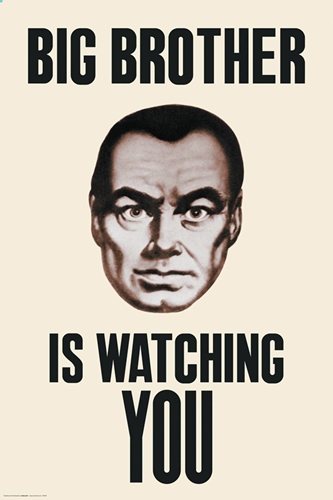
Technology, whilst a ‘liberating’ force for many individuals is also being used to enslave us too. CCTV, continual push for biometric ID cards, communication eavesdropping and monitoring, to name just a few developments that will make it increasingly easier for any future Government to turn 1984 into a reality.

.

History shows that once liberties are surrendered they are very difficult to restore.

.

For National Liberals however the defence of personal liberty is at the heart of our mission. Governments struggle, at best, to resist the lure of power and often seek to centralise authority into their hands. This will inevitably impact upon individual freedoms. In times of heightened threats to national or personal security, Authority will seek to restrict their citizens movements and expression. What are and are not acceptable restrictions are of supreme importance to many. Outside of Authority, National Liberals must be part of societies ‘civic conscience’. Inside of Authority, they must ensure the ‘correct balance’ is struck between personal freedom and collective security and responsibility.

.

To assist in maintaining this balance, we call for the Government appointment of a specific Civil Liberty Watchdog, with some executive blocking powers, to ensure our civil liberties are maintained in the face of private or public threats.

.

The National Liberal Party will continue to expose, and campaign against, the steady encroachment of our individual freedoms and civil liberties. Whilst the main political topics of the day; the economy, immigration, Europe and education presently hold the attention of sections of the public, political parties and the media we believe that concern over loss of civil liberties will one day hold everyone’s attention.

.

* As the famous historian A.J.P Taylor stated in his book English History: 1914-45 ‘Until August 1914 a sensible law-abiding Englishman could pass through life and hardly notice the existence of the state, beyond the post office and the policeman. He could live where he liked and as he liked. He had no official number or identity card.’

.

• ALSO Check out:

.

Build New Horizon! http://nationalliberal.org/build-new-horizon

New Horizon – Head & Heart http://nationalliberal.org/new-horizon-head-heart

Share:
  • Print
  • Digg
  • StumbleUpon
  • del.icio.us
  • Facebook
  • Yahoo! Buzz
  • Twitter
  • Google Bookmarks
  • Add to favorites
  • blogmarks
  • Blogosphere
  • Google Buzz
  • PDF
  • email
  • Live
  • MSN Reporter
  • MyShare
  • MySpace
  • Technorati
  • Webnews.de

Liberty & Nation Says … Wherever You Live – Shop Local This Christmas!

Share:
  • Print
  • Digg
  • StumbleUpon
  • del.icio.us
  • Facebook
  • Yahoo! Buzz
  • Twitter
  • Google Bookmarks
  • Add to favorites
  • blogmarks
  • Blogosphere
  • Google Buzz
  • PDF
  • email
  • Live
  • MSN Reporter
  • MyShare
  • MySpace
  • Technorati
  • Webnews.de

EU Ombudsman complaint

Dr. Jonathan Levy

The National Liberal party believes that the Cryptocurrency ‘world’ needs regulating to protect innocent investors from being fleeced by hackers etc.

Our global attorney Dr Jonathan Levy is leading the charge to get the EU (and individual states such as the UK) to regulate as they have for Banks and other financial institutions. He has now laid an official complaint to the EU Ombudsman (see press release below).
.

December 9, 2019

For Immediate Release

Cryptocurrency Victims Claims

Dr. Jonathan Levy

jlevy@globalattorney.org

info@jlevy.co

+44 20 8144 2479

European Union Commission Accused of Aiding Crypto Crime

EU and UK Singled Out in Maladministration Complain

BRUSSELS: (EU Ombudsman Complaint # 201902197)

A complaint filed by lawyer Dr. Jonathan Levy on behalf of cryptocurrency crime victims, whose claims totaling over €27 million, takes aim not only at the European Commission but singles out the United Kingdom and several other EU member states as safe havens for crypto criminals.

The EU is accused of “maladministration” in regard to cryptocurrency. Maladministration is the technical term for various types of governmental injustice including delay and failure to investigate, take action or follow the law.

Dr. Jonathan Levy represents the Victims and the National Liberal Party, a UK political party with a platform that includes sound cryptocurrency policy. The EU stands accused of knowingly permitting the transfer of billions of Euros from victims to organized crime including the notorious €5 billion One World–One Coin Pnzi scheme which was operated by EU citizens utilizing EU banks for over almost 5 years.  Only on the day of the filing of this complaint did the EU act to remove One World–One Coin from its own Top Level Domain .EU where it had been operating with impunity.

Dr. Levy has long criticized the United Kingdom’s handling of cryptocurrency related claims.  According to Dr. Levy, “The United Kingdom and European Union have rolled out a welcome sign for crypto criminals and provided them unhindered access to Top Level Domains like .EU and .IO, their banking system, companies registration, and have turned a blind eye to the largest transfer of wealth to international criminal organizations since World War Two.”

Levy and his clients seek intervention by the EU Ombudsman to prompt the EU Commission to hold cryptocurrencies, social media networks, domains, exchanges, and domain privacy providers accountable for funding a Cryptocurrency Security Fund to pay out compensation to victims of cryptocurrency criminals.

Copies of the pleadings are available at: http://www.jlevy.co/cryptocurrency-litigation/

For more information or interviews:

Dr. Jonathan Levy

Attorney & Solicitor

+44 (0) 20 8144 2479

info@jlevy.co

Share:
  • Print
  • Digg
  • StumbleUpon
  • del.icio.us
  • Facebook
  • Yahoo! Buzz
  • Twitter
  • Google Bookmarks
  • Add to favorites
  • blogmarks
  • Blogosphere
  • Google Buzz
  • PDF
  • email
  • Live
  • MSN Reporter
  • MyShare
  • MySpace
  • Technorati
  • Webnews.de

Essex Voice Debate (1) – Will Labour Get Hammered At The General Election?

WELCOME TO the first debate hosted by Essex Voice – the voice of National Liberal Party In Essex. With the general election just around the corner, we’ve reproduced an article written by Paul Embery, which first appeared on the UnHerd news website towards the middle of October. You can read the original here:

https://unherd.com/2019/10/as-a-headstrong-activist-i-was-a-dangerous-thing/

Paul Embery is a firefighter, Fire Brigades Union (FBU) activist, pro-Brexit campaigner and ‘Blue Labour’ thinker. In this almost autobiographical article, he notes that when politicians and political activists ignore the wishes of the electorate they’re setting themselves up for a fall. Embery speaks from bitter experience. He was guilty of this himself – he was ‘tin-eared, patronising’ and certain in his own ‘moral rectitude’. Thus the Labour Party in Barking & Dagenham unwittingly acted as midwifes for the British National Party.

We find it interesting that Embery – who could probably be described as a ‘Patriotic Socialist’ – has abandoned his previous ‘far left’ position and now takes a remarkably similar stance to ourselves on many social and economic questions. He’s also predicted that Labour’s abandonment of Brexit – along with its shift to becoming a party of the Metropolitan Middle Class – will eventually result in electoral meltdown.

With the above in mind, our question is simple: Will Labour Get Hammered At The General Election? (Our feeling is that – and if Essex Voice has read the runestones correctly – this Thursday will prove to be ‘pay back’ time for Jeremy Corbyn’s Labour Party.) Share your thoughts when this article is reproduced on either of our two Facebook sites – National Liberals https://www.facebook.com/groups/52739504313/ – and National Liberal Party – https://www.facebook.com/NationalLiberalParty/ It goes without saying that there are no official links between Paul Embery, UnHerd, Essex Voice and the National Liberal Party.

.

As a headstrong activist, I was a dangerous thing

Like Labour, I dismissed the concerns of decent people as they struggled to cope with fundamental social change

By Paul Embery

The last few years of politics have tested loyalties and fractured tribes; for many, it’s tempting to disengage altogether. We have asked contributors to remind us of why politics matters, by reflecting on their formative years. This series of political awakenings shows how family, feelings and unlikely accidents can shape a lifetime of politics…

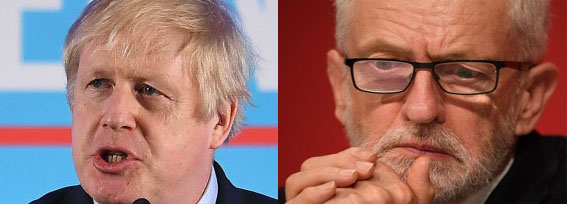
Essex Voice – the voice of the National Liberal Party in Essex – believes that Boris Johnson will be the only one smirking after the general election on Thursday. Unlike previous Tory leaders like Thatcher & Cameron, Johnson isn’t ideological. He is, however, a brilliant actor and knows what to say to please people. Essex Voice feels that this - combined with Labour’s abandonment of Brexit and its shift to becoming a party of the Metropolitan Middle Class – will result in a meltdown at the polls for Corbyn.

I’M SURE THERE must once have been a law passed which prohibited the citizens of Barking and Dagenham from voting anything other than Labour. It would explain why, when I was growing up in the borough, I never met anyone who did such a thing. Such people did exist apparently, but whichever party they voted for never achieved the merest modicum of electoral success locally. Every MP and local councillor in Barking and Dagenham wore a red rosette.

The place was a working class, blue-collar, industrial heartland. The sprawling Becontree estate, built in the 1920s and 30s, was the largest municipal housing estate in the world. Thousands of families, both sets of my grandparents among them, settled there after moving down the track from London’s East End. The Ford motor plant in Dagenham dominated the horizon.

We were the first family in our social circle to own a video recorder. My dad won it in a competition at work. I recall that he recorded the 1983 election night programme on it, and I can see him now, cursing at the TV the following morning when he replayed the tape and discovered the scale of Michael Foot’s annihilation by Margaret Thatcher. I was eight years old, but I understood then that we were Labour. It was tribal. The party was our party. It spoke for people like us.

Trade unions were on our side too. I knew that, because my dad told me he was something called a ‘shop steward’ at his depot, and my mum worked for the GMB. That was good enough for me.

It was natural that I should stand as the Labour candidate at the mock general election held at my secondary school in 1987. (I won by a landslide — though, frankly, it would have taken some effort to lose.)

Later, as life’s grotesque social and economic inequalities became apparent to me, it seemed obvious that the labour movement — the Labour Party and trade unions together — was the only force interested in tackling them. And I wanted to be a part of it.

This innate tribalism and sense of injustice motivated my 16-year-old self to organise (unsuccessfully) a wildcat strike at the supermarket where I stacked shelves, and later to rub up against every boss who sought to exploit work colleagues or failed to treat them with respect.

It was also what inspired me to join the Labour Party at 19 and plunge straight into activism with the Fire Brigades Union (FBU) when I became a firefighter three years later.

The FBU — a proud, powerful union — had its share of hardline activists, many from the ranks of the Communist Party, Socialist Workers’ Party and their fellow travellers. These activists always wielded far more influence than their numbers merited. I fell in with some of them and soon became that very dangerous thing — a person who is utterly certain in his own mind that he is right. Anyone who didn’t subscribe to my worldview, which was so obviously correct, was plainly an Inherently Bad Person. That — trust me on this — is how most radicals on the modern Left think.

I embraced the standard patter and slogans of the far-Left and used them relentlessly in debate. (I often smile when interlocutors use the same language to attack me today — often in a way that suggests they think I have never even heard such clichéd arguments before, never mind deployed them, and will be instantly converted by them.)

Around this time, Barking and Dagenham, then still my home, was experiencing a period of rapid and deep-seated transformation. The settled, stable, culturally homogenous place in which I had been born and raised was suddenly caught in the crosswinds of globalisation. Thousands of newcomers had arrived in the borough in a few very short years. Most were fundamentally decent, hard-working folk, but in a social and cultural sense they had little in common with those who had lived there for years.

Very quickly, Barking and Dagenham found itself in the eye of a storm of national debate over immigration. Local people felt bewildered and disorientated by the abrupt and far-reaching change to their community. Many simply upped sticks and departed. Streets in which neighbours had known each other and grown up together, which had buzzed with friendship and human interaction, were now places of loneliness and solitude in which people often lived parallel lives. The social solidarity and common cultural bonds that had sustained the community over generations were suddenly fracturing.

Not that any of this bothered me at the time. On the contrary, I welcomed it. This was liberal cosmopolitanism in all its vibrant glory. It was enlightened and progressive. All decent people embraced it, didn’t they?

Besides, it was the class war that mattered most, and the newcomers were working-class allies in the battle against capitalism. Who cared if a few reactionary locals were uneasy about this dramatic change to their community and traditional way of life? These bigots, with their stupid notions of place and belonging and cultural attachment, obviously lacked ‘class consciousness’. And why did they doggedly refuse to be won over by the argument that open borders meant improved GDP?

It was because of people like me — tin-eared, patronising, certain in their own moral rectitude — that the British National Party won 12 seats on Barking and Dagenham council at the local elections in 2006. It was the party’s best ever performance in an election. The citizens of the borough, angry and resentful at being ignored and insulted, used the only weapon they thought was left available to them. Abandoned by Labour, they turned to the far-Right.

It was only in the years afterwards, once I had taken the time to actually engage seriously with local people and listen to their concerns, rather than simply bombarding them with boilerplate rhetoric, that I began to understand how wrong I was, how wrong Labour was, and frankly how wrong much of the political establishment was, to dismiss the grievances of communities such as Barking and Dagenham so scornfully.

Here was a place of largely decent, tolerant people who would have been perfectly willing to accommodate a modest and manageable number of new arrivals without complaint, but which had instead been expected to accept fundamental social and cultural change, imposed at breakneck speed. And if they did quibble, they were called racist. No wonder they hit back.

The whole experience taught me that, contrary to what so many on the Left now seem to believe, it isn’t all about the economy or austerity or the class struggle. Of course no place can remain for ever unaltered, but if you are going to foist change upon hard-pressed working-class communities, you had better do it carefully. These places are often bound together organically through a culture of language, custom, solidarity, tradition and social mores passed down through generations. Violate that so casually, and you are inviting blowback.

I am still Labour to my bones. That’s why I argue night and day that the party — and indeed the wider Left — needs to urgently rethink its entire worldview if it is to maintain the support of its traditional base. If we keep force-feeding working-class voters a globalist, liberal cosmopolitan view of the world that fails to resonate with them, we are inviting electoral wipeout. And it would be thoroughly deserved.

Delivering a fairer, more equal economy — crucial though that is — is only half the battle. Millions are crying out for a return to a more rooted, patriotic, communitarian politics that respects their sense of belonging and seeks to build a nation of shared values and common bonds — one in which everyone, regardless of their background, should be encouraged to participate, and where communities are not simply abandoned to the forces of globalisation.

To this day, very few in mainstream politics are speaking for these voters. The lesson of Barking and Dagenham — and I learned it up close and personal — is that if you neglect a community for long enough, the quiet anger will soon become a roar. And the price to be paid will be a high one.

Share:
  • Print
  • Digg
  • StumbleUpon
  • del.icio.us
  • Facebook
  • Yahoo! Buzz
  • Twitter
  • Google Bookmarks
  • Add to favorites
  • blogmarks
  • Blogosphere
  • Google Buzz
  • PDF
  • email
  • Live
  • MSN Reporter
  • MyShare
  • MySpace
  • Technorati
  • Webnews.de

By continuing to use the site, you agree to the use of cookies. more information

The cookie settings on this website are set to "allow cookies" to give you the best browsing experience possible. If you continue to use this website without changing your cookie settings or you click "Accept" below then you are consenting to this.

Close