Wednesday, 21 January 2026

Category » Articles

Fourth World Review – Towards A new Era!

REGULAR VISITORS to this site will be aware that one of the ideals of the National Liberal Party revolves around the concept that ‘Small Is Beautiful’.

This ideal was first put forward by Professor Leopold Kohr over half a century ago in his epochal Breakdown of Nations, and later popularised in Fritz Schumacher’s Small Is Beautiful.

The Reverend John Papworth has also spent decades promoting their work in his well-known and highly respected publication, Fourth World Review.

According to John Papworth, Kohr and Schumacher were “simply arguing that the origins of the modern crisis lay in the fact that governments and institutions (including industries), had become so large as to be uncontrollable under any political label, and that the genuine democratic target lay in making them smaller so people could control them.”

Because of this convergence of views, we are delighted to announce that John Papworth has invited Graham Williamson and Wayne John Sturgeon to re-launch 4WR on the basis of its founding editorial policy. Graham and Wayne are now joint editors whilst John Papworth remains very active serving as an Editorial Board member.

As many readers will be aware, Graham is presently a leading figure in the NLP – he is also editor of the NLPs ideological publication, New Horizon. He is also Chairman of the influential Adamsgate Action Group (a local Hornchurch-based community group), the co-author of the seminal work, A Declaration and Philosophy of Progressive Nationalism, a human rights campaigner and a Consultant for a Public Relations Company.

Wayne has musical roots in the Anarcho-Punk musical scene and counter culture of the 1980s. He would describe himself as a Christian Anarchist with strong Progressive Nationalist and Left Libertarian/Agorist leanings. His writings have appeared in various Anarchist, Libertarian and Counter Cultural publications.

Issue 153 of 4WR is the first in over a year – and the new joint editors have agreed to host this new issue to prevent it being lost to history. They regard the threat of globalisation – which leads to the centralisation of power – is a threat to the belief that ‘small is beautiful’ and the ideas contained within 4WR are now required more than ever!

Those wanting to obtain a copy of 4WR should simply e-mail John Papworth at papworthjohn@yahoo.co.uk and ask for a FREE pdf copy of issue 153.

The re-launch of Fourth World Review also coincided with the unveiling of a new book from the founder and former editor John Papworth at the prestigious Savage club in central London.

A slim book, Why schools of economics and political science should be closed down, seeks to show how ‘modern’ thinking has led man to follow false gods. As its’ forward puts it “In this excellent book, John Papworth goes to the very root of the problem to explain how we the people have all been led to trade in the wisdom of ages contained in Aristotle’s theory of scale for the shallow modern philosophy of ‘just follow the money’. The book juxtaposes the teachings of the ancient thinkers that put the human being at the centre of economic and political theories against the teachings of the modern schools of economics and political science that have made ‘the market’ the central focus”.

Copies can be obtained by sending a cheque for £6 to Arbuckle Books c/o Akin Palmer LLP, 3, Angle Gate, 326 City Road, London EC1V 2PT.

Share:
  • Print
  • Digg
  • StumbleUpon
  • del.icio.us
  • Facebook
  • Yahoo! Buzz
  • Twitter
  • Google Bookmarks
  • Add to favorites
  • blogmarks
  • Blogosphere
  • Google Buzz
  • PDF
  • email
  • Live
  • MSN Reporter
  • MyShare
  • MySpace
  • Technorati
  • Webnews.de

State of the Union – A Federal vision

The National Liberal Party and a federal vision to unite the dis-United Kingdom

Federal Britain: Unity in its' diversity

Federal Britain: Unity in its' diversity

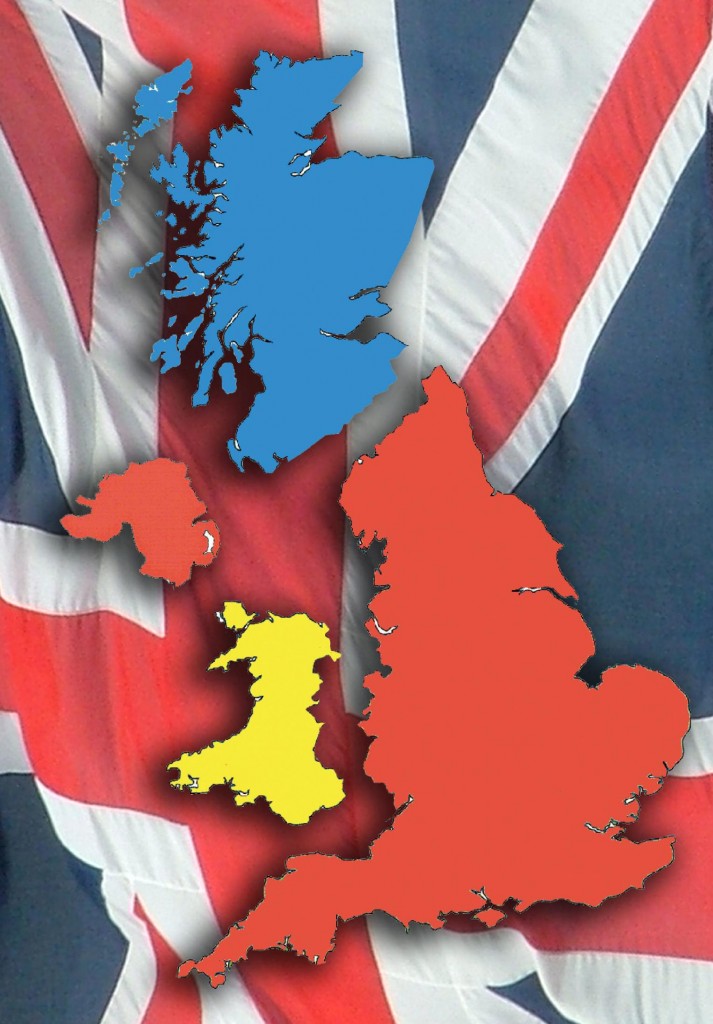
We live in what is supposed to be a United Kingdom and indeed this once was the case. However in 1997 Tony Blair’s Labour regime, transformed what was the United Kingdom into the dis-United Kingdom by introducing a devolution settlement that can only be described as complete fudge. It was a fudged settlement which allowed the Scots, Welsh and Northern Irish to have a government or an assembly working in the interest of their particular nation, whilst England was denied such a democratic institution. It was a fudged settlement which allowed M.P’s from the other home nations to vote at Westminster on matters which solely related to England.

It is likely the basis of the devolution settlement was not to bring about better democracy or recognise the distinct culture of the Celtic nations, but to stem the rising tide of votes for parties such as the SNP and Plaid Cymru. Or to put it another way, to secure Labour seats in the Parliament at Westminster. This fudged settlement remains today, with little hope of the Tories, Lib Dems or Labour ever likely to look at democracy instead of self-interest.

The National Liberal Party is a party which firmly believes in democracy. The people of Wales, Scotland and Northern Ireland chose to have their own devolved Parliament or Assemblies and we accept their decision. Likewise our belief in democracy goes as far as self-determination, and therefore if any of the home nations decide via a referendum that their future rests outside the United Kingdom, we would recognise the majority decision. If this came about, the National Liberal Party would work towards creating a Britannic Conference, whereby close links and co-operation between the former home nations would be nurtured.

Fudged devolution

However, with opinion in all four home nations currently in favour of a ‘United Kingdom’, the National Liberal Party proposes to deal with the current fudged devolution settlement through the creation of a federal UK.

To bring about these changes, we have to ensure democracy and fair representation exists within the UK. As has already been mentioned, the Celtic nations have their own houses where elected representatives can make decisions on items such as health, policing, education and the environment. The National Liberal Party would offer the people of England the opportunity to decide whether they also wished to have their own Parliament, whereby representatives elected in England would solely deal with matters that directly concern England. Opinion polls currently demonstrate the vast majority of people in England wish to have their own Parliament, something the National Liberal Party is happy to support. We recognise the present devolution settlement is unjust, and in England in particular the elderly, the infirm and the young are the ones that are being hit the hardest.

English Parliament

There is a definite need for an English Parliament for several reasons.

• It would allow democratic, accountable government in England.

• It would allow the people of England to express priorities where expenditure is needed and provide a much fairer deal financially.

• It would give greater protection to England’s heritage and culture.

• It would allow the people of England to preserve its national identity and protect its environment.

• It would help unite the people of England, from all identities and backgrounds to decide their future within the UK and the EU.

• It would give a voice and recognition for England.

Federal Britain

As part of our revised devolution settlement, greater powers could be devolved to the houses of all four home nations. Therefore ALL the nations of the United Kingdom would have a greater say in their own destiny. This would allow a reduction in the number of M.P’s currently being sent to Westminster. Through greater devolution of powers, the role of Westminster would mainly be concerned with defence and issues of national (involving all the home nations) and international affairs. Internal affairs (within each home nation) would then be the responsibility of each devolved government. This is the nature of a proper federal state and will ‘square the circle’ of the present imbalance.

As an aside, we support the principle of Subsidiarity which means the different organs (Westminster, Parliament, Councils) are responsible for what they need to be responsible for and thus handled by the smallest, lowest or least centralized competent authority. This in effect will mean a devolution of power downwards from Westminster and Parliaments/Assemblies.

The National Liberal Party is one of true democracy. Currently in the United Kingdom, through the failings of all the main parties to put the interests of the people before their own political aspirations, true democracy has been denied. We have been force fed democracy for political self-interest, rather than democracy for national interest.

Our policy for a federal United Kingdom is built upon Liberty, Democracy and Independence, the three pillars of National Liberalism. It would offer each home nation far greater control of their internal affairs and tackle the fudged mess we currently live with.

Share:
  • Print
  • Digg
  • StumbleUpon
  • del.icio.us
  • Facebook
  • Yahoo! Buzz
  • Twitter
  • Google Bookmarks
  • Add to favorites
  • blogmarks
  • Blogosphere
  • Google Buzz
  • PDF
  • email
  • Live
  • MSN Reporter
  • MyShare
  • MySpace
  • Technorati
  • Webnews.de

American Censorship Day
Today is American Censorship Day. The US Congress is voting on a bill to empower their government to order service providers to block websites for infringing links posted by any users. It is pretty obvious it will be used by ‘spoilers’ to cause problems for those sites they don’t like or Government Agencies to do the same!
Why concerned about the US? Well they host the most websites which could lead a direct attack on those sites hosted by a US server regardless of the websites ‘home’, US based sites such as Twitter and You Tube will be at risk and, if successful, you can be sure politicians in the UK will want to copy it here (as they send our troops to wherever the US wants them!). The National Liberal party will always support our citizens liberty. This is just such a cause.
Visit the American Censorship website at http://americancensorship.org/ and sign the Avaaz petition too at http://www.avaaz.org/en/save_the_internet/?cl=1390703454&v=11160
Share:
  • Print
  • Digg
  • StumbleUpon
  • del.icio.us
  • Facebook
  • Yahoo! Buzz
  • Twitter
  • Google Bookmarks
  • Add to favorites
  • blogmarks
  • Blogosphere
  • Google Buzz
  • PDF
  • email
  • Live
  • MSN Reporter
  • MyShare
  • MySpace
  • Technorati
  • Webnews.de

Mass Immigration – Let the People (always) decide!

IT SEEMS that e-petitions are like busses. You wait ages for one – and then two come along at once!

Last week we highlighted the latest move by the Campaign for a Referendum. (The CfaR is a cross party initiative led by Independent MEP Nikki Sinclaire. Earlier this year they gathered 120,000 signatures demanding a referendum on Britain’s membership of the EU. This petition forced the debate in Parliament late last month. Here, an alliance of Con-Dem Government and the Labour-led ‘Opposition’ voted against allowing the British people a vote in a referendum on the EU.)

However, not to be undone, the CfaR have launched another petition – The European Union – LET THE PEOPLE DECIDEcalling for an EU Referendum. Over 5000 people have already signed this new petition. You can find it here: http://epetitions.direct.gov.uk/petitions/20911?utm_
source=EVERYTHING&utm_campaign=07e246ef83-EU_PETITION11_1_2011&utm_medium=email

Another successful e-petition doing the rounds has been launched by Sir Andrew Green of Migration Watch UK. MGUK is “an independent, voluntary, non political body which is concerned about the present scale of immigration into the UK.”

The Parliamentary Reform Bill ensures that any petition of 100,000 signatures is eligible for a formal debate in the House of Commons. MGUKs petition has already attracted well over the 100,000 signatures needed.

However, the National Liberal party calls upon as many people as possible to continue signing this petition. We feel that it is essential that Parliament knows the depth of feeling relating to the subject of mass immigration. We also need to force MPs to deal with questions they would rather sweep under the carpet.

Mass Immigration is not about asylum

We also feel that it’s necessary to make MPs understand that mass immigration has nothing to do with genuine political asylum. They are completely different and should be treated as such.

Mazzini

The NLP supports genuine political asylum seekers like one of our historical 'heroes' the Italian nationalist and liberal Giuseppe Mazzini. However, we are completely opposed to mass uncontrolled immigration.

For instance, Britain has a rich and noble tradition of providing political asylum. Indeed, one of the NLPs historical ‘heroes’, the Italian nationalist and liberal Giuseppe Mazzini, took advantage of this whilst hiding from Austrian and Italian Monarchist agents in the 19th Century.

Mass immigration, on the other hand, represents a mass ‘free for all’. It makes it impossible to tell who is in the country and who isn’t. Anyone – particularly those who live in inner-city areas – will be able to testify that it puts an intolerable strain on public services. Indeed, if we don’t know how many people are in the UK, how can we even begin to plan for housing, schools, health care and transport?

The MWUK e-petition notes:

Over the past ten years the government has permitted mass immigration despite very strong public opposition reflected in numerous opinion polls. We express our deep concern that, according to official figures, the population of the UK is expected to reach 70 million within 20 years with two thirds of the increase due to immigration. While we recognise the benefits that properly controlled immigration could bring to our economy and society, this population increase, which is the equivalent of building seven cities the size of Birmingham, will have a huge impact both on our quality of life and on our public services yet the public has never been consulted. So we call on the government to take all necessary steps to get immigration down to a level that will stabilise our population as close to the present level as possible and, certainly, well below 70 million.”

You can sign the No to 70 million e-petition here: http://epetitions.direct.gov.uk/petitions/19658
Share:
  • Print
  • Digg
  • StumbleUpon
  • del.icio.us
  • Facebook
  • Yahoo! Buzz
  • Twitter
  • Google Bookmarks
  • Add to favorites
  • blogmarks
  • Blogosphere
  • Google Buzz
  • PDF
  • email
  • Live
  • MSN Reporter
  • MyShare
  • MySpace
  • Technorati
  • Webnews.de

Facebook Politics

The Internet has been a liberating force in the interests of free speech and truth. The alternative viewpoint, the small party and dissidents are able to expose orthodox politicians and corporations to a scrutiny that the establishment media does not. Of course, it is also used by the mischievous and ‘trolls’ who aim to spread disinformation too! Nevertheless, it does allow a viewpoint the chance of being heard by thousands, possibly millions of people that otherwise wouldn’t be exposed to the message.

One of the spin-offs has been a growing social media e.g. Facebook where people interact to discuss all manner of things. Groups also have a chance to discuss matters of interest instantly and to a wide audience. The National Liberals presently have two facebook groups, one largely to highlight stories on our website http://www.facebook.com/pages/National-Liberal-Party/160937907279184, the other to debate ideas at http://www.facebook.com/#!/groups/52739504313/ Feel free to join.


Q&A

There are also other groups that provide debating services for all parties and ideas. One such is the popular and growing site Politics UK at http://www.facebook.com/#!/PoliticsUK The site is not only ‘open-minded’ but ‘libertarian’ in that it tries not to censor views and prevents extremists from hijacking or suppressing debate. A member of the National Liberal Steering Committee, Graham Williamson, was asked to take part in their ongoing Q&A series for political parties. We thought you might be interested in his answers to some set questions.

1. What are the you’re party’s 3 main policies?

Referendums – The National Liberal Party feels that it is not right that Governmental decisions are taken without regard to the wishes of the people. The only way of course, to test those wishes would be via a public vote, a referendum(s). In Switzerland, arguably one of the most successful democracies in the world, referenda is regularly used, which proves beyond all doubt, consulting the people, and not ignoring them, can definitely work.
We have recently launched a petition entitled ‘Consult the People’ http://www.gopetition.com/petitions/consult-the-people.html which specifically calls for referendums to be used to ascertain the people’s view. This is, in our view, the basis of any genuine democracy.

Civil Liberties – For National Liberals the defence of personal liberty is a core policy. Governments struggle, at best, to resist the lure of power and often seek to centralise authority into their hands. This will inevitably impact upon individual freedoms. In times of heightened threats to national or personal security, Authority will seek to restrict their citizens movements and expression. What are and are not acceptable restrictions are of supreme importance to many. Outside of power/influence, National Liberals must be part of societies ‘civic conscience’. With power/influence, they must ensure the ‘correct balance’ is struck between personal freedom and collective security and responsibility. To assist in this, we call for a specific Civil Liberty watchdog, with some executive blocking powers, to ensure our civil liberties are maintained in the face of private or public threats.

Renewable Energy – A developed society such as ours consumes a great deal of energy. Much of that is presently of a finite quality or pollutes. Since we reject the nuclear option as expensive and dangerous, we should invest more heavily in cleaner ‘fossil fuel’ and renewable energy technology. We would, for example, ensure all properties included solar panelling (which is becoming more efficient). Technology can of course be used to produce cleaner (as well as more of any) energy.

2. Should smaller parties have a “vision” or a manifesto?

It should have both. The vision represents the ‘goal’ i.e the type of society they envisage whilst the policies (Manifesto) describe the ‘tools’ they will use to achieve it. We are presently heavy on vision and light on policy but our Steering Commission will be unveiling a Statement of Policy (manifesto) in the New Year.

3. Should we have a referendum on the EU, if yes, when?

Given that we believe in the use of Referendums as a principle then the answer has got to be yes! However, we do believe that, despite what Europhiles and Eurosceptics say, that it might be possible to renegotiate the UK’s (or any country’s) relationship within the EU.

As has been stated many times and by all but the most pro-Europeans (who conveniently remain silent on the matter) the UK joined and later voted to remain in a Common Market i.e. a trading bloc. It was even presented as such by Europhiles and there was no talk of it evolving. Of course, anyone who has studied the motive and agendas of the European Commission and their party political supporters, especially on the Continent, will be aware that that was never going to be the end of the matter. For them everything is a stepping stone to a United States of Europe.

That said there is no reason why a largely trading relationship (plus some Regional co-operation on matters of common necessity) could not be worked out for those European countries that don’t wish to be absorbed by an ‘ever closer Union’? After all, countries outside the EU are not at ‘war’ with members and bilateral relations are good.

It is true that the Eurocrats are determined to continue with centralising power. Indeed, in reaction to the problems of the Eurozone, they (and most of the political leaders) are demanding that members budgets and taxation regimes are brought into line and threatened an all or nothing reaction (in or out of the EU!) to Greece if they had been allowed to vote to reject the bailout proposals.

However, most of these threats are idle and the upshot of the crisis is likely to further centralisation (in the Eurozone). This in effect is leading to a ‘two-tier’ Europe and thus offers a window of opportunity for the ten countries outside to negotiate a new (trading) relationship within the EU. If our Government has the will to do so (and Cameron has talked about ‘clawing back powers’) we believe an acceptable deal could be brokered.

If so a referendum, offering a Yes to one of the three questions (In, Out, New Deal), as put crudely by the recent House of Commons motion, should take place as soon as a deal is brokered. If there was no acceptable deal offered, the referendum would simply offer an In or out of the EU. Under such circumstances we would recommend withdrawal.

4.What is you’re party’s “route” into mainstream politics (e.g. local elections, Scottish, Euros…)

Initially, it is to highlight our position in political society, to show to liberals (and their critics) that the desire to protect personal freedoms and liberties is not the preserve of out-of-touch ‘do gooders’ but is (or should be) the concern of all of us and to show to ‘patriots’ (and their critics) that preserving the nation-state is also important in preserving our liberties and protecting us from the designs of big business or ‘big politicians’.

Thereafter, it will be to build the party from the bottom-up by electing councillors independently or in partnership. Without PR it will be very difficult to elect someone on a higher level so we would see partnership as the best way to cover that next phase. This will involve the creation of a ‘Coalition of the Centre’ that will include small parties of centre-left and right that will co-operate in campaigns and maybe elections, whilst retaining their independence. Such partnerships are the future for small parties.

5. Would you say you are on the left, the right, the center or another third way?

We believe we are part of the (radical) centre as we believe in some fundamental changes to our political system i.e. a Swiss style democracy, but see this occurring through political evolution rather than revolution.

6. What is you’re policy on ‘votes at 16‘?

Despite the legal adult age being 18, most 16 year olds are treated as adults in practice so having the vote seems logical. As an aside, however, I am not sure that giving 16 year old’s the vote will break the cycle of apathy since many adults over 18 year old’s are equally apathetic/disaffected despite having the vote!

What we sorely miss in this country is any real attempt at inculcating a sense of citizenship (as apart from brainwashing!) in the public. We in the UK have, unlike many other countries, always treated politics as something ‘someone else’ does. This apathy is encouraged, in my opinion, by professional politicians who are only interested in the public every so often at voting times and would rather keep the masses in ignorance, lest they actually support change! Once upon a time children were taught British Constitution lessons, thoroughly turgid but better than nothing. And nothing seems to be on the cards as the now named Citizenship lessons are under threat.

A young man from Bethnal Green however is campaigning to keep lessons and is petitioning the Education Secretary and can be supported by visiting his website or on facebook at Hands up who’s bored. He deserves backing since calls to reduce the voting age, while increasing those voters political ignorance, just doesn’t make sense!

7. What is you’re own personal view on ‘benefit tourism’?

Clearly there is a problem of fraud everywhere in life. Some people try and get something for nothing. BT, I believe refers to EU nationals moving to Britain in order to obtain more generous benefits. There are also those who arrive specifically to benefit from our overworked and underfunded NHS for treatment or to give birth. Of course, it is exploitation and should be restricted. I would include it as part of any renegotiation of our EU relationship.

8. Under you’re leadership, where do you see the party in a year’s time?

Well I am not the ‘leader’ as such for we are presently run by a four man Steering Committee, pending a new constitution in the new year. Nominally, the nearest position we have to a leader would be our National Secretary, Glen Maney, who is an ex-Liberal Democrat activist. That said, I would like us to have re-established in the political milieu the philosophy of National Liberalism, based upon the ideas of an ‘alternative liberal’ tradition (in the 19th century it was THE main strand of liberalism throughout Europe) as personified by figures such as Hoare-Belisha, Chamberlain and Roseberry, who combined a patriotism with their liberalism. .

9. Why should people join you’re party?

If they believe that our personal freedoms are under threat and need to be protected, that our democracy is too reliant upon professional politicians and should be ‘devolved’ to the people and that our nation-state should be maintained and protected from the excesses of globalisation or the designs of supra-national bodies such as the EU, then they can promote these principles via the NLP.

10. What one thing would you change about the british political system?

Apart from introducing referendums based upon the Swiss system I would introduce PR into elections. The present system is not representative of the electorate. It is of course designed to create an Authority (Westminster/Council) based upon a single party but in doing so prevents the views of many being represented in these bodies. It is not surprising there is a growing apathy when the system is designed to strangle independent and diverse opinion from gaining recognition. PR will re-energise political life.

Share:
  • Print
  • Digg
  • StumbleUpon
  • del.icio.us
  • Facebook
  • Yahoo! Buzz
  • Twitter
  • Google Bookmarks
  • Add to favorites
  • blogmarks
  • Blogosphere
  • Google Buzz
  • PDF
  • email
  • Live
  • MSN Reporter
  • MyShare
  • MySpace
  • Technorati
  • Webnews.de

Renewable energy are we serious?
In a Q&A interview on renewable energy http://nationalliberal.org/?p=3103 we discussed the value and prospects of developing renewable energy. If we are serious about reducing our dependency upon fossil fuels, let alone nuclear, we have to invest in renewables. Solar power costs are largely ‘upfront’ because of the capital investment (and company profitability). Government has to walk the walk instead of trying to get PR benefits from saying the right thing without commitment.

In response to the shock announcement that the Government is to slash its subsidy for installing solar power, our Energy Policy Advisor, businessman Pramjit Sadra of Viking Renewables, shares with us his views

We as a company were aware of this pending change but thought that it would come into effect in April 2012. The loser as always seems to be the consumer.

David Cameron recently had a meeting with the Big Six energy suppliers only to emerge from that get together with the ‘ground breaking’ suggestion we all look to switch supplier with a comparable tariff, presumably one of the six?! I find strange that this particular announcement has been made so soon after that meeting which was set up to discuss the hike in energy prices. One wonders what was discussed? (the NLP would beef up the energy (and other) watchdogs to ‘cap’ or reduce prices-Ed)

It seems that the Government have shot themselves in the foot somewhat with this whole scheme as the reason given for the reduction in tariff is due to installers charging such high prices. This is ignoring however the reduction of the price of panels and other components falling recently. However the fall has been due in part to a higher demand so there are more companies manufacturing, more companies selling and installing.

The Government accredited MCS certification, that is needed by companies to install the systems, should have been aware of the prices these unscrupulous companies were charging (I read a report only last month that a 5 or 6 panel system being sold for just over £19,000). If they were concerned (and I am) and wanted to stop this practice of ‘overcharging’ why did they simply not revoke the MCS certificate? In this way they could have continued with the same level of tariff and thus allow ordinary people to help combat their rising energy bills.

There was talk within Government circles regarding a Green Fund which would be available to each household to spend but unfortunately this has not been put in place and it has not been clarified as to what will be covered by the fund. Obviously we are hoping that renewable energy will/would fall within it (Such a fund could also implement our policy of ensuring all new homes have solar power installed – Ed).

That all said, even with the lower tariff this system (solar panelling) will work but we as consumers will have to be very aware of the prices we are paying for our system!

Pramjit Sadra – NLP Policy Advisor (Energy)
vikingrenwableuk@gmail.com

(If you are concerned about the reduction of this subsidy and the stranglehold that the Big Six energy suppliers have on our energy please sign the Friends of the Earth petition at http://www.facebook.com/l.php?u=http%3A%2F%2Fwww.foe.co.uk

Share:
  • Print
  • Digg
  • StumbleUpon
  • del.icio.us
  • Facebook
  • Yahoo! Buzz
  • Twitter
  • Google Bookmarks
  • Add to favorites
  • blogmarks
  • Blogosphere
  • Google Buzz
  • PDF
  • email
  • Live
  • MSN Reporter
  • MyShare
  • MySpace
  • Technorati
  • Webnews.de

By continuing to use the site, you agree to the use of cookies. more information

The cookie settings on this website are set to "allow cookies" to give you the best browsing experience possible. If you continue to use this website without changing your cookie settings or you click "Accept" below then you are consenting to this.

Close