




Country Report/Lebanon
For many in the West, for so long settled within secure national borders and taking the existence of basic liberties for granted, the notion of political Nationalism and even Liberalism is an anachronism. The idea that they are relevant goals/values for political action today is beyond their comprehension.
That their nation state is a target for extinction from the EU, that borders have become porous within and largely from outside Europe, that we (in the UK) are one of the most ‘spied’ upon citizens via CCTV in the world, that political establishments want access to all our digital records whilst ‘regulating’ (nee restricting) the Internet to boot, is lost on the majority.
In some countries however the threat or loss of sovereignty and/or threats to civic rights are acute political and social issues and are reflected in their political parties. One such country that suffers from both is Lebanon.–
–
Independence
Threatened by Syria to the East and Israel in the south the country has been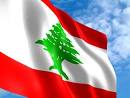 invaded on numerous occasions. Distinct religious differences have often erupted into civil wars and political assassination. The country has often been destabilised by the Israeli-Palestinian conflict which has resulted in Shia paramilitaries such as Hezbollah shelling Israeli who in turn retaliate or occasionally by incursion. Thousands of exiled Palestinians reside in camps not able or willing to integrate and sometimes clashing with the Government. Syria has also coveted the eastern Bekka Valley and intervened in favour of one side or another. Naturally some of the warring groups have thrown their lot in with either of their two neighbours either militarily (with militias) or politically.–
–
Religious splits
Trying to hold the country together against invaders and their supporters from within has not been an easy task. A nationalist in Lebanon, as apart from one only interested in a particular community i.e. Christian or Muslim (Sunni and Shiite), has struggled to stand out. The complex divisions have resulted in a myriad of parties, most confessional i.e. supporting one ‘religious’ community or another.
–
Liberal Constitution
Compared to many Arab states Lebanon regularly holds open elections and has a liberal constitution which provides for freedom of religion and the freedom to practise religious rites. It also declares an equality of rights and duties for all citizens without discrimination or preference whilst establishing a balance of power among the major religious groups. Thus parliamentary seats are divided 50:50 between Christan and Muslim (this may one day be revised due to a growing Muslim population).
 However on the other hand authorities often detain political opponents without charge and have been accused of torture, and a ‘paramilitary’ culture still persists in some areas resulting in intimidation and conflict. In order to keep everyone happy (sic) certain freedoms of expression, particularly criticism of religion, have also been curtailed.
After a period of stability the assassination of the pro-Western Sunni PM Rafic Hariri in 2005 was a setback and a special tribunal suggests that Hezbollah and Syria may have been involved. Tensions are once again rising. Consequently political parties are largely divided into two major blocs – the Government one composed of a centrist largely Christan group known as the Change and Reform and a Shiite pro-Syrian grouping, March 8; the opposition known as the March 14 Alliance composed of anti-Syrian, mainly moderate Sunni Muslims and Christian nationalists.
–
National Liberal Party
Amongst a confusing and volatile mix of parties stands one (linked to the Christian opposition) that has maintained a national (independent) and even enhanced its liberal (civic rights) viewpoint since its formation in 1958 – the National Liberal Party or the Hizbu-l-waTaniyyīni-l-aHrār http://www.ahrar.org.lb/.
 Led since 1990 by Dory Chamoun (son of an ex-President and founder of the party), he has maintained an uncompromising line towards the preservation of Lebanese independence, campaigning against Syrian interference but also Israeli too. The party, although small and secular, like most parties is largely restricted to a community (Christian). Under Mr Chamoun though it has firmly supported the distinctive liberal practises of freedom of expression and religion as guaranteed, but often not practised, in the Constitution. It is one of the most Liberal of the (Christian) Nationalist parties.
Although coalitions are common in the ‘personalised’ politics of Lebanon it was a major supporter of the Qornet Shehwan Gathering (a Christan ‘People’s Alliance’?) which aims to preserve Lebanese independence from interference, a modern democratic constitutional government, religious and national reconciliation and a just peace settlement between Israel and the Palestinians. Sadly the NLP left claiming corruption (an endemic problem in the country) amongst some of the participants.
–
Middle-Eastern Switzerland?
Lately they have been campaigning for Lebanon to take a totally neutral line (like Switzerland) and not interfere in neighbours domestic politics and maintaining the independence of the Judiciary.
We believe there is likely to be a similar party(s) rooted amongst the Sunni community and we would welcome any suggested candidates? In the meantime we salute Mr Chamoun resolve in maintaining his National Liberal line despite Lebanon’s fractious and turbulent politics.


Date: June 23, 2011
Categories: Articles
 MPs believed that the imposition of tariffs was the only way that British industry could be protected from ‘export dumping’ from abroad. Only when everyone was protected could tariffs be removed through negotiation for mutual benefit (similar to Nuclear ‘downsizing’). The price to pay for following that policy was a split in the Liberal Party between Liberals and Liberal Nationals.