Sunday, 18 January 2026

Category » Articles

Global Markets Free Nations

.

.
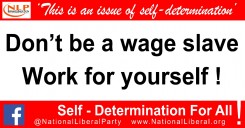
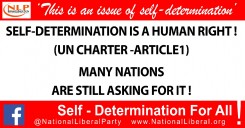
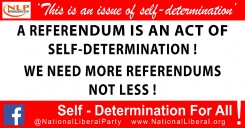
THE NATIONAL LIBERAL PARTY is running its own campaign designed to promote a NO vote in the forthcoming European Referendum. To date we’ve produced several e-posters (1 – 5) which are being viralled out via social media. As can be seen, they’re a mixture of both ‘in your face’ and more nuanced e-posters. All of them cater for different people. We will be producing many more in the run up to the Referendum itself.

However, the NLP is also working in conjuction with the Friends Party and Libertarian Party and endorsed by others to promote a positive vote Leave the EU campaign.

This campaign is named Global Markets Free Nations. It seeks to highlight the positives of ending the UK’s membership of the European Union. Global Markets Free Nations would prefer to see small, free and independent states rather than large power-blocs that lead to conflict and seek to grow at the expense of others.

We will be looking at this campaign group – as well as some others which advocate freedom – in a little more detail in the next couple of weeks. In the meantime, we’d encourage all National Liberals to visit the Global Markets Free Nations Facebook site here: https://www.facebook.com/globalmarketsfreenations/

We’d also encourage as many people as possible to become active with this group. Information stalls and door-to-door leafletting sessions have already started and a hardcopy campaign poster is also planned.

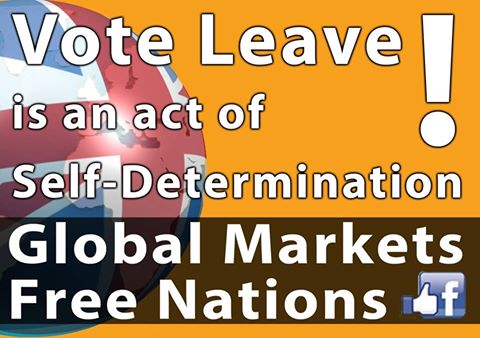
Displayed above is the first of a series of e-posters that has already been produced. It specifically looks at the reason why the NLP is promoting a NO vote – on the grounds of self-determination and decentralisation.

You can also find this e-poster here https://www.facebook.com/globalmarketsfreenations/photos/a.899339370178685.1073741828.866929033419719/903967673049188/?type=3&theater and we’re asking all of those who oppose Britain’s membership of the EU to ‘like and share’ it via Facebook and to link it via their Twitter accounts and ask others to RT it. Do it today!

1) http://nationalliberal.org/open-your-eyes-and-say-no-to-the-eu

2) http://nationalliberal.org/national-liberal-party-for-europe-against-the-eu

3) http://nationalliberal.org/england-says-no-to-the-eu

4) http://nationalliberal.org/for-a-europe-of-the-peoples

5) http://nationalliberal.org/scotland-says-no-to-the-eu

Share:
  • Print
  • Digg
  • StumbleUpon
  • del.icio.us
  • Facebook
  • Yahoo! Buzz
  • Twitter
  • Google Bookmarks
  • Add to favorites
  • blogmarks
  • Blogosphere
  • Google Buzz
  • PDF
  • email
  • Live
  • MSN Reporter
  • MyShare
  • MySpace
  • Technorati
  • Webnews.de

Distributism – Beyond Capitalism & Socialism!

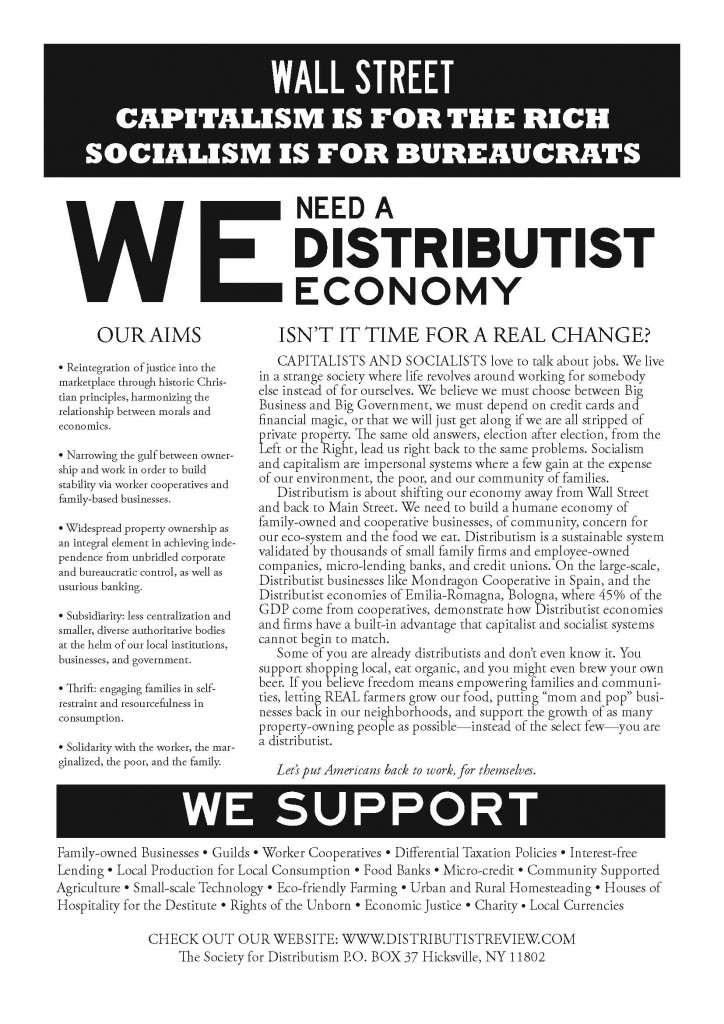
US artwork which seeks to illustrate the similarity between capitalism and socialism. Distributism ensures that power is not concentrated in the state, people are free and there’s a focus on individual responsibility and the family. Distributism also means that power is not concentrated in large corporations and banks, there’s more equality, and more of a sense of community.

‘AS EVERY DISTRIBUTIST KNOWS, there are three basic economic systems. The first upholds private ownership of the means of production but concentrates it in the hands of the few, thus leaving the greater portion of the population with no choice but to sell the only thing that they own, their labour, in exchange for the means of subsistence. This is the capitalist system. The second system rejects private ownership of productive property in favour of collective ownership, whether this collective ownership be entrusted to the State or to a series of smaller community bodies. This attitude towards capital is the central tenet of socialism. The third and final alternative maintains the institution of private ownership, but insists that this ownership must be generally apportioned so that as many people as possible may enjoy their own share in the productive property of the nation. This is the model which has come to be known as ‘Distributism’. Every economic system (whether extant or merely possible) is a variation on one of these themes or a partial combination of some of their key aspects and tendencies.’


THE ABOVE comes from an article entitled Social Credit: An Introduction for Distributists (1) published by The Distributist Review, an online magazine that examines culture, politics, and economics from a distributist perspective.

We’ve reproduced this very brief description of distributism – and how it differs in relation to capitalism and socialism – as a follow up to our recent article The Panama Papers Scandal (2). Here we noted that dodgy dealing via off-shore accounts and tax havens was really an integral part of capitalism. This is because capitalism is essentially an economic philosophy and way of life based on sheer greed and exploitation.

We share the general anger at the revelations reported by the media. However, despite the many demonstrations and denunciations, no one has really suggested a genuine alternative to capitalism. Indeed, Dodgy Dave is now so unconcerned that he views the fall-out from the Panama Papers Scandal as merely bad PR.

The National Liberal Party will be featuring another article about this affair in the very near future.

In the meantime we can only reiterate that, in our view, capitalism (and socialism for that matter) should be replaced by a completely new system – and that system is distributism!

(1) http://distributistreview.com/social-credit-introduction-distributists/

(2) http://nationalliberal.org/the-panama-papers-scandal

Share:
  • Print
  • Digg
  • StumbleUpon
  • del.icio.us
  • Facebook
  • Yahoo! Buzz
  • Twitter
  • Google Bookmarks
  • Add to favorites
  • blogmarks
  • Blogosphere
  • Google Buzz
  • PDF
  • email
  • Live
  • MSN Reporter
  • MyShare
  • MySpace
  • Technorati
  • Webnews.de

The Panama Papers Scandal

THE ONLY thing that surprises us about the Panama Papers scandal is that so many people have been surprised by it! Indeed, who would have believed that unscrupulous capitalists would have salted away their loot so that they wouldn’t have to pay various taxes. Perish the thought!

Let’s get one thing clear – Capitalism is not a system run by kind hearted businessmen and women who just want to provide a few jobs, help the community and make a few quid profit into the bargain. Capitalism is nothing of the sort. Capitalism is based on sheer greed and exploitation.

And as the National Liberal Trade Unionists- http://nationalliberal.org/from-the-liberty-wall-%e2%80%93-national-liberal-trade-unionists-%e2%80%93-do-immigrants-cause-unemployment– have previously noted, capitalism is ‘a highly unstable and unfair system – it fluctuates between boom and bust at fairly regular intervals and allows for poverty amongst plenty.

However one thing always remains the same. And that is it’s a system that’s always stacked in favour of a very tiny minority as opposed to the vast majority.

The capitalist system is also to be opposed as it views all working folks (both blue and white collar) as mere worker ants. At the end of the day, everyone is expendable. It’s a ‘dog-eat-dog’ system whereby profit is the name of the game.

Capitalism knows no loyality or compassion. It’s the sole ‘mover and shaker’ behind the whole move towards globalisation. Indeed, it’s the only beneficiary of the policy of allowing free movement of capital and labour. This is why various industries are happy enough to ‘up sticks’ and chase – and exploit – lower wages across the globe.’

Caught in a trap? David Cameron is only one of the super-rich political and financial elite who have been caught up in the Panama Papers scandal.

With this in mind, should we really be surprised at the tax dodging shenanigans of the super rich?

Let’s be honest with ourselves, none of us really likes paying taxes (indeed, the NLP is more than sympathetic with the view that ‘taxation is theft’) but under the current financial system it’s a necessary evil. Sadly, taxes will remain with us until we totally change the financial system – from one based on debt to one based upon positive money.

However, what sticks in the craw is the fact that there appears to be one rule for them and one for the rest of us. The super-rich elite (the 1%) simply employ off-shore tax havens whilst the rest of us (the 99%) just pay our way.

So where does this leave us?

First of all, it’s clear that we need to dump the current capitalist system which only really benefits the very, very few. But what do we replace it with? Certainly not socialism, which at root, is merely a form of state capitalism. For all of its fine talk of equality, in practice socialism is elitist as the Party bosses tend to rule the roost.

The view of the National Liberal Party is that neither capitalism nor socialism are desirable economic models. They should both be replaced by distributism. Simply put, distributism is a system whereby ‘a just and sustainable social order can only exist in which the ownership of property and the means of production, distribution and exchange are widespread.’

For the moment, we’re happy enough to let people know that an alternative to capitalism and socialism exists. However, in the future we’ll be spending more time explaining the ideas behind distributism.

The second thing that strikes us about the Panama Papers scandal is that we’ll need to take an in-depth look at the way money – and thus wealth – is created. For instance, how many people are aware that, instead of letting private banks create money, the state could create it – debt free – and spend the money into the economy?

Once again, we’ll be looking at saner alternatives to the current economic system in the near future.

Share:
  • Print
  • Digg
  • StumbleUpon
  • del.icio.us
  • Facebook
  • Yahoo! Buzz
  • Twitter
  • Google Bookmarks
  • Add to favorites
  • blogmarks
  • Blogosphere
  • Google Buzz
  • PDF
  • email
  • Live
  • MSN Reporter
  • MyShare
  • MySpace
  • Technorati
  • Webnews.de

Disability: A Voice For Change

FOUNDED in 2005, the Huffington Post is an online publication which acts as a news aggregator – collecting syndicated web content sybdicated web content such as online newspapers, blogs, podcasts and video blogs (vlogs) in one location for easy viewing.

One British blogger who regularly posts on the Huffington Post site is West Midlands-based Simon Stevens.

According to his blogs, Simon is ‘a leading independent disability issues consultant, controversial inclusion activist and trainer, and social change agent, with vast experience and expertise in a wide range of fields including disability equality, independent living, social care, lifestyle advocacy and secondlife.

My website is www.simonstevens.com
My email is simon@simonstevens.com

I have worked with many organisations of all types over the last 15 years locally, nationally and internationally including Scope, Warwick University, Channel 4, Department of Health, Council of Europe, National Housing Federation and eBay. I have also been a trustee of Skills for Care as someone who uses services I am the founder and owns of, Wheelies, the world’s first disability themed virtual nightclub, and star of Channel 4’s disability prank show, I’m Spazticus. I am also a regularly blogger from the Huffington Blog.

Born in 1974, I have cerebral palsy which affects my speech, balance, hand control and continence in a significant manner, as well as providing mw with a very good sense of humour in a positive way. I also have asthma, acute neuropathy which means I am in constant nerve and muscle pain, and a mild form of bipolar, making my life interesting to say the least. Despite my difficulties and the level of everyday discrimination I have faced that has assisted me to help others by my willingness and openness to discuss my experiences.

I have had a vast range of life opportunities and experiences. I have travelled widely around Europe and the world for work as well as for fun, and taken part in many sports and especially water sports. My mission in life is to make an active contribution to supporting disabled people and others to maximise their life opportunities and experiences through all my activities.’

Please note that there is no official link between the National Liberal Party and Simon Stevens. Thus, it should not be taken that Simon endorses the NLP or that we unconditionally support everything that he writes. We reproduce his blog – from June of last year – in the interest of sparking debate relating to disability issues.

.

Political Battles Between Inclusion and Welfare

George Osborne, Chancellor of the Exchequer. His March budget – which included a £1.3bn cut to disability benefits - has brought the issue of disability into sharp focus.

I WOULD like to suggest that when the coalition government came into power in May 2010, there was a major shift in the way many sick and disabled people have organised themselves to protest against ‘welfare reforms’. Most people will not see any problem with this, regarding this as something quite natural. This is because they may not be aware of the political history of disabled people over the last 40 years, which has dominantly been focused upon the pursuit of our full inclusion into society, trying to move away from a negative portrayal of sick and disabled people as merely objects of welfare.

But the historic inclusion movement has been overshadowed by a new welfare based ‘sick and disabled’ people’s movement, which is fashionably fuelled with its trade union roots, and its left-wing rhetoric. Its message that sick and disabled people are ‘the most vulnerable’ who are dependent on the state under the remit of ‘compassion and fairness’ is easy on the eye and enables unwavering public support.

For myself, watching the inclusion of disabled people being flushed down the political loo has been frustrating to say the least, as I read endless pity stories that makes my blood boil! It is very complex to explain why what most people lap up as ‘the right thing to think’ in terms of ‘not forcing disabled people to work’ is actually a very wrong thing, that is damaging to disabled people’s inclusion within society.

This is why I have just published a paper on the Political Battles between Inclusion and Welfare and I am presenting it this week at a disability studies conference at Liverpool Hope University. This paper aims to explain the political landscape between inclusion and welfare, hopefully in a more successful way than I have tried with some of my Huffington Post articles, and many of my infamous Twitter rants.

At over 8000 words, the paper is admittedly not light reading but I believe it is an easy read if you have an hour to spare. With over 50 references, I have tried to keep an objective overview of what is happening from the viewpoint of the many players involved. I believe the paper is a good attempt to clarify the issues and viewpoints that separates how disabled people can be seen as needing social protection, and how they can be seen as included equal members of society.

I believe there is the potential to reach a compromised position between welfare and inclusion, recognising that social protection is needed, especially for disabled people who contributions to society does not equate to earning a living wage, while at the same time ensuring disability related payments are not passive, but are instead directed to support the meaningful inclusion of disabled people. It never helps where the left wing media daily reports how immoral it is to consider anyone with any kind of impairment as able to work, unconsciously adding fuel to the legal killing of unwanted disabled people. While the public laps up this pity press, it just makes me angry at how this seen as acceptable.

The political battles between inclusion and welfare are complex and the passion from activists on both side is huge, as it is often regarded as a ‘life or death’ issue. This makes any attempts to negotiate a compromise something can could make achieving world peace look easy, especially since many activists do not even acknowledge there is a debate to be had.

The paper is my attempt to start a discussion in what is the greatest challenge the political direction of disability related social policy has had for a generation, but whether anyone will want to engage is another matter.

Follow Simon Stevens on Twitter: www.twitter.com/simonstevens74

Share:
  • Print
  • Digg
  • StumbleUpon
  • del.icio.us
  • Facebook
  • Yahoo! Buzz
  • Twitter
  • Google Bookmarks
  • Add to favorites
  • blogmarks
  • Blogosphere
  • Google Buzz
  • PDF
  • email
  • Live
  • MSN Reporter
  • MyShare
  • MySpace
  • Technorati
  • Webnews.de

EU referendum: Can you help?
.
Dear Friend,
.
The National Liberal Party was originally going to stand for London Mayor. The party has been campaigning in the Southall area for the last two months and we have been gaining support.
.
In the meantime however the Prime Minister called a referendum on whether the UK should leave or remain in the EU. As self-determinists we believe in the right of peoples to choose their own future and that will usually to be become, or remain, independent.
.
The last vote the British people had on the EU was in 1973. Since then the EU has turned from a free trade area into a nascent state. This flies in the face of history as the idea of a United States of Europe died (or should have) at the end of the Cold War.
.
The issues of democracy, sovereignty and borders are so vital that we felt that it was much more important than the Mayoral election. The latter will come round again but a vote on the EU may not.
.
The National Council have therefore decided to withdraw from the GLA election in order to concentrate on campaigning for a Leave vote at the EU referendum because our relationship with the EU is the most important national issue we face in the country today.
.
VOTE LEAVE!
.
The NLP has joined with the Libertarian and Friend’s parties in a new vote leave campaign called Global Markets Free Nations (https://www.facebook.com/globalmarketsfreenations/?fref=ts). We urge all our supporters to join the Facebook group and support the campaign.
.
CAN YOU HELP?
.
You can contribute to the Fighting Fund to help raise funds to run the campaign. Funds already raised will go towards this campaign. Donations can be made via http://nationalliberal.org/the-party-organisation/donate or by transferring to the Bank of Scotland, NLP, 12-11-03, 06186181, or cheques to the NLP mailed to the National Liberal Party, PO Box 4217, Hornchurch, Essex RM12 4PJ. If you want to physically help contact us at natliberal@aol.com.

.
* National Liberal Party, PO Box 4217, Hornchurch RM12 4PJ * http://nationalliberal.org/ * natliberal@aol.com
Share:
  • Print
  • Digg
  • StumbleUpon
  • del.icio.us
  • Facebook
  • Yahoo! Buzz
  • Twitter
  • Google Bookmarks
  • Add to favorites
  • blogmarks
  • Blogosphere
  • Google Buzz
  • PDF
  • email
  • Live
  • MSN Reporter
  • MyShare
  • MySpace
  • Technorati
  • Webnews.de

National Liberal Debate 18 – International Women’s Day – Has Anything Changed? Have Your Say!

International Women’s Day (IWD) was marked earlier this month. IWD has been celebrated since the early 1900s – but has anything really changed during that time?
THE MANY problems faced by Britain – whether economic or social – are not going to be solved by screaming and shouting. Thus, the National Liberal Party is not interested in ‘hitting the headlines’ using the tired formula of macho–posturing and gesture politics. These problems will only be overcome by a combination of careful thought and action.


This means that we favour informed and reasoned debate. Here we concentrate on arguments, points of view and facts. We are not interested in personalities, prejudice or promoting self-interest.

The National Liberal Party seeks to build an organisation that encourages free speech and debate. To do this, we also attempt to take into consideration as many views as is possible in open debate. Thus, members and supporters are always encouraged to have their say.

We’re also interested in encouraging people to develop their debating skills. That’s why the NLP has introduced a new series of articles called Have Your Say! Whilst each subject will be announced on this web-site, they’ll be conducted in full on the National Liberals Facebook site, which can be found here: https://www.facebook.com/groups/52739504313/

Before we start this debate we’d like to remind folks of our ground rules:

• First of all, say what you think – but think what you say.

• Secondly, just debate the issue(s) raised. There should be no personal attacks.

• As previously noted, we’re simply not interested in personalities.

• Please note that we may ask selected members and supporters to play ‘devil’s advocate’. Hopefully, this’ll help sharpen the debating skills of all involved!

• Finally, it should be remembered that all of the views expressed in Have Your Say! are personal and should not be taken to be the official view of the NLP itself.

Our latest debate is effectively a continuation of a debate from two years ago concerning the treatment of women: http://nationalliberal.org/national-liberal-debate-10-%e2%80%93-how-do-we-treat-women-equally-have-your-say

National Liberals will be aware that International Women’s Day (IWD) was held on 8th March to celebrate the social, economic, cultural and political achievement of women.’ According to the IWD web-site – http://www.internationalwomensday.com/ – it also noted that ‘progress has slowed in many places across the world, so urgent action is needed to accelerate gender parity.’

IWD has been celebrated since the early 1900s – but has anything really changed during that time?

Many of the problems faced by women then still exist. For instance, women sometimes still receive less pay than their male counterparts who do the same work. And many males still – regrettably – view women as some form of chattel or second class citizen.

This latter view has been reinforced by the shameful attitude to women displayed by some elements of the US hip-hop scene and (more recently) what appears to be a total disrespect for women by many radical Islamists.

Therefore, our question is simple: Has Anything Changed?

To share your views, simply look out for this article on the National Liberals facebook site https://www.facebook.com/groups/52739504313/?fref=nf and have your say in the comments section.

• THIS ARTICLE should be read in conjunction with the following:

Ten Of The Best! (13/03/2014) http://nationalliberal.org/ten-of-the-best
National Liberal Debate 11 – Outside Of London Who Should National Liberals Vote For In The Euro-Elections? Have Your Say! (15/05/2014) http://nationalliberal.org/national-liberal-debate-11-%E2%80%93-outside-of-london-who-should-national-liberals-vote-for-in-the-euro-elections-have-your-say
National Liberal Debate 12 – What’s Our Take On UKIP? Have Your Say! (22/06/2014) http://nationalliberal.org/national-liberal-debate-12-what%e2%80%99s-our-take-on-ukip-have-your-say
National Liberal Debate 13 – Should We Bring Back The Death Penalty? Have Your Say! (27/08/2014) http://nationalliberal.org/national-liberal-debate-13-should-we-bring-back-the-death-penalty-have-your-say
National Liberal Debate 14 – I Am Charlie. I Am Not Charlie. Have Your Say! (14/01/2015) http://nationalliberal.org/national-liberal-debate-14-%e2%80%93-i-am-charlie-i-am-not-charlie-have-your-say
National Liberal Debate 15 – What Action Should National Liberals Take At The Polling Stations? Have Your Say! (28/04/15) http://nationalliberal.org/national-liberal-debate-15-what-action-should-national-liberals-take-at-the-polling-stations
National Liberal Debate 16 – How Democratic Will The 2017 EU Referendum Be? Have Your Say! (25/06/15) http://nationalliberal.org/national-liberal-debate-16-%e2%80%93-how-democratic-will-the-2017-eu-referendum-be
National Liberal Debate 17 – EU Referendum 2017: What Will Be The Dominant Issues? (08/11/15) http://nationalliberal.org/national-liberal-debate-17-eu-referendum-2017-what-will-be-the-dominant-issues
National Liberal Debate 18 – Will Peace Ever Be Achieved In The Middle East? Have Your Say! (25/01/16) http://nationalliberal.org/national-liberal-debate-18-%e2%80%93-will-peace-ever-be-achieved-in-the-middle-east-have-your-say
Share:
  • Print
  • Digg
  • StumbleUpon
  • del.icio.us
  • Facebook
  • Yahoo! Buzz
  • Twitter
  • Google Bookmarks
  • Add to favorites
  • blogmarks
  • Blogosphere
  • Google Buzz
  • PDF
  • email
  • Live
  • MSN Reporter
  • MyShare
  • MySpace
  • Technorati
  • Webnews.de

By continuing to use the site, you agree to the use of cookies. more information

The cookie settings on this website are set to "allow cookies" to give you the best browsing experience possible. If you continue to use this website without changing your cookie settings or you click "Accept" below then you are consenting to this.

Close