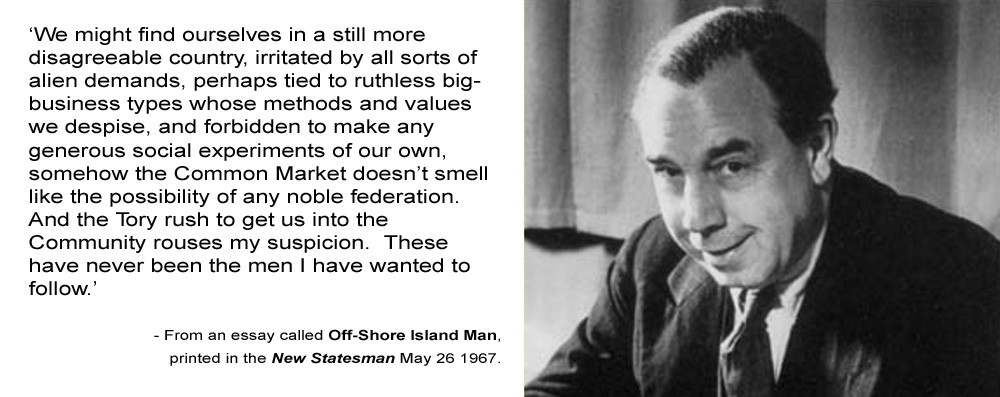
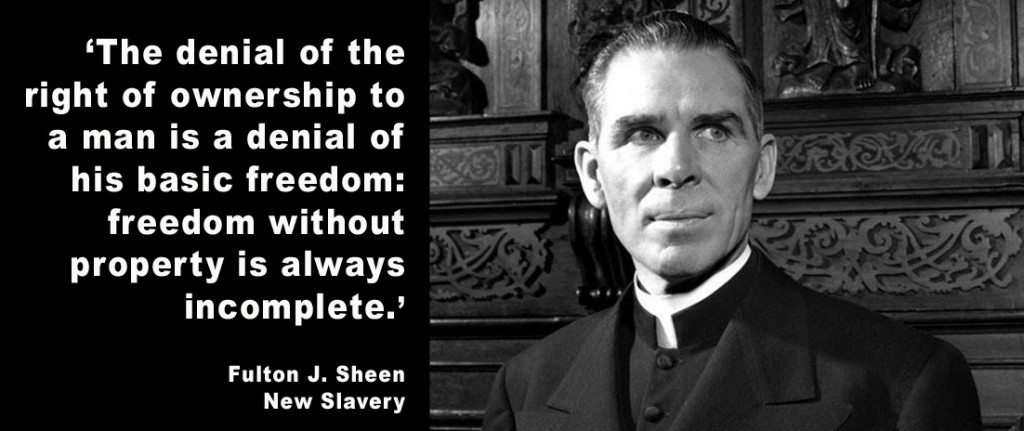
Words Of Wisdom – Fulton J. Sheen (1895–1979)
Date: November 11, 2016
Categories: Articles
Sunday, 12 July 2026

Self-Determination is a human right






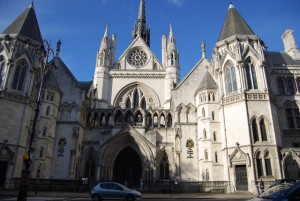 The decision of the High Court to demand that Parliament rather than the Government/Executive must invoke Article 50 (to leave the EU) has, understandably, produced a negative reaction especially from elements of the press. This ranged from accusations of frustrating the ‘will of the people’ to treason. The greatest fear was that it would delay or even sabotage Brexit.
In reality, although Parliament could on paper reject Article 50, no-one thinks that likely. Some 421 out of 574 English and Welsh constituencies voted to Leave and that will be a factor in those MPs minds. If the Tories impose a three line whip plus the added votes of the DUP and individuals of other parties, will easily pass the relevant motion. Labour are threatening to vote against that motion unless there is a commitment to access the single market. This of course is disingenuous since everyone believes that would involve some form of freedom of movement and that is anathema to millions of voters. Such a move could backfire on Labour. In any event, the post-Brexit relationship between the UK and the EU/27 members will be the result of negotiations and not just imposed by the former. It will all depend on May’s resolve to get the motion passed without compromise.
The Government had previously, albeit reluctantly, agreed that Parliament would have a say in the terms of Brexit after Article 50 was invoked. The High Court action has simply added another level of Parliamentary, as apart from just Government, involvement. Whether the Government’s negotiations will be hampered by a pro-EU/Soft Brexit Parliament prior or after A50 is invoked remains to be seen.
SUBVERSION?
There has been criticism that the judges’ actions were an attempt to subvert the ‘will of the people’? Whilst that may be been in the mind of some of the plaintiffs and backers, the question the High Court was asked to decide upon was whether the Executive or Parliament had the right to invoke Article 50? Because the UK doesn’t have a written constitution, ultimately what is ‘legal’ is not clear. Whilst we might be unhappy with the implications of the HC’s decision to fall on the side of Parliament this time, there may be many other occasions where we would oppose a Government’s unfettered power. Indeed we should always be opposed to unfettered Government power.
WILL OF THE PEOPLE
The larger question is: where does the ‘will of the people’ e.g. referendums’ fit in all this?
The UK traditionally talks about the ‘Sovereignty of Parliament’. The High Court action was essentially a resolution, on this one issue only, of the perennial tension between Parliament and Government. Whilst the UK has no Constitution (a complicated issue itself) this will always be possible and indeed the High Court decision itself is being appealed at the Supreme Court.
If the UK continues to use referendums, and we demand that it must, to decide upon, presently major, national issues it requires a position within our system. In other words, whether it is advisory or statutory, who (can) call it and how the results are interpreted and implemented.
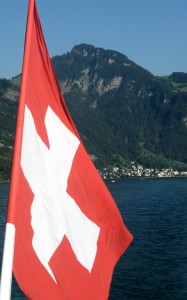
We would put the ‘will of the people’ i.e. referendums at the top of any system, followed by an elected legislature, and finally Governing bodies. Essentially ‘Direct’ rather than ‘Representative’ Democracy would predominate. We would support the introduction of a bespoke version of the ‘Swiss model’ of democracy.
SWISS MODEL
In Switzerland, statutory Referendums are held on any proposed constitutional changes and advisory referendums/Initiatives on other matters. Their Parliaments (national and cantonal) are elected via PR and their Government is essentially run by a National Council based upon the strength of the political parties i.e. as a consensual body.
 In effect, there would be no need to involve the Courts to decide upon the results of referendums if it were clear what their place was in our system.
There have been a greater use of national votes but also at a local level too over the last few years. We don’t expect the thirst for more to dry up. Clearly however there are MP’s who oppose referendums, seeing it as a threat to their parliamentary power, and now some citizens who cannot accept being losers. However, the majority of citizens would support greater use of referendums.
Now is the time to not only increase the number of referendums but to put them on an equal statutory footing with legislatures so that we can begin to introduce real democracy into the UK.


Date: November 6, 2016
Categories: Articles

To find out more about Small Business Saturday check out https://smallbusinesssaturdayuk.com/
THE NATIONAL LIBERAL PARTY supports freedom – that’s why we oppose both capitalism and socialism.
Date: October 30, 2016
Categories: Articles

Meanwhile the likes of Labour leadership hopeful Owen Smith are calling for another Referendum. Various individuals and parties opposed to Brexit are also talking about posing legal challenges to the vote. Meanwhile many British youngsters who couldn’t be bothered to vote still claim that their future has been stolen!
Date: September 9, 2016
Categories: Articles, Party News
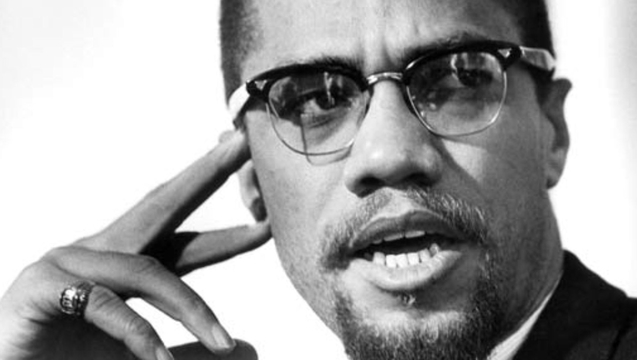
Malcolm X was a fierce critic of the media.
WHY DOES the National Liberal Party – NLP – put so much effort into building the infrastructure of an alternative mass media of news, views and entertainment? The simple answer is that the media is all powerful. It can set the political agenda by either highlighting or covering up various news stories.
.
These two quotes from Malcom X illustrate this point
.
“The media’s the most powerful entity on earth. They have the power to make the innocent guilty and to make the guilty innocent, and that’s power. Because they control the minds of the masses.”
.
“If you’re not careful, the newspapers will have you hating the people who are being oppressed, and loving the people who are doing the oppressing.”
.
Sadly the vast majority of our people are happy to accept what different forms of establishment media tells them. They don’t look beyond the headlines and possible agenda of specific journalists, editors or owners. It takes a lot of time to research to see beyond headlines. Sadly only a relatively small number non-conformists and anti-establishment free thinkers seem to find the time to do this.
.
A case in point is the US presidential election – set for early November. At the moment the race between Republican hopeful Donald John Trump and the Democrat nominee Hillary Diane Rodham Clinton is already starting to dominate our news. The closer the election the more the media will ramp up its coverage – in due course it’ll swamp TV, radio, the papers and online news outlets.
.
Our guess is that the election will be presented – at root – in very simple terms: Hillary Clinton is a living saint whilst Donald Trump is a dangerous lunatic. (Doubtless in George Orwell’s 1984 the slogan would have read Hillary Good – Trump Bad!) Now this may well be true – but the point is we don’t really know. Let’s be honest with ourselves, how many of us have any real idea what Clinton or Trump stand for? We judge them on what we see, hear and read of them. However, we only see, hear and read what elements of the media want us to see, hear and read.
.
The mass media really do call the shots here. For instance, we’ve already become accustomed to the word ‘controversial’ being associated to any speech that Trump makes. And to be honest, what we see, hear and read does seem to be pretty ‘out there’ at times. However, we only hear a snippet – maybe just a few seconds – of a speech that may be well over an hour long. How many of us check out the whole speech from which the ‘controversial’ soundbite is plucked? Indeed, how many of us check out in what context the speech is made? Surely it’s only possible to accurately judge if a quote is ‘controversial’ once we understand the context – and background – of the whole speech?
.
Yet if the US public – and in many instances the politicians – are to make decision of national importance they need to have access to raw data and the full facts. Information provided by the media should not be slated. And it certainly shouldn’t be based on pure emotion or in reaction to an event or events.
.
Liberal Future – the youth wing of the National Liberal Party – had the following to say (1) about the tendency of elements of the media to ‘dumb down’ political debate by attaching simple labels to groups. The same could be said of the US media:
.
‘We feel that simply labelling an idea, person or group as ‘left’ or ‘right’ stifles political debate. This is because people believe they know everything about the subject matter simply because of the way that it’s been labelled. This is particularly so when the media gives an idea, person or group a negatively loaded label or description.
.
LF feels that these political labels of ‘left’ and ‘right’ are way too restrictive. Indeed, they’re increasingly meaningless – especially when followers of Tony Blair are referred to as being on the ‘right wing’ of the Labour Party and socially conscious Conservatives as being on the ‘left wing’ of the Tory Party!’
.
Elements of the media also appear to be working to their own agenda when they should really be making a true and accurate record of the events of the day. For instance they like to use prejudicial terms – or attack words – like ‘racist’, ‘anti-Semitic’, ‘Islamophobia’, ‘homophobic’ to describe an individual or group. However, they often fail to correctly define what these terms mean. Just because one has issues with Israel don’t mean that one is ‘anti-Semitic’ or an ‘anti-Semite’!
.
In a similar vein, the media also loves to make a mountain out of a molehill when it comes to labelling an individual or a group as ‘extremist’. Again they never really define ‘extremism’ and use the most tenuous of links as ‘proof’ of their allegations.
.
With all of this in mind the National Liberal Party believes that it’s absolutely essential to build the infrastructure of an alternative mass media of news, views and entertainment. And, as we’ve recently noted (2) we’re looking for very special people who can help us. Who are these people? Well, they’ll probably be something like you:
.
‘they’ll likely to be fairly quiet and thoughtful people. They’ll look way beyond the bluster and headlines (that passes for politics these days) and will examine cold hard facts and figures. They’ll also be free-thinkers and non-conformists.’
.
If you think you fit the bill get in touch with us contact nationalliberal@aol.com as soon as possible. We look forward to hearing from you.
.
(1) http://nationalliberal.org/liberal-future-%E2%80%93-beyond-left-right
.
(2) http://nationalliberal.org/building-our-local-media
.
• CHECK OUT the National Liberals on Facebook: https://www.facebook.com/groups/52739504313/?fref=nf
Date: September 4, 2016
Categories: Articles
By continuing to use the site, you agree to the use of cookies. more information
The cookie settings on this website are set to "allow cookies" to give you the best browsing experience possible. If you continue to use this website without changing your cookie settings or you click "Accept" below then you are consenting to this.