




Saturday, 11 July 2026

Category » Articles

‘Old Thunder’: Neither Capitalism Nor Socialism (Part 4)

THIS IS the fourth and final part of an article which appeared in 2014 on the Old Thunder Belloc blogsite.  It is a reprint of Hilaire Belloc’s Neither Capitalism Nor Socialism, first published in the July 1937 issue of The American Mercury.  (‘Old Thunder’ is a reference to the Anglo-French historian, essayist and poet, Hilaire Belloc.)  You can read the original article here: https://oldthunderbelloc.blogspot.com/2014/08/neither-capitalism-nor-socialism.html  

It’s important to note that National Liberals regard Belloc as a ‘point of interest’ in that he said – or did – things that are of interest to us.  As we’ve noted before, that doesn’t mean that we place him on a pedestal, so to speak.  

What interests us about Belloc & his Distributist ideas are that they offer an alternative to both Capitalism & Socialism.  Despite outward appearances, both systems are similar in that they oppose individuals owning private property.  Capitalism restricts ownership to an elite few, whilst socialism wishes to restrict ownership to the state.  

As National Liberals we’re against centralism.  We feel that it can be dogmatic, undemocratic & totalitarian in nature.  However, we have to be both principled & pragmatic.  We accept that there may (and probably will) have to be some central planning associated with the phasing out of Capitalism & Socialism and the introduction of Distributism.  Indeed, as Belloc notes ‘You cannot have a Distributist State without a strong executive to safeguard the small man permanently against the aggression of the great’.  

It goes without saying that there are no links between The American Mercury, the Old Thunder Belloc blogsite & the National Liberal Party.  It should also be noted that whilst Belloc was a Catholic, the NLP welcomes members & supporters from all religions and none.  Please note that we’ve kept the original US spellings as they are.  

This section of the article should be read directly on from Parts 1 and 2 – see the links below.    


‘Old Thunder’: Neither Capitalism Nor Socialism (Part 4)
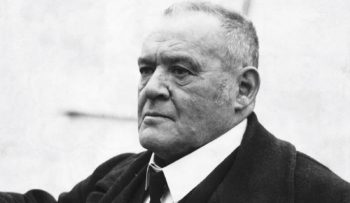
   

Hilaire Belloc – together with Arthur Penty, G. K. Chesterton & his younger brother Cecil – developed the economic philosophy of distributism. Opposed to the centralizing tendencies of both Capitalism & Socialism, they believed that productive assets should be as widely owned as possible. Therefore, distributism favours small independent shops, craftsmen and producers, worker co-operatives & mutual societies.

Inevitably the obstacles to its achievement are very great. Many would pronounce them insurmountable. First, as always, come the spiritual factors. Men have grown used to capitalism and have come to think in terms of wage-earner and employer. It is difficult to go back to another mood. Next, our existing laws are nearly all in favor of large accumulations through the action of competition. Increasing rapidity in the transmission of information and orders, work in the same way; so does the increasing efficiency of the machine.  

But all these factors making for the putting of control into a few hands can be counteracted. You may preserve the expensive centralized machinery in transport and manufacture, but you may divide its shareholding individually. You may aid the division of accumulation by differential taxation weighing heavily upon great accumulations of wealth, but we do not use it for the furtherance of better division. Were we to do so, better division could be achieved. It is not enough to super-tax the rich man; you must use the proceeds to build up property of the small man, both by subsidy and by giving a premium upon purchase of capital and law by the small man with a penalty for purchase by the big man. Your differential tax can gradually extinguish the chain store and the department store; and in the very important department of public investment, you can see to it that the small subscriber is favored when State or municipal bonds are issued, and the large one handicapped.  

With sufficient will to create small property, well distributed throughout the community, the thing could certainly be done: the difficulty would be when once it was done to keep it stable. The two forms of slavery, Communism and personal slavery, remain stable of themselves; but, just as political freedom requires for its maintenance a permanent attitude of alert defense, so does economic freedom—and a permanent attitude of alert defense is difficult to maintain. Moreover, if it is left to competing individuals, un-co-ordinated, it is impossible to maintain.  

Therefore, in order to make the Proprietary State stable, you must have laws (or customs with the force of laws) which make it difficult for the small man to alienate himself and yet safeguard him in his share of the means of production. Laws of hereditary succession will do this, so will the natural play of differential taxation, which profits the small purchaser at the expense of the large purchaser whenever there is a transfer of capital or land. But the best instrument of all for maintaining the stability of small property is the Guild.  

If we can re-establish the Guild we shall have done the trick. With men incorporated in chartered guilds having the power of the State behind them, small property, once achieved, will be secure. The Guild regulates its own affairs, it sets limits to competition within its boundaries, it provides for a succession of new free guildsmen by apprenticeship (which is a form of initiation), it sets the price of the goods produced (another check on competition), it regulates the method of production also, it has every advantage and every power for dealing with property after a fashion that shall maintain it in spite of the threat of competition. If we are to build the Distributist State, the Guild must be the keystone of that arch, and until men are trained in the idea of the Guild, until the Guild is set up and begins working before their eyes, the attempt to restore a Distributist State will be in vain.  

And there is the last proviso, the Distributist State to be secure must include large fields of State action, not only political but economic. Whatever is of its nature a monopoly must be under State control, more or less developed. You cannot have a Distributist State without a strong executive to safeguard the small man permanently against the aggression of the great. In most communities of the Middle Ages, this function was performed by an official called a King; the name does not matter, but the office is all-important. A society without a strong, centralized executive is a society inevitably doomed to plutocracy.  

• THIS ARTICLE should be read in conjunction with:

‘Old Thunder’: Neither Capitalism Nor Socialism (Part 1)  https://nationalliberal.org/‘old-thunder’-neither-capitalism-nor-socialism-part-1  

‘Old Thunder’: Neither Capitalism Nor Socialism (Part 2)  https://nationalliberal.org/‘old-thunder’-neither-capitalism-nor-socialism-part-2  

‘Old Thunder’: Neither Capitalism Nor Socialism (Part 3)  https://nationalliberal.org/old-thunder-neither-capitalism-nor-socialism-part-3  


Share:
  • Print
  • Digg
  • StumbleUpon
  • del.icio.us
  • Facebook
  • Yahoo! Buzz
  • Twitter
  • Google Bookmarks
  • Add to favorites
  • blogmarks
  • Blogosphere
  • Google Buzz
  • PDF
  • email
  • Live
  • MSN Reporter
  • MyShare
  • MySpace
  • Technorati
  • Webnews.de

‘Old Thunder’: Neither Capitalism Nor Socialism (Part 3)

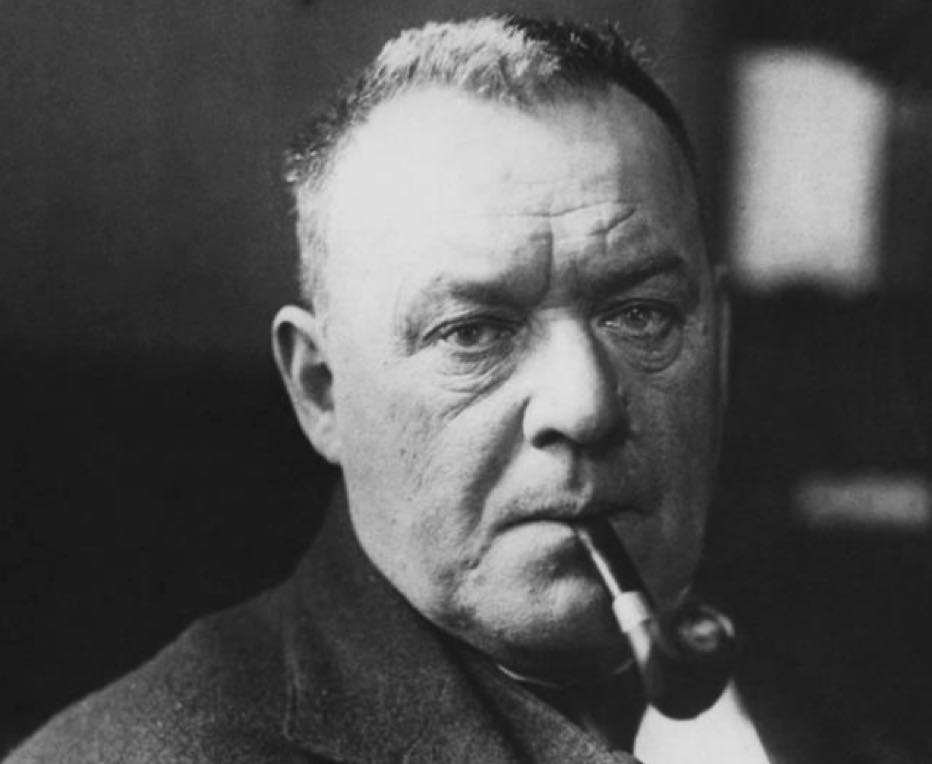
Hilaire Belloc (1870 – 1953) was a noted Anglo-French historian, orator, poet, politician, sailor, satirist, soldier and writer. A critic of both capitalism and socialism, Belloc – along with G. K. Chesterton, Cecil Chesterton & Arthur Penty – became one of the main advocates of Distributism. The National Liberal Party is drawn to his economic ideal of the widest possible spread of ownership of land, property, or workplace.

JOSEPH HILAIRE PIERRE RENÉ BELLOC was born in La Celle-Saint-Cloud, France, on 27th July, 1870 and died on 16th July 1953 in Guildford, Surrey, England.  His mother – Bessie Rayner Parkes Belloc – was an English writer, activist and noted feminist and his father  – Louis Belloc – was a French barrister.  Belloc’s father died when Hilaire was two years old.  His mother moved back to England and brought him and his elder sister, Marie Adelaide Elizabeth, to live in Slindon, West Sussex.    

During his life, Hilaire Belloc was known as an historian, orator, poet, politician, sailor, satirist, soldier and writer.  A critic of both capitalism and socialism, Belloc – along with G. K. Chesterton, Cecil Chesterton & Arthur Penty – became one of the main advocates of Distributism.  Here, Belloc believed in the widest possible spread of ownership of land, property, or workplace.   

National Liberals regard him as a ‘point of interest’ in that he said – or did – things that are of interest us.  This doesn’t mean that we put Belloc, on a pedestal so to speak.  Indeed, we’re fully aware that some of his views may be viewed as ‘controversial’ or regressive.  However, we believe that most, if not all, humans are fairly complex characters.  We’re full of contradictions & we feel that it’s next to impossible to paint individuals completely in terms of good and bad.  For instance, Belloc was very ‘conservative’ when it came to social issues like the role of women in society.  Yet, it could be argued that – economically – he was ‘revolutionary’ when  it came to his views on capitalism & socialism and the need for Distributism.  

With the above in mind, some time ago our attention was drawn to an old article – https://oldthunderbellocblogspot.com/search?q=Neither+Capitalism+Nor+Socialism – which appeared on the Old Thunder Belloc blogsite.  It is a reprint of Belloc’s Neither Capitalism Nor Socialism, first published in the July 1937 issue of The American Mercury.  (‘Old Thunder’ is a reference to the Anglo-French historian, essayist and poet, Hilaire Belloc.)  This section of the article should be read directly on from Parts 1and 2  – see links below.  

It goes without saying that there are no links between The American Mercury, the Old Thunder Belloc blogsite & the National Liberal Party.  It should also be noted that whilst Belloc was a Catholic, the NLP welcomes members & supporters from all religions and none.  Please note that we’ve kept the original US spellings as they are.

This ephemeral but acute phase of social history which we call Capitalism and for which Proletarianism would be a better word, subjects free men arbitrarily to the will of other citizens, their political equals, and compels them to this subjection through the mere power of many. There is no bond of duty such as co-exists with Status; there is no obligation of loyalty, not any mutuality of service. The man who has nothing must work for the man who has the goods, and as both are completely free, the man, who has nothing can legally be deprived of his livelihood at any moment at the caprice of the man who has the goods. The material evils accompanying this spiritual evil of degrading subjection with no moral sanction to enforce it, are insecurity of livelihood for nearly all, and a permanent measure of insufficiency for a great part of society.

It should have been clear that such a state of affairs could not endure one it had become widespread. So long as it was confined to a comparatively small proportion of the people, it would hobble along though with great friction; when it becomes the rule, when the mass of men are wage-earners at the mercy of a minority of capitalists, it is certain that the wage-earners if they remain politically free will rebel. We know the for that rebellion has taken with free labor—interference by conspiracy and combination: strikes on the one hand and lock-outs on the other—all the elements of a simmering civil war. To restore peace and achieve a stable society there are only three policies possible. Either we must abolish capitalism by putting the means of production into the hands of State officials, in which case all citizens will lose their freedom and becomes slaves of a Communist State. The half-free proletariat will lose such freedom as they have, and the wholly free possessor of capital will lose his entire freedom.

Or, as a second policy, we can enslave the proletariat; compel them by force to work for the profit of owners. In other words, we can re-establish private slavery. That is a very stable arrangement of society and a permanent one; we all came out of it and it would be natural that we should return to it. Indeed, anyone with a long vision may think to foresee our return to it and perceive already the beginnings of the Servile State.

If we reject these two solutions—the Communist solution and the Servile State—there remains the Proprietary solution, the setting up of a social system in which ownership is the general rule and universal popular freedom is accompanied by widespread economic freedom; a state of society in which the normal citizen owns land or housing or both and has a share of profits from commercial enterprise, from State bonds or in general revenue from investment, as well as revenue earned by his own labor. We know well that such a state of society can be for we belonged to it in the immediate past; the United States within living memory was a Distributist society, and Denmark almost wholly so. The government of Italy today is aiming at Distributism; the independent Irish have made it the main part of their political program.

• THIS ARTICLE should be read in conjunction with:

 ‘Old Thunder’: Neither Capitalism Nor Socialism (Part 1)  https://nationalliberal.org/‘old-thunder’-neither-capitalism-nor-socialism-part-1  

 ‘Old Thunder’: Neither Capitalism Nor Socialism (Part 2)  https://nationalliberal.org/‘old-thunder’-neither-capitalism-nor-socialism-part-2  

Share:
  • Print
  • Digg
  • StumbleUpon
  • del.icio.us
  • Facebook
  • Yahoo! Buzz
  • Twitter
  • Google Bookmarks
  • Add to favorites
  • blogmarks
  • Blogosphere
  • Google Buzz
  • PDF
  • email
  • Live
  • MSN Reporter
  • MyShare
  • MySpace
  • Technorati
  • Webnews.de

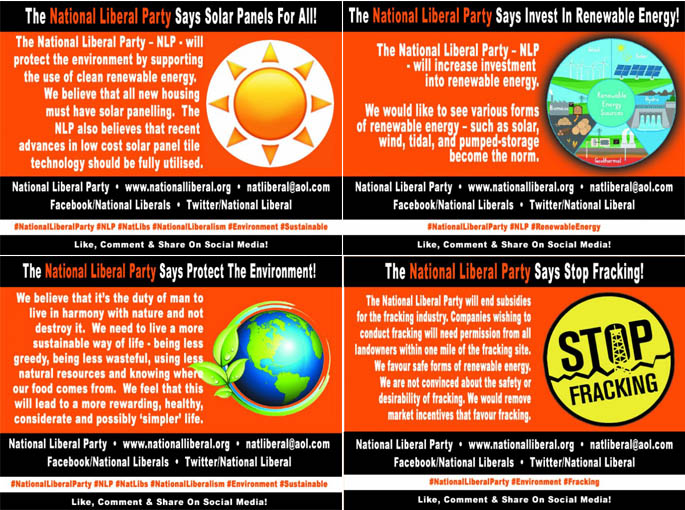
Where We Stand (4) The National Liberal Party Says Protect The Environment!

• THIS should be viewed in conjunction with the following:

Where We Stand (1) The National Liberal Party Supports Real Democracy!

http://nationalliberal.org/where-we-stand-1-the-national-liberal-party-supports-real-democracy

Where We Stand (2) The National Liberal Party Supports Constitutional Reform!

http://nationalliberal.org/where-we-stand-2-the-national-liberal-party-supports-constitutional-reform

Where We Stand (3) The National Liberal Party Supports A Sane Foreign Policy!

http://nationalliberal.org/where-we-stand-3-the-national-liberal-party-supports-a-sane-foreign-policy 

Share:
  • Print
  • Digg
  • StumbleUpon
  • del.icio.us
  • Facebook
  • Yahoo! Buzz
  • Twitter
  • Google Bookmarks
  • Add to favorites
  • blogmarks
  • Blogosphere
  • Google Buzz
  • PDF
  • email
  • Live
  • MSN Reporter
  • MyShare
  • MySpace
  • Technorati
  • Webnews.de

Liberal Future – Days In Europa (2) – Parliament Buildings (Stormont), Belfast, Ulster

AS WE NOTED in our first Days In Europa article – https://nationalliberal.org/liberal-future-–-days-in-europa-1-–-st-basil’s-cathedral-moscow-russia – whilst Liberal Future ‘is opposed to the EU, we’re not anti-European.  Indeed, how could we be anti-European when the UK (indeed, the whole of the British Isles) constitutes part of Europe?  We’re proud to be both Britons & Europeans.’  

We have absolutely no problem with the nations of Europe co-operating.  Indeed we have no problem with the nations of the world co-operating.  However, this must be done on the basis of sovereign – and truly free – nations co-operating with each other.

To us, the EU can only rule via an extremely centralised body.  It’s effectively operates on a ‘power grab’ basis.  In reality, EU political power rests with France & Germany.  We believe that ‘Small is Beautiful.’  Therefore we’re opposed to the whole philosophy of the EU.  It also goes without saying that we disagree with the institution & its system of working.

The EU is all about control, money & power.  We view Europe in terms of freedom, nations & people.

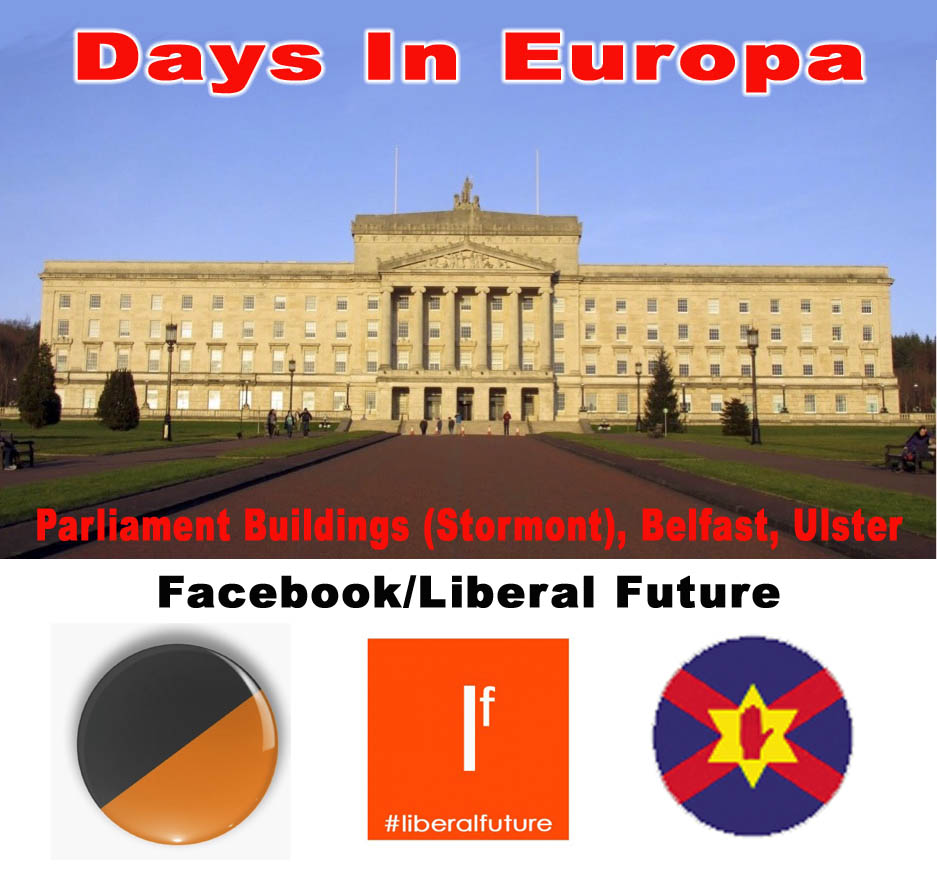
We’re deeply interested in the history & beauty of Europe.  With this in mind, in January we examined the Cathedral of Vasily (Basil) the Blessed, more commonly known as St. Basil’s Cathedral, in Moscow, Russia.  This time we’re going to take a look at Parliament Buildings (Stormont), which are situated in Belfast, Ulster.    
As can be seen from our photograph, the Parliament Buildings were built in a Greek classical style.  The foundation stone was laid in May 1928 & was opened in November 1932.  It has been used, on and off, as the seat of political power (such as it is in Northern Ireland) ever since.  

Much of the interior of Stormont is ornate & absolutely stunning.   Large chandeliers, paintings, a grand staircase & beautifully decorated walls and ceilings complete the picture.  

The grounds are also beautiful.  They’re dominated by both the Prince of Wales Avenue, commonly known as ‘The Mile’ (which leads up to the Parliament Buildings) and a large statue of the famous barrister & Unionist leader, Edward Carson.  

• ALSO CHECK OUT Liberal Future – Days In Europa (1) – St. Basil’s Cathedral, Moscow, Russia https://nationalliberal.org/liberal-future-–-days-in-europa-1-–-st-basil’s-cathedral-moscow-russia  

• FOR MORE information about Liberal Future – the youth wing of the National Liberal Party – check out:  https://nationalliberal.org/liberty-wall-3/liberal-future  

• LIBERAL FUTURE would like your views on both this article & our ideas for a future Europe.  Simply post your comments when you see this article posted on our Facebook page https://www.facebook.com/groups/706779429376233 and/or the National Liberals Facebook page https://www.facebook.com/groups/52739504313  

• READERS MAY be interested in the logos which feature at the bottom of this second Days In Europa poster produced by Liberal Future – the youth wing of the National Liberal Party.   

The circular black & orange logo (on the left) symbolises the fusion of progressive nationalism and liberalism.  Here we give equal weight to ‘national questions’ (concerning all of the nations & peoples of the British Isles and in principle, beyond) as we do to ‘liberal’ questions (concerning the individual and freedom).  

The square orange logo (centre) is the official symbol of Liberal Future.  We’ve used it since 2014 when the idea of creating a youth movement for the National Liberal Party was first mooted: https://nationalliberal.org/liberal-future-–-a-manifesto-for-our-youth  

The red, gold & blue logo is known as the Second Ulster National flag (sometimes called the Ulster Independence flag).  Liberal Future uses this – as well as the Cross of St. Patrick – as we believe in uniting both Protestants & Catholics (as well as those of other religions, or indeed, no religion).  We acknowledge that Stormont has been the scene of many bitter disputes between Unionists and Republicans.  However, LF works towards a united & peaceful Ulster.  

Share:
  • Print
  • Digg
  • StumbleUpon
  • del.icio.us
  • Facebook
  • Yahoo! Buzz
  • Twitter
  • Google Bookmarks
  • Add to favorites
  • blogmarks
  • Blogosphere
  • Google Buzz
  • PDF
  • email
  • Live
  • MSN Reporter
  • MyShare
  • MySpace
  • Technorati
  • Webnews.de

Are You Fed Up With The Establishment Parties?

Share:
  • Print
  • Digg
  • StumbleUpon
  • del.icio.us
  • Facebook
  • Yahoo! Buzz
  • Twitter
  • Google Bookmarks
  • Add to favorites
  • blogmarks
  • Blogosphere
  • Google Buzz
  • PDF
  • email
  • Live
  • MSN Reporter
  • MyShare
  • MySpace
  • Technorati
  • Webnews.de

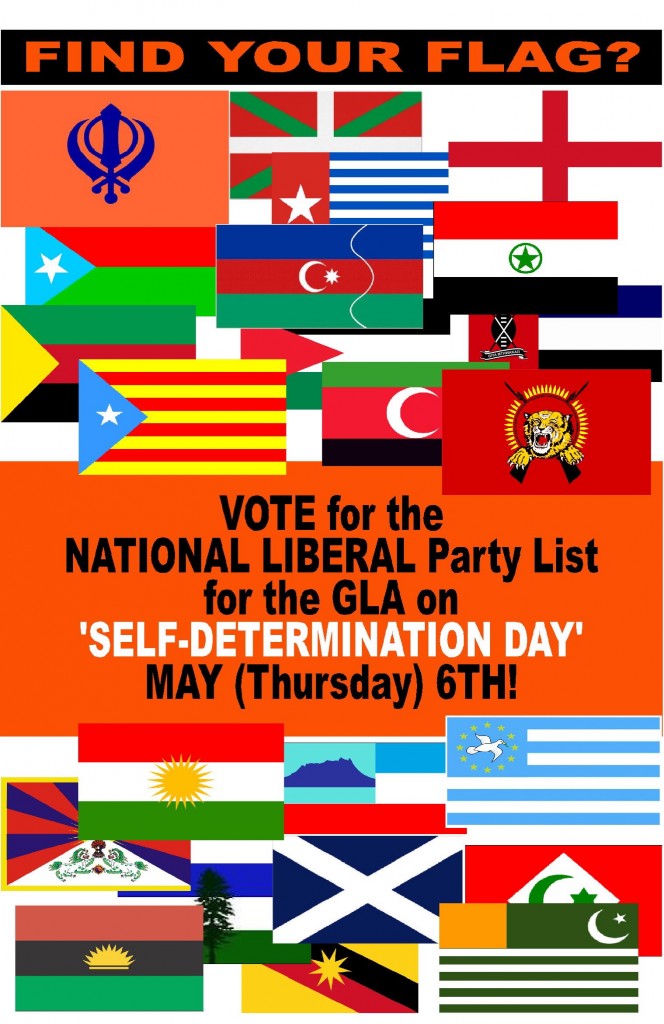
National Liberal Party – Bringing Self-Determination To London!

THE COLLINS ENGLISH Dictionary defines Self-Determination as ‘the right of a country to be independent, instead of being controlled by a foreign country, and to choose its own form of government.’ (1)

This definition effectively sums up one of the main reasons why the National Liberal Party – NLP – is standing in the forthcoming Greater London Authority (GLA) Elections.  Here we’re fielding five candidates, including lead candidate Upkar Singh Rai, who’re standing on Thursday 6th May under the banner of National Liberal Party – Self-Determination For All!

Basically, the National Liberal Party is appealing to everyone in London who desires freedom – and particularly National Freedom in the form of Self-Determination – to vote for us.

As everyone knows, Greater London is home to many people from around the world.  Many of these people are economic migrants – the exploited victims of capitalism.  Some would be legal, others illegal.  All are effectively wage slaves – and some are literally ‘employed’ as slave labour.

Others would be refugees fleeing from war in their homelands.  Ironically, they’ve had to flee their homelands as they’re usually illegally occupied by US & UK troops who’re bringing ‘democracy’ & ‘freedom’ to them.  (The geopolitical importance of the occupied nation invoved and the presence of valuable oil & mineral resources is obviously a mere coincidence.)

POLITICAL REPRESSION

However, many people have also come to London to escape direct political repression in their country of origin.  It’s the latter group that we’re particularly interested in – especially the long-suffering Kashmiris, Sikhs & Tamils.

The NLP also wants to use the GLA elections to draw attention to the plight of the indigenous English, who’re still waiting for some form of national parliament or assembly, years after those in Scotland, Ulster & Wales were given theirs.

As we noted earlier, we’re standing under the banner of National Liberal Party – Self-Determination For All! Thus, our main aim is to use the 6th May elections as a springboard to raise awareness of the concept of Self-Determination.

We also intend to gain valuable experience in electioneering strategy & tactics.  The NLP believes that such experience will be invaluable and will stand us in good stead for future elections.  Much of the GLA campaign will be conducted online – although there will be some physical leafletting & canvassing.  We also hope to use this campaign to learn more about building our Social Media presence.  It will also help us forge links and build alliances between various different self-determinists living in London.

But we can only do so much on own.  We need help – and that’s where you come in.  With your help & support we can do much, much more!

SELF-DETERMINATION

Earlier  we  provided  a  definition  of  Self-Determination  provided  by  the  Collins English Dictionary.  At root, Self-Determination is all about people choosing their own destiny without outside interference.

This means that ordinary working folks get a real say in the way our countries are run. Self-Determination enables us to make our own laws, rules and regulations. It means that we keep our traditions, customs and way of life. And it allows us the right to say how we work, who we trade with and who can come to live and work in our countries.

As we’re promoting Self-Determination via an election, it would be useful to know the definition of democracy.  Here the Collins English Dictionary notes that democracy ‘is a system of government in which people choose their rulers by voting for them in elections.’ (2)

Definitions are one thing – but reality is another.  As we all know, democracy is really the preserve of the rich. Just look at the costs involved in the GLA elections. (3)

There are still a few weeks left before the GLA elections.  We need to raise as much money as we can during this period. The National Liberal Party has no wealthy backers.  This election gives us the opportunity to represent the oppressed against the oppressor.  However, as everyone knows, the oppressed tend to be poor whilst their oppressors are rich.  So, what does this mean for those who desire freedom?  Basically, for our voice to be really heard at the highest local level in London, Self-Determinists must get rich!

WILL YOU HELP YOUR PEOPLE?

Will you help support our brave candidates who’re fighting for Self-Determination?  Our candidates are part self-financing their campaigns.  They’re literally putting their money where their mouths are.

Will you help those who’re doing their upmost to fight for their people & nations?  Will you help your people?

Remember, the more money we raise the more we can spend on our campaign.  And the more we can spend the more likely we’ll get candidates elected to represent you at  City Hall in London!

Please transfer any donations to our Bank of Scotland account.  Here’s the details:

Account Name:  National Liberal Party

Sort Code:  12-11-03

Account Number:  06186181

If you prefer to donate via cheque send to:  National Liberal Party, PO Box 4217, Hornchurch, Essex, RM12 4PJ, England.

For  obvious  reasons  our  GLA  election  campaign  will  focus  on  National  Self-Determination.  However, the National Liberal Party believes that Self-Determination can be  applied  to  two  other  areas  –  Political Self-Determination  and Economic  Self-Determination.

Self-Determination is the raison d’étre of the National Liberal Party.  The following is our general statement in respect of Self-Determination:

SELF-DETERMINATION FOR ALL!

THE DISCONNECT between professional politicians and the people has never been greater. The decisions taken by the former are more often viewed as self-serving in the eyes of the latter.

Professional politicians, often labelled as so-called ‘elites’, are largely divorced from the everyday experiences of the great mass of people. Thus, we should not be surprised that they are often seen to take political positions and decisions at odds with most people.

The answer to this gulf between the present day ‘rulers’ and ‘ruled’ is found in the principle of Self-Determination; i.e. Putting decision making into the hands of the individual rather than ‘others’.

PRINCIPLE OF SELF-DETERMINATION

This principle can be applied largely in three areas; National, Political and Economic.

• National Self-Determination seeks to ensure decisions affecting the collective future of a nation are taken by ALL the people via referendum. This may be ‘External’, for example: the creation or maintenance of a nation state, or ‘Internal’ – framing/updating a constitution to reflect how a people should rule themselves. (We favour independent nations and liberal, democratic, states).

• Political Self-Determination seeks to ensure that the collective will of the people as well as the variety of political opinion is reflected in decision making. Thus, for example, we favour greater use of referendums to meet the former, and PR to reflect the latter (we favour a system close to the Swiss model of Direct Democracy).

• Economic Self-Determination seeks to distribute ownership as widely as possible and as close to the individual as practical by favouring home ownership, self-employment, small businesses, cooperatives and employee shareholdings. (We believe that ownership is the key to economic and social health: where workers obtain a just reward for their labours and gain a feeling of well-being through their having a genuine personal stake in society).

The above principles underpin many National Liberal policies but others are rooted in common sense and usually aim to strike a balance between conflicting opinions, as befits a centrist party.

(1)  https://www.collinsdictionary.com/dictionary/english/self-determination

(2)  https://www.collinsdictionary.com/dictionary/english/democracy

(3) https://www.londonelects.org.uk/im-candidate/campaign-spending-and-expenses

Share:
  • Print
  • Digg
  • StumbleUpon
  • del.icio.us
  • Facebook
  • Yahoo! Buzz
  • Twitter
  • Google Bookmarks
  • Add to favorites
  • blogmarks
  • Blogosphere
  • Google Buzz
  • PDF
  • email
  • Live
  • MSN Reporter
  • MyShare
  • MySpace
  • Technorati
  • Webnews.de

By continuing to use the site, you agree to the use of cookies. more information

The cookie settings on this website are set to "allow cookies" to give you the best browsing experience possible. If you continue to use this website without changing your cookie settings or you click "Accept" below then you are consenting to this.

Close