






Saturday, 11 July 2026

The House Of Lords – Should It Stay Or Should It Go? Part 6

.
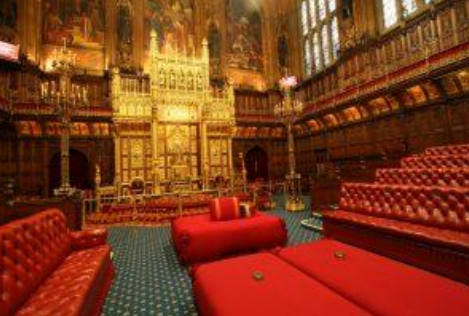
Our picture shows the Chamber of the House of Lords which is dominated by the Royal Throne. It was designed by A.W. Pugin for ceremonial use, and – in particular – for the official opening of the House of Lords in April 1847.
Picture Credit: https://victorian-era.org/history-westminster-palace.html

OVER THE last few months, we’ve been looking at the existence & purpose of the House of Lords. 

 
We accept and understand why it was founded.  And that’s to provide a vital counterbalance to the House of Commons.  A series of checks and balances are a good idea when applied to many aspects of life (such as business and finance).  But this is particularly so of politics & especially when the government of the day has an overwhelming majority.
 
However, it’s clear that the mere existence of the House of Lords remains a bone of contention for many people.
 
SUPPORT THE HOUSE OF LORDS
 
We’ve previously examined the arguments those who support the House of Lords and its workings. 
 
In particular, they highlight the valuable role it plays in scrutinising legislation (which has previously been passed in the Commons).
However, they also acknowledge that the debate over whether to reform – or even abolish – the House of Lords often reflects broader philosophical discussions.  These discussions revolve around tradition versus modernisation and meritocracy versus aristocracy.
We feel that many of those who support the House of Lords as it stands are culturally very conservative (almost to the point of absurdity).  They favour tradition & aristocracy over everything else.
 
OPPOSE THE HOUSE OF LORDS
 
 We’ve also looked at the arguments of those who criticise & oppose the Lords. 
 
In a nutshell, they claim that it is an outdated and undemocratic institution.  In particular, they point to the presence of hereditary peers as evidence of elitism and inherited privilege.
 
With the above in mind, we now look at some of the potential reforms relating to the House of Lords:
 
Elected Senate.  One of the most proposed reforms is the creation of an elected Senate.  This would replace hereditary and appointed peers with elected representatives.  Supporters claim that this would ensure that the upper chamber has democratic legitimacy.
An elected Senate could be structured similarly to other bicameral systems (1) around the world.  Here, members could be elected via proportional representation (PR) or the current First Past The Post (FPRP) system.
Supporters claim that having elected representatives – as opposed to hereditary peers – would enhance accountability.  Additionally, the legislative process would be more reflective of the electorate’s will.
 
Non-Partisan Appointments.  Another popular alternative is to reform the appointment process for the upper chamber, focusing on non-partisan appointments.
This approach would involve creating an independent commission responsible for appointing members based on their expertise and contribution to society, rather than political affiliation.
The goal would be to retain the benefits of having knowledgeable and experienced individuals while eliminating the influence of political patronage and hereditary privilege.
Non-partisan appointments could ensure that the chamber remains a source of expert advice and thorough legislative scrutiny.
 
Reforming Hereditary Peerage.  Instead of abolishing the House of Lords entirely, some propose reforming the hereditary peerage system. This could involve gradually phasing out hereditary peers and replacing them with life peers or elected members.
Existing hereditary peers could be allowed to serve out their terms, but no new hereditary titles would be granted. This approach would mitigate the undemocratic aspects of inherited privilege while maintaining the institution’s historical continuity and tradition.
 
•  To be continued.
 
(1)  A bicameral system refers to a legislative body that is divided into two separate chambers or houses. Typically, these two chambers are known as the lower house and the upper house. Each chamber may have different responsibilities, powers, and methods for selecting its members. The term bicameral comes from the Latin words bi meaning ‘two’ and camera meaning ‘chamber.’
In countries with a bicameral legislature, the two houses work together to review, amend, and pass legislation. The intention is often to provide a system of checks and balances, ensuring that laws are carefully considered from different perspectives before becoming official.
For example, like the UK, the United States Congress is bicameral, comprising the House of Representatives and the Senate.
 
 
•  THIS ARTICLE should be read in conjunction with the following:
 
The House Of Lords – Should It Stay Or Should It Go? Part 1  https://nationalliberal.org/the-house-of-lords-should-it-stay-or-should-it-go-part-1
 
The House Of Lords – Should It Stay Or Should It Go? Part 2  https://nationalliberal.org/the-house-of-lords-should-it-stay-or-should-it-go-part-2
 
The House Of Lords – Should It Stay Or Should It Go? Part 3  https://nationalliberal.org/the-house-of-lords-should-it-stay-or-should-it-go-part-3
 
The House Of Lords – Should It Stay Or Should It Go? Part 4 https://nationalliberal.org/the-house-of-lords-should-it-stay-or-should-it-go-part-4
 
The House Of Lords – Should It Stay Or Should It Go? Part 5
https://nationalliberal.org/the-house-of-lords-should-it-stay-or-should-it-go-part-5
Share:
  • Print
  • Digg
  • StumbleUpon
  • del.icio.us
  • Facebook
  • Yahoo! Buzz
  • Twitter
  • Google Bookmarks
  • Add to favorites
  • blogmarks
  • Blogosphere
  • Google Buzz
  • PDF
  • email
  • Live
  • MSN Reporter
  • MyShare
  • MySpace
  • Technorati
  • Webnews.de

The Lost Promise Of The Digital Age
REGULAR READERS will know that the National Liberal Party has a long-standing policy of publishing articles to promote – even provoke – free thought & debate. 
 
We do this by presenting a diverse range of opinions that may be of interest to our readers.  These opinions are from right across the political divide. 
 
We’ve previously reproduced articles by Andrew Torba, the CEO of Gab.com (which describes itself as a ‘free speech technology company owned and operated by Christians.’) Torba describes himself as a Christian Nationalist.  
 
As National Liberals we obviously have differences with Christian Nationalists & Torba.  However, we find his articles & thinking very interesting.
 
The following – which originally appeared on 1st May – is one such article.  It looks at the Amish & their relationship with the modern in general & technology in particular.  We were struck by Torba’s view that the Amish ‘aren’t anti-progress. They’re anti-frivolity’.
 
The Amish – who could be described as an ethnoreligious group – are of interest to those who’re interested in community & positive identity.  Various non-conformists, including anti-materialists and those into self-sufficiency & living off grid would also find them worthy of study.  On saying that, we should always remember never to view any group though rose-tinted spectacles.
 
The original article can be found here https://news.gab.com/2025/05/the-lost-promise-of-the-digital-age/ & we invite readers to leave their comments on the National Liberal Party Facebook page here https://www.facebook.com/NationalLiberalParty or on the National Liberals Facebook page here https://www.facebook.com/groups/52739504313

.

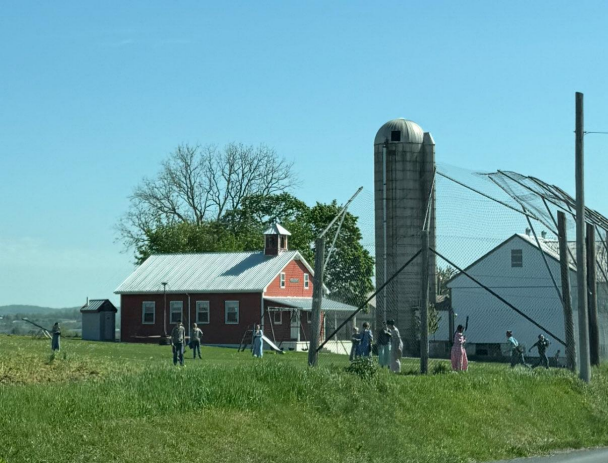
A picture – that accompanied the original article from Gab.com – of the Amish. Can various non-conformists learn anything from this ethnoreligious group, particularly in respect of Information Technology?

.

The Lost Promise Of The Digital Age

 .
WHEN THE INTERNET first emerged, it was framed as a tool for liberation. We believed it would democratize information, give a voice to the voiceless, and foster a global village of informed citizens. In many ways, it has. We carry pocket-sized supercomputers that grant us instant access to medical research, ancient literature, and the collective stories of humanity. Yet, instead of fostering deeper understanding, the Internet has become a battleground of chaos, a playground for algorithms that prioritize outrage over insight, and a mirror reflecting our most fragmented selves.
.
Today, the paradox is undeniable: We are more connected than ever, yet lonelier; more informed than ever, yet more confused; more entertained than ever, yet emptier than before. Studies show that rates of anxiety, depression, and social isolation have skyrocketed alongside smartphone adoption. Birth and marriage rates have plummeted. Political discourse has devolved into performative tribalism, where nuance is drowned out by the next viral hot take. Even our relationships with truth have frayed—how can we distinguish fact from fiction when every click rewards sensationalism?
.
Every year, my family and I visit Lancaster County, a place where time seems to bend backward. The Amish community there lives without smartphones, social media, or even electricity in many homes. Their one-room schoolhouses, horse-drawn buggies, and sprawling farmlands feel like a relic of another era. But what strikes me most is their quiet, unshakable contentment.
.
Here, children play in dirt yards, their laughter unmediated by screens. Families gather for meals without the hum of notifications. Neighbors work side by side to build barns, their hands calloused by labor, not keyboards. The Amish aren’t just avoiding technology; they’re rejecting the frenetic pace and fragmented attention it demands. They’ve chosen a life where time is not a commodity to be optimized but a rhythm to be lived.
.
This isn’t nostalgia—it’s a deliberate philosophy. The Amish evaluate every technology through the lens of community and faith. If a device threatens their values (like individualism over collective well-being), it’s rejected. Their birth rates, four times the national average, and their low rates of mental health crises suggest a parallel society thriving in ways the modern world struggles to replicate. They aren’t perfect, of course, but their approach invites a provocative question: What if less really is more?
.
The Internet promised liberation but delivered a new kind of bondage. We’ve outsourced our attention spans to push notifications, our memories to search engines, and our social skills to emojis. The result? A culture of superficiality where deep thought is rare and genuine connection rarer. Even our sense of purpose feels diluted — how often do we scroll through endless feeds instead of engaging with the physical world, our loved ones, or our own creativity?
.
The Amish, by contrast, live in a world where every action has weight. Their work is tangible: planting crops, crafting furniture, baking bread. Their relationships are rooted in proximity and shared responsibility. They don’t “network” — they nurture. Perhaps most importantly, they have no illusion that happiness lies in keeping up with the Joneses (or the Kardashians, as the case may be). Their simplicity isn’t a lack; it’s a focus.
. 
The Amish aren’t anti-progress. They’re anti-frivolity. Their rejection of modern tech isn’t about ignorance but intentionality. They’ve sidestepped the dopamine-driven cycles of consumerism and digital validation that ensnare so many of us. Without screens to mediate their lives, they’re forced to confront the raw, messy, beautiful reality of existence, something we’ve largely forgotten how to do.
.
Consider their approach to education. Amish schools stop at eighth grade, emphasizing practical skills and community values over abstract theory. Yet their adult literacy rate is near 100%, and their children grow up with a clear sense of purpose. Meanwhile, in the digital world, we binge TED Talks and online courses while feeling increasingly unmoored. The irony is crushing.
. 
I’m not suggesting we all abandon our smartphones and take up farming (though there’s something appealing about that). The Internet has undeniable benefits: it connects us to distant loved ones, provides lifelines for dissident voices, and drives innovation. But the Amish remind us that technology is a tool, not a master. Their lives are a testament to the power of boundaries, of choosing what serves the soul over what merely serves the ego.
. 
Maybe the solution isn’t to quit the digital world entirely but to become more Amish in spirit. What if we turned off notifications, reclaimed our evenings for conversation instead of streaming, or prioritized local communities over global networks? What if we put the phones, tablets, and screens down for one whole day a week (the horror!) What if we asked ourselves, before every click or post, “Does this bring me closer to what matters?”
.
The Amish don’t just avoid technology; they interrogate it. Before adopting a new tool, they ask: Does this strengthen our community? Does it honor our values? Does it free us, or will it bind us to systems we can’t control? This is the question we’ve avoided with both the Internet and AI. In our rush to “innovate,” we’ve treated technology as an unqualified good, blind to its costs.
.
Perhaps the real answer isn’t to retreat into an analog cocoon, but to adopt a similar philosophy of discernment. What if we approached AI and other new technology not with blind faith but with the humility of asking, “What might this break?” What if we shared the Internet with the world not as a monolith, but as a platform adaptable to unique cultures rather than flattening them into a single, corporate-defined mold? The Amish remind us that progress isn’t a straight line, it’s a negotiation between what we can do and what we should do.
.
The Internet didn’t ruin humanity. It simply amplified what was already there: our brilliance, yes, but also our capacity for self-destruction. The Amish didn’t escape this truth—they embraced it, choosing simplicity as a bulwark against chaos. Perhaps their greatest lesson isn’t about rejecting the modern world but about remembering that we always have a choice. After all, the best tool is the one you control, not the one that controls you.
.
So, as I return to my inbox and the buzz of daily digital life, I carry their quiet wisdom with me. In a world drowning in noise, maybe the most radical act is to unplug, look someone in the eye, and ask, “What’s new?” without a screen between us.
Share:
  • Print
  • Digg
  • StumbleUpon
  • del.icio.us
  • Facebook
  • Yahoo! Buzz
  • Twitter
  • Google Bookmarks
  • Add to favorites
  • blogmarks
  • Blogosphere
  • Google Buzz
  • PDF
  • email
  • Live
  • MSN Reporter
  • MyShare
  • MySpace
  • Technorati
  • Webnews.de

The House Of Lords – Should It Stay Or Should It Go? Part 5
.

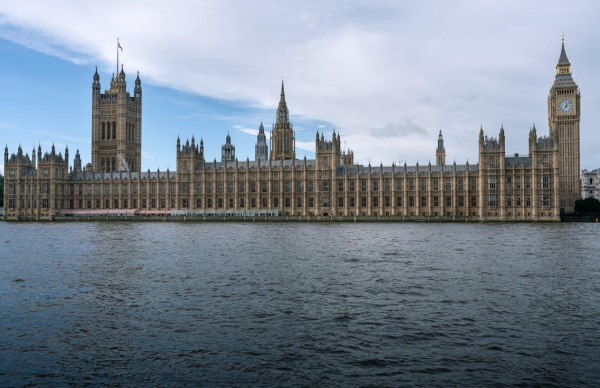
Most of what we recognise today as the Houses of Parliament – officially known as the Palace of Westminster – was constructed in the nineteenth century. The House of Lords was completed in 1847 & the House of Commons was finished in 1852. Many people believe that the Houses of Parliament stand as a symbol of British democracy – but is the Lords, in particular, truly democratic? (Picture credit: Free image from pixabay.com https://www.pexels.com/photo/london-28111450/)

QUESTIONS RELATING to the future of the House of Lords simply won’t go away. 

 
We feel that most people accept that there needs to be a body that can scrutinise legislation passed by the House of Commons.
.
However, as we’ve previously noted, opinion is sharply divided.  Some want to keep the Lords as it is.  Others want to see a measure of reform – or to do away with it altogether.
.
In March, we examined the main arguments put forward by those who support the House of Lords as it currently stands.
.
We now look the three main arguments against the House of Lords.
.
Hereditary Privilege: Critics argue that the hereditary peers in the House of Lords represent an outdated & undemocratic vestige of feudalism. The idea that individuals can inherit political power is viewed as fundamentally unjust and contrary to the principles of meritocracy and equal opportunity.
.
Lack of Democratic Accountability: Opponents contend that the House of Lords lacks democratic legitimacy – as its members are not elected by the public. This unelected body has significant legislative power, which is seen as undermining the democratic process and the sovereignty of the electorate.
.
Impediment to Modernisation: Many believe that the House of Lords hinders the modernisation of the British political system. They argue that reforming or abolishing this institution is essential to creating a more equitable and representative democracy, where power is based on merit (and the collective will of the people) rather than on birthright or appointment.
.
•  To be continued.
.
•  THIS ARTICLE should be read in conjunction with the following:
.
The House Of Lords – Should It Stay Or Should It Go? Part 1  https://nationalliberal.org/the-house-of-lords-should-it-stay-or-should-it-go-part-1
.
The House Of Lords – Should It Stay Or Should It Go? Part 2  https://nationalliberal.org/the-house-of-lords-should-it-stay-or-should-it-go-part-2
.
The House Of Lords – Should It Stay Or Should It Go? Part 3  https://nationalliberal.org/the-house-of-lords-should-it-stay-or-should-it-go-part-3
.
The House Of Lords – Should It Stay Or Should It Go? Part 4 https://nationalliberal.org/the-house-of-lords-should-it-stay-or-should-it-go-part-4
Share:
  • Print
  • Digg
  • StumbleUpon
  • del.icio.us
  • Facebook
  • Yahoo! Buzz
  • Twitter
  • Google Bookmarks
  • Add to favorites
  • blogmarks
  • Blogosphere
  • Google Buzz
  • PDF
  • email
  • Live
  • MSN Reporter
  • MyShare
  • MySpace
  • Technorati
  • Webnews.de

Free Speech – A Personal View

.

Free Speech – A Personal View

.
DEBATE ABOUT free speech rages on and on, so I’ll add my halfpenny’s worth to it.
.

A POSTER produced by the National Liberal Party in support of Free Speech.

Over the last few years, there have been extremists (from all groups, be they religious, far right or far left) whose prime focus is to close debate.

.
The reason such groups do this is not just to air an opinion, but to ensure their respective opinions are translated into law.  And if such opinions are of an intolerant nature this is where the problem arises.
.
The philosopher Karl Popper once made the shrewd comment that if we are tolerant on the intolerant, then the intolerant will always win.  So, to my small mind, we shouldn’t let the views of such extremists go unchallenged (no matter where such views emanate from).
.
The answer is not to close down debate but to open it up.
.
Everyone should be free to air their views.  To do otherwise will give a free meal ticket to those who wish to impose their respective narrow-minded views/laws on us all.
.
If we don’t open debate to all, democracy will just wither and die a slow death.
.
No group (or individual) should dictate what books, films, plays, music we should or shouldn’t read, view or listen to. I believe that we should be given a choice & decide for ourselves as to the merits – or otherwise – of any given point of view.
.
We shouldn’t allow any arrogant third party decide (on our behalf) what is right or what is wrong and what is the correct viewpoint.  Let folks decide for themselves.
.
In effect, what such extremists are claiming is that they are superior to the rest of mankind.  They believe that we’re all too stupid to make valid conclusions for ourselves.
.
We should never forget that there’s no clear demarcation line between religion, culture and politics.  All should be open to a critique.
.
The old Medieval blasphemy laws that were brought about to stop debate were abolished in England and Wales in 2008, and in Scotland in 2024. (They remain in force in Northern Ireland.)  However, it seems to me that the likes of Facebook are trying to bring back blasphemy laws via the backdoor as they are desperate to close debate.  They even have a special button to press if you think any comment is offensive to your religion.  (It should be noted that it doesn’t matter if any such comment is factual – but just might give offence.)
.
We’re allowed to give offence to our political parties.  So why should any religion feel they are exempt?
.
We live in a dangerous world.  We shouldn’t allow any group to close debate in the name of any cause.  I fear the sands of time may be against us, but we should try and make a moral stand whilst we can! 
.
Cllr Brent Cheetham (National Liberal Party), Cuffley, Hertfordshire.
Share:
  • Print
  • Digg
  • StumbleUpon
  • del.icio.us
  • Facebook
  • Yahoo! Buzz
  • Twitter
  • Google Bookmarks
  • Add to favorites
  • blogmarks
  • Blogosphere
  • Google Buzz
  • PDF
  • email
  • Live
  • MSN Reporter
  • MyShare
  • MySpace
  • Technorati
  • Webnews.de

The House Of Lords – Should It Stay Or Should It Go? Part 4
 

THE HOUSE OF LORDS remains a subject of contention.


John Francis McFall, The Lord McFall of Alcluith, is the current Lord Speaker of the House of Lords. He is elected by the members of the House of Lords & is expected to be politically impartial. His position is similar to that of the Speaker of the House of Commons.
(Picture Credit: https://en. wikipedia.org/wiki/John_McFall%2C_Baron_ McFall_of_Alcluith Fair Use)

Critics argue that it is an outdated and undemocratic institution, pointing to the presence of hereditary peers as evidence of elitism and inherited privilege.

 
On the other hand, supporters highlight the valuable role it plays in examining legislation and providing a counterbalance to the House of Commons. (This is particularly so when the government of the day has an overwhelming majority & can steamroller legislation through the House of Commons.)
.
The debate over whether to reform or abolish the House of Lords often reflects broader philosophical discussions about tradition versus modernisation and meritocracy versus aristocracy.
.
With the above in mind, the first three articles in this series have examined the history & purpose of the House of Lords.
.
This is because deciding the future of the Lords requires deep analysis, thought and debate. Indeed, the very last thing we need are decisions based on kneejerk reactions.
.
We now turn to look at the three main arguments in favour of retaining the House of Lords.
.
Historical Tradition:  Proponents argue that the House of Lords represents a cherished historical institution that provides continuity and stability within the British parliamentary system. It embodies centuries of tradition and a unique British heritage, which adds a layer of depth and legitimacy to the legislative process.
.
Expertise and Experience:  Supporters claim that the House of Lords benefits from the diverse expertise and experience of its members, many of whom are appointed life peers with distinguished careers in various fields. This expertise allows for more thorough and informed scrutiny of legislation, contributing to more refined and effective laws.
.
Checks and Balances:  The House of Lords serves as a critical check on the power of the House of Commons, ensuring that proposed legislation undergoes rigorous examination and debate. This dual-chamber system is seen as a safeguard against hasty or poorly considered laws, enhancing the overall quality of governance.
. 
•  To be continued.
.
•  THIS ARTICLE should be read in conjunction with the following:
 
The House Of Lords – Should It Stay Or Should It Go? Part 1  https://nationalliberal.org/the-house-of-lords-should-it-stay-or-should-it-go-part-1
 
The House Of Lords – Should It Stay Or Should It Go? Part 2  https://nationalliberal.org/the-house-of-lords-should-it-stay-or-should-it-go-part-2
 
The House Of Lords – Should It Stay Or Should It Go? Part 3  https://nationalliberal.org/the-house-of-lords-should-it-stay-or-should-it-go-part-3
Share:
  • Print
  • Digg
  • StumbleUpon
  • del.icio.us
  • Facebook
  • Yahoo! Buzz
  • Twitter
  • Google Bookmarks
  • Add to favorites
  • blogmarks
  • Blogosphere
  • Google Buzz
  • PDF
  • email
  • Live
  • MSN Reporter
  • MyShare
  • MySpace
  • Technorati
  • Webnews.de

Sausage Machine
.
SUZANNE LOCKHART has spent over 20 years working with government agencies, global food manufacturers, farming groups and grocery retailers. During this time she has gained in-depth (& inside) knowledge relating to the politics and production of our food.
 
Her book, Mad Diet: Easy Steps to Lose Weight and Cure Depression (published in 2016) is informative, well-researched and easily read. It lifts the lid on the food-production/processing industry.
 
Like other female independent free-thinkers – such as Eva Karene Bartlett, Vanessa Beeley & Caitlin Johnstone – she is a breath of fresh air.
 
Like ourselves, Suzanne Lockhart is a non-conformist & not into groupthink. She also has an interesting take on politics & world affairs, which largely coincides with our own.
 
The following article, which is well worth reading, appeared on her Facebook page – https://www.facebook.com/Maddiet.co – four days ago. (If you want to read the original, hurry up as we’ve noticed that there’s a tendency for some of her articles to disappear without warning & presumably on the behest of the FB police!)
 
The author is Scottish which explains some of the colloquialisms & terms she uses. Also, she doesn’t name names in this article, but you’ll get the gist!  She has an entertaining & unique writing style. And we really like the way she makes sometimes very complex and complicated information easy to understand. This includes the situation in Ukraine, the subject of this article.
 
We publish this article to promote free thought & debate. And, as the old saying goes, Before We Conform, Or Condemn, Let Us At Least Be Curious.
 
It goes without saying that there are no links between Suzanne Lockhart, Mad Diet & the National Liberal Party.
.

US President Dondald Trump (left) & Ukrainian President Volodymyr Zelenskyy (right). Was their disagreement at the White House all a show? If you really want to know what’s going on in Ukraine, don’t obsess over the optics. Simply follow the money & ask yourself one question: who gains?


Sausage Machine

 
HUMANS HAVE been scrapping over land and resources since the beginning of time. Driven by lack of food or fuel, but sometimes greed and a thirst for power.
.
Today’s bunfights are no different, although the facts of such matters are rarely discussed on the box. We prefer to lambast pantomime puppets yet ignore the men behind the curtain.
.
When I worked in Kiev sampling grain for illegal GM contaminants, it was pretty clear they were heading for trouble. A mongrel nation like ours, but deeply divided with vultures circling overhead.
.
Long prized as the breadbasket of Europe, the land of blue and yellow was the second largest wheat exporter in the world. With its magic black soil and minerals aplenty, the usual suspects have been eyeing it up for years.
.
In 2011 the Verkhovna Rada (their parliament) held its first hearing on The Law on Land Market. They came up with a plan on who could and couldn’t buy farmland, but the World Bank wasn’t happy. The new Bretton Woods mob had assured Western banks and corporations a piece of the action and piled on pressure to deliver that promise.
.
Local people and some politicians were quite rightly worried about foreign entities controlling their food supply. But as officials bickered over which way to turn, movers and shakers were already making ground.
.
Cargill (the company I was paid to keep tabs on) bought up 30% of their largest commercial bank and invested big time in ports. ADM, Bunge and other Western agrifood giants set up shop, soon followed by Monsanto and DuPont waiting for the cards to fall their way.
.
Meanwhile, there was all sorts of jiggery-pokery going on to push and pull the people. MSM and social media jockeying – dividing ranks to weaken social cohesion and sovereignty.
.
By the time that comedian came to power the scene was already set. Money masters from East and West primed to slug it out. Not just for land and resources, but to destabilise Europe.
.
Global finance is a bit like the Highlander movie – remember that cheesy 1986 film with Christopher Lambert and Sean Connery? When it comes to the reserve currency, “there can be only one”, and today that’s the US dollar.
.
A lot has happened since the Treaty of Rome when six European countries clubbed together in 1957. Today the EU is the largest trading bloc in the world – one of three ‘Orwellian’ superstates vying for supremacy. Our penchant for cheap tat has transformed Mao’s China into an economic powerhouse chomping at Western heels.
.
The US economy is joined at the hip to China, so no matter what the big orange jobbie says, that won’t be sorted anytime soon. Derailing Europe is a far easier option to squeeze out the competition. Bomb the sh*t out of MENA, force mass migration across the Med, orchestrate a bunfight in their back yard and job’s a good’un.
.
Of course, none of this is decided by presidents or prime ministers – past or present. They are just players at the table hoping for a decent hand. But the croupier is bent, the deck is rigged, and the eye in the sky has dirt on everyone so even if they win, they still need to pony up.
.
This is why I don’t get my knickers in a twist about party politics and refrain from taking sides. That big drama in the White House last week had everyone in a tizzy but I just watched and sighed. Anyone paying attention may have noticed the wee snorter had already signed over his minerals to sausage fingers!
.
Defending that asset is of prime importance for those set to benefit from the spoils. So, now us minions are being conditioned to fork out more, see the needy go without, and send our boys off to the sausage machine?
.
They’ll likely soften us up with VE day celebrations, patriotic promotions and the like. Brainwashing us into thinking conscription or national service is a good idea. Our dads and granddads did it, so why not us?
.
The thing is, nobody is threatening to bomb Clydebank and why would they want to? In fact, the peace talks three years ago might have been sorted if Bojo hadn’t swooped in to scupper the deal!
.
It’s all super murky and you need to get up early to see the wood through the trees. But we must keep in mind what sparked this fire in the first place…
.
… a divided nation, manipulated by media, and elected patsies selling off farmland and natural resources.
.
Let’s ca’ canny and not fall for the ruse.
.
Suzanne.x
.
PS – we must support our farmers – not just for food security but to keep our land in trusted local hands. x
 
Share:
  • Print
  • Digg
  • StumbleUpon
  • del.icio.us
  • Facebook
  • Yahoo! Buzz
  • Twitter
  • Google Bookmarks
  • Add to favorites
  • blogmarks
  • Blogosphere
  • Google Buzz
  • PDF
  • email
  • Live
  • MSN Reporter
  • MyShare
  • MySpace
  • Technorati
  • Webnews.de

By continuing to use the site, you agree to the use of cookies. more information

The cookie settings on this website are set to "allow cookies" to give you the best browsing experience possible. If you continue to use this website without changing your cookie settings or you click "Accept" below then you are consenting to this.

Close