








Thursday, 15 January 2026

Category » Articles

Self-Determination Is The Complete Opposite Of Imperialism!
.
SELF-DETERMINATION is the raison d’être of the National Liberal Party.  And – as we’ve noted many times – we believe that there are three forms of self-determination.  They are:
.
•  National Self-Determination,
.
•  Economic Self-Determination &
.
•  Political Self-Determination.
.
For this article, we’ll be concentrating on National Self-Determination.
.
By National Self-Determination we mean that the ordinary working people of each nation have the right to have a real say in the way their countries are run.  They also have the right – without outside interference – to make their own laws, rules and regulations.
.
National Self-Determination means that everyone has the right to keep their traditions, customs and way of life.  It also means that everyone has the right to say how they work, who they trade with and who can come to live and work in their country.
.
It also means that everyone has the right to live in peace and freedom.
.
As National Liberals we fuse two old and honourable political traditions – Nationalism & Liberalism – together.
.
However, our form of nationalism (Self-Determination) is completely different to the way it is commonly depicted.
.
Our nationalism is positive.  It’s based on the love of our respective nations & peoples.  It’s also based on mutual cultural respect.  Our nationalism is the complete opposite of imperialism.  To us, imperialism is a more aggressive & expansive form of capitalism.
.
As we noted earlier, our nationalism is based on love & mutual respect.  Imperialism is based on greed and disrespect (bordering on hate) of others.
.
It goes without saying that we’re opposed to both capitalism & imperialism. And we’re more than happy to distance ourselves from both.
.
We’re aware that some people mistakenly confuse nationalism with imperialism.  Others deliberately conflate the two.
.
Therefore, we need to step up our educational efforts so that no one is in any doubt that self-determination is the complete opposite of imperialism!
Share:
  • Print
  • Digg
  • StumbleUpon
  • del.icio.us
  • Facebook
  • Yahoo! Buzz
  • Twitter
  • Google Bookmarks
  • Add to favorites
  • blogmarks
  • Blogosphere
  • Google Buzz
  • PDF
  • email
  • Live
  • MSN Reporter
  • MyShare
  • MySpace
  • Technorati
  • Webnews.de

Assisted Dying
.
LATE LAST YEAR we reproduced an article – A Death Knell for Civilisation: Today’s vote is a dark day for Britain – by Laura Doddsworth.  It examined the assisted dying bill (Terminally Ill Adults (End of Life) Bill) from, what could be considered, a ‘culturally conservative’ point of view (1).
 
We reproduced her article to promote free thought & debate & noted that we were more than happy to publish any opposing view.
 
One reader thought that Doddsworth’s article was strident & apocalyptic – akin to something produced by a ‘religious extremist’ who has no feeling for those watching close friends or relatives who’re dying slowly.
 
They agreed that it’s legitimate to ask that adequate safeguards be put in place.  However, they pointed out that any legislation can be the adjusted, if required.
 
Our reader takes a position of bodily autonomy – basically, ‘My body, my choice.’  They also pointed out the trauma people are put through – on charges of murder – after they have seen a loved one slowly suffering due to a fatal illness & ‘have helped them on their way.’
 
With all of the above in mind, we reproduce the following article, written by Noel Byrne of the Dublin-based End of Life Ireland group.  It appeared in an online publication called The Pensive Quill (TPQ). 
 
TPQ is written mostly from an Irish Republican & Socialist perspective.  It carries many interesting and thought-provoking essays.  However, it’s unique in that it dissents from the current political position held by Sinn Féin & also promotes a diverse range of opinions (including those held by Ulster Unionists).
 
Noel Byrne’s article calls for ‘a compassionate law on Assisted Dying that permits a medically assisted death to adults of sound mind who are suffering intolerably or are terminally ill.’
 
It goes without saying that there are no links between Laura Doddsworth, Noel Byrne, the End of Life Ireland group, TPQ & the National Liberal Party.
.

.

Assisted Dying

In recent years two attempts have been made in this jurisdiction to have a law on Assisted Dying enacted. Both efforts failed. 

 
In 2024 a Dáil ‘All Party Special Committee’ concluded after a nine-month period of research and consideration that such legislation should be enacted here. Their report has been accepted by the Dáil. It had already been determined by the Supreme Court that there was no constitutional bar on such legislation.
 
Unfortunately, legislation on Assisted Dying has not been included in the new Programme for Government as neither Fianna Fáil nor Fine Gael had included it in their manifestos. The majority of the other political parties are in favour of such legislation.
 
Such legislation would permit a medically assisted death to adults of sound mind who are suffering intolerably or terminally ill, and gives a choice to those with incurable physical conditions who face years of constant pain and suffering that they find unbearable.
 

The purpose of any Assisted Dying legislation is to give people:


  • The right to die with dignity, peacefully, and without suffering.
 
  • The ability to make their own choices about death while taking into account the reasonable interest of others.
 
  • The ability to make their well-considered end of life decisions in a safe and peaceful environment supported by the law.

Such legislation is similar to abortion or divorce, it is about giving individuals a personal right to choose if they so desire.
 
Legislation on Assisted Dying is currently in place in Austria, Switzerland, The Netherlands, Belgium, Germany, Spain, Portugal, Luxembourg, New Zealand, Australia, Canada, 11 of the United States and Colombia. The process to initiate such legislation is currently in progress in France, England, Scotland, Isle of Man and the Channel Islands.
 

The principal arguments for Assisted Dying legislation are:


  • Relief from suffering. Assisted Dying provides a compassionate and humane way to end unbearable pain and suffering for terminally ill patients.
 
  • Autonomy and Self-Determination. Persons have the right to control their own bodies and lives. This includes the decision to end their life if they are suffering.
 
  • Dignity and Quality of Life. By allowing individuals to choose Assisted Dying it helps to preserve their dignity and maintain their quality of life rather than prolonging their suffering.

The National Liberal Party believes in free thought & free speech. Therefore, we publish a diverse range of opinions that might be of interest to our readers. This article is published in support of assisted dying. It counters an article – from late last year – that opposed assisted dying.


Naturally as with all such ethical legislation there are many who are opposed. Their arguments generally fall into four categories:

.

  • The sanctity of life. This is a belief that human life has inherent value and should be preserved at all costs, regardless of circumstances. This is primarily an argument from religious belief. There is no evidence of life being sacred.
 
  • The Slippery Slope argument is that legalising Assisted Dying could lead to a situation where the criteria for eligibility are gradually expanded, potentially leading to unjustified deaths. This is not a genuine argument. In any democracy the legislature must be in a position to amend legislation. It would be wrong to tie the hands of any future Government. This argument applies both ways, in that a future government might also decide to downgrade the eligibility criteria of any such legislation.
 
  • Palliative care is a sufficient alternative. This is completely untrue. There are a percentage of cases where palliative care is unable to relieve intolerable pain and distress. The majority of people seeking Assisted Dying are already receiving hospice or palliative care. Assisted Dying legislation is not in competition with palliative care. It is complementary to palliative care.
 
  • Potential for abuse. No law is perfect. All laws can be abused. It is most important that all laws relating to Assisted Dying have extremely tight controls and mechanisms in place whereby any abuse of the legislation is severely punished.

I am a member of EOLI (End of Life Ireland) which is a voluntary advocacy group involved solely in campaigning to have compassionate Assisted Dying legislation enacted in Ireland.
.
We want a compassionate law on Assisted Dying that permits a medically assisted death to adults of sound mind who are suffering intolerably or are terminally ill. We believe reform is necessary to reduce unbearable suffering of individuals, and just as importantly, to give choice to those with physical, incurable conditions who face years of constant pain or suffering that they find unbearable.

EOLI has a 
https://www.endoflifeireland.ie and also a Facebook page “End of Life Ireland” where you can get further information on this subject. EOLI are also looking for volunteers to assist us in our campaign. If you are interested in assisting the campaign, you can contact us at info@endoflifeireland.ie

Noel Byrne is a retired Civil Servant and a Humanist, with a principal interest in Philosophy, and a particular interest in Ethics and Morality.
 
 
(1)  https://nationalliberal.org/a-death-knell-for-civilisation-todays-vote-is-a-dark-day-for-britain
 
(2)  https://www.thepensivequill.com/2025/02/assisted-dying.html
Share:
  • Print
  • Digg
  • StumbleUpon
  • del.icio.us
  • Facebook
  • Yahoo! Buzz
  • Twitter
  • Google Bookmarks
  • Add to favorites
  • blogmarks
  • Blogosphere
  • Google Buzz
  • PDF
  • email
  • Live
  • MSN Reporter
  • MyShare
  • MySpace
  • Technorati
  • Webnews.de

Why Are Police Refusing To Answer My Straightforward Question Over The Southport Massacre?
.
OUR ATTENTION has recently been drawn to the following article by Paul Embery.  It relates to Axel Rudakubana, who was sentenced to life imprisonment last week for the of killing three children and injuring ten others in Southport last year. 
 
Embery became a member of the Labour Party in the early 90s.  He’s also a trade union activist (with the Fire Brigades Union – FBU).  His views are probably best described as a form of patriotic & traditional working-class socialism.  He’s as far from the ‘Far Right’ as is possible.
 
Embery’s article – which appeared on 15th January can be found here  https://www.paulembery.com/p/why-are-police-refusing-to-answer – raises serious questions about Merseyside police, who were responsible for investigating the murders.
 
In refusing to answer legitimate questions, the police are only stoking public mistrust, which results in (often wild) online speculation.  This, as we’ve already seen, can easily fuel civil disturbances.
 
This trend of – what seems to be – elements of the Establishment obscuring the truth must end.  This is essential in establishing the correct balance, in terms of rights & responsibilities, between the nation, government & people.
 
Good government is based on liberty & truth.  Any government which habitually obscures the truth – or outright lies – cannot expect to hold the loyalty of its people.
 
It goes without saying that there are no links between Paul Embery, the Labour Party, the FBU & the National Liberal Party.
.
.
.

Why Are Police Refusing To Answer My Straightforward Question Over The Southport Massacre?

. 
THE TRIAL of Axel Rudakubana, the suspect in the Southport murders, is listed to commence next week at Liverpool crown court. Like every defendant, Mr Rudakubana is entitled to the presumption of innocence, and nobody should say or do anything to compromise that presumption or undermine the proceedings.
.
So, in what follows, I have chosen my words carefully and without making judgements on either the evidence to be laid before the court or Mr Rudakubana personally.
.
Instead, my focus is limited to an aspect of the police investigation that would usually be regarded as an open matter, as well as the question of what the public was (or wasn’t) told about that matter.
.
I raise these issues in the context of a response I have received to a freedom of information request that I submitted to Merseyside police – a response which, I believe, is highly evasive and suggests that we aren’t being provided with the full picture.
.
We know that immediately following the Southport massacre, Merseyside police announced that they were not treating the incident as terror related. This surprised many at the time, as the incident appeared to carry all the hallmarks of an Islamist attack.
.
Then, in October, three months after the incident, and after Rudakubana had been charged with murder, we learned that police had discovered ricin and an al-Qaida training manual when searching his home, and that additional charges, including one under the Terrorism Act 2000, had consequently been laid against him.
.
However, when announcing these additional charges, the chief constable of Merseyside police confirmed that the incident was still not being treated as terror related. ‘For a matter to be declared a terrorist incident, motivation would need to be established,’ she said.
.
I thought this peculiar. As someone who worked in the emergency services, I knew that there were examples of incidents being declared as terror related even though no motive had at that stage been established.
.
For instance, the attacks in 2019 at London Bridge by Usman Khan and Manchester Victoria station by Mahdi Mohamud, and in 2021 at Liverpool women’s hospital by Emad al-Swealmeen (an incident which, as with Southport, fell within the territory of Merseyside police), were all treated as terror related even though officers admitted that they were unsure of any motive at the time. There may be other examples.
.
Why, then, I wondered, were Merseyside police suggesting that the absence of a motive meant they were unable to treat the Southport incident as terror related? Had they not, even in the immediate aftermath of the discovery of the ricin and al-Qaida manual at the defendant’s property, seen fit to treat it as terror related? Did they then rescind that decision? The 12-week period between the search of the property and Merseyside police’s announcement of the discovery – a time lag which itself caused some controversy – would certainly have allowed for that sequence of events to have played out.
.
Were Merseyside police genuinely concerned only about motive when considering whether the incident should be declared terror related, or were other – let us say external – factors at play? Given the public suspicion and disquiet already surrounding the events in Southport, they would certainly have known that any decision to declare the incident terror related after previously insisting it was no such thing would have stoked more mistrust and alarm.
.
So I thought I would put the question to them. My freedom of information request was submitted in the following terms:
.
In respect of the murder of three young girls in Southport on 29 July 2024, I would like to know if at any point during the ensuing investigation, Merseyside police decided to treat the incident as terror related. (For the avoidance of doubt, the question still applies even if such a decision was subsequently rescinded.)
.
I saw no reason why Merseyside police shouldn’t provide me with the information. After all, my request centred on a straightforward question of process and, I stress again, one that would usually be regarded as an open matter following such incidents. I did not see how the release of such information would have any bearing on the administration of justice. Otherwise, why would it ever be deemed permissible to announce that an incident was or wasn’t being treated as terror related.
.
In December, I received a formal response from Merseyside police. They told me that they were ‘not obliged to supply the information’ I had requested. In refusing the request, they cited various exemptions listed in the Freedom of Information Act.
.
They argued that, if they did hold the information, it would be necessary to withhold it:
.
•  on the grounds that it would have been supplied by, or relate to, a body (such as the Security Service) dealing with security matters (section 23 of the act
•  for the purposes of ‘safeguarding national security’ (section 24)
•  to avoid prejudicing the upcoming trial (section 30)
•   to avoid compromising law enforcement (section 31)
.
On that basis, they refused to even confirm or deny that they held the requested information.
.
This all seemed a bit unconvincing. If Merseyside police had at some point treated the incident as terror related, that information wouldn’t, one would have thought, have been ‘supplied’ to them. And so far as the information might ‘relate’ to a security body, or disclosure of it might undermine national security, prejudice the trial or compromise law enforcement, it would be valid to ask why these things do not appear to preclude police from announcing in other cases that they are or aren’t treating an incident as terror related (just as Merseyside police had already confirmed in the Southport case, both prior to and then after the discovery of the ricin and al-Qaida manual, that they were not treating the incident as terror related).
.
Merseyside police also argued, bizarrely, that, if the information was held, they would be prevented from disclosing it on the grounds that it constituted personal data (section 40). I really couldn’t make sense of this contention. It’s almost as though they were trying to find any reason at all to withhold the information.
.
Guidance from the information commissioner states that a public authority is under no obligation to apply an exemption listed in the Freedom of Information Act (provided that in disapplying an exemption it does not contravene other laws). So Merseyside police’s decision to apply the exemptions here tells us that they didn’t want to release the information, not that they couldn’t release it.
.
It’s hard to avoid concluding that Merseyside police may be attempting to conceal something. After all, if they had never treated the incident as being terror related, what possible harm could come from admitting the fact – particularly given, once again, that they had confirmed on two occasions that they were not at those specific points in time treating it as being terror related. So any confirmation that they had never treated it as such would simply show consistency.
.

The Southport massacre was a horrific event that attracted significant media attention across the globe. The actions of the authorities have not been without controversy, and some members of parliament have expressed concern that information which ought to have been placed in the public domain is being withheld.

.
Disclosure of the information I requested, if it was held, would plainly be in the public interest. On that basis, I have asked Merseyside police to review their decision to block my request. After that, and if necessary, I will raise the matter with the information commissioner.
.
When revealing details of the ricin and al-Qaida manual discoveries, the chief constable stated: ‘You may have seen speculation online that the police are deciding to keep things from the public. This is certainly not the case.’
.
I think the jury is still out on that one.
Share:
  • Print
  • Digg
  • StumbleUpon
  • del.icio.us
  • Facebook
  • Yahoo! Buzz
  • Twitter
  • Google Bookmarks
  • Add to favorites
  • blogmarks
  • Blogosphere
  • Google Buzz
  • PDF
  • email
  • Live
  • MSN Reporter
  • MyShare
  • MySpace
  • Technorati
  • Webnews.de

Farage Is Not A National Socialist – He’s A National Capitalist!
.

It’s extremely lazy to call Nigel Farage a National Socialist (Nazi). There’s nothing ‘Socialist’ about him. He is a National Capitalist.
Nigel Farage Picture Credit:
https://en.wikipedia.org/wiki/Nigel_Far age#/media/File:Official_portrait_of_Ni gel_Farage_MP_(3x4_cropped).jpg Fair  Use

NIGEL FARAGE is not a National Socialist (Nazi).  But if he’s not a Nazi, what is he – and how should we view him politically? To answer this, we need to first provide context.

.
As we’ve noted on many occasions, we’re not great fans of increasingly meaningless terms like ‘left-wing’ & ‘right-wing.’
.
For instance, in the UK, there’s hardly a fag papers worth of difference between the Blairite ‘right-wing’ of the Labour Party (which is supposedly a ‘left-wing’ party) & the Tory Wet ‘left wing’ of the Conservative Party (which is supposedly a ‘right-wing’ party).
.
Therefore, we feel that man-made terms like ‘left-wing’ & ‘right-wing’ are simply designed to provoke knee-jerk reactions.
.
CAPITALIST TRAP
.
Those who do react fall into the age-old trap – set by the capitalist elites – of ‘divide and conquer.’  Here, different sections of the population are successfully played off against each other.
.
Indeed, these differing sections then spend so much time, energy & money attacking each other that the elites are effectively allowed to get on with their plans, completely unhindered!  (This is one of the reasons why the NLP promotes a culture of critical thinking & analysis.)
.
Therefore, to simply call Farage a National Socialist, is lazy in the extreme.  For starters, and as far as we can tell, there’s nothing ‘Socialist’ about him!
.
However, and with the above in mind, if we were absolutely forced to stick a label on Farage, we’d call him a National Capitalist.  This is because everything, at root, is about money.
.
For us, the only real difference between a National Capitalist and an International Capitalist is that the former seems to love money that’s preferably wrapped in their national flag. 
.
 
  • THIS IS the first in a series of brief articles relating to Nigel Farage & Reform UK.  We hope that these articles will encourage thought & provoke debate.  So what do you think of the man – who is tipped to be the future Prime Minister – and his political ideas?
Share:
  • Print
  • Digg
  • StumbleUpon
  • del.icio.us
  • Facebook
  • Yahoo! Buzz
  • Twitter
  • Google Bookmarks
  • Add to favorites
  • blogmarks
  • Blogosphere
  • Google Buzz
  • PDF
  • email
  • Live
  • MSN Reporter
  • MyShare
  • MySpace
  • Technorati
  • Webnews.de

The Last Inquiry Failed Grooming Gang Victims – We Need A Full National Inquiry
.
A BLIND MAN on a flying horse would be aware of the controversy surrounding Pakistani male grooming gangs who targeted vulnerable white girls over many years.
 
The controversy has been rumbling on for years.  However, it recently hit the headlines again after Elon Musk attacked Sir Keir Starmer for failing to bring ‘rape gangs’ to justice when he was director of public prosecutions (DPP).
 
Musk has also called for the UK Prime Minister to be jailed #, claiming that “Starmer is complicit in the crimes” of child sex grooming gangs.
 
(For those who don’t know, Musk is the owner of several companies, including X – previously known as Twitter.  He’s also a  billionaire, and as we know, money talks & buys influence.)
 
The National Liberal Party believes that child abuse – indeed, any form of abuse – is wrong, no matter who does it.  We also believe that any systemic failure to protect any vulnerable section of society must be investigated, halted & reversed.
 
Therefore, we believe that the authorities must grasp the nettle & order a fully independent national public enquiry into the grooming gang scandal. 
 
Any enquiry must be based on evidence & not feelings.  Nothing or no one should be allowed to influence it.  There should be no point scoring from either ‘left’ or ‘right’.  Its sole aim should be to follow the evidence & uncover the truth.  If prosecutions follow, then so be it.
 
We also feel that there’s also a fair argument for instituting similar national enquiries into various religious – and non-religious – organisations that have been mired in scandals relating to abuse.  (Readers will be aware that Justin Welby, the archbishop of Canterbury, resigned last week due to his failure to investigate allegations of physical and sexual abuse in the Church of England.)
 
With all the above in mind, we reproduce an article by Charlie Peters (a National Reporter with GB News) which appeared in The Standard on 8th January.  You can read the original article here:
https://www.standard.co.uk/comment/grooming-gangs-national-abuse-inquiry-elon-musk-victims-b1203415.html  It lays bare the need for a full national inquiry – one which lets the victims fully have their say. 
 
It goes without saying that there are no links between Charlie Peters, GB NewsThe Standard & the National Liberal Party.
.

The Last Inquiry Failed Grooming Gang Victims – We Need A Full National Inquiry

.
IT’S EASY to get sucked into the online fight between Elon Musk, the richest man in the world, and the British government – https://www.standard.co.uk/news/politics/elon-musk-keir-starmer-grooming-gangs-b1203090.html – over the rape gangs scandal. But it risks us losing sight of what really matters: the victims and their needs.
.
The scandal has been laid out by reports on places like Rotherham, Telford and Rochdale: thousands of girls, mostly white, were raped and abused, often in sadistic ways, by organised networks of abusers, who were disproportionately of Pakistani origin.
.
The abuse, and the revelations that officials in local government and the police failed to stop it, in many cases out of a fear of looking racist, shame our country.
.

Just some of those found guilty of sexually abusing vulnerable girls

However, there has been no definitive report looking at the issue on a national level.

.
So far, the government’s response to demands for such a national inquiry has been to point to the Independent Inquiry Into Child Sex Abuse (IICSA) – https://www.iicsa.org.uk/reports-recommendations/publications/inquiry/final-report.html – with Labour ministers referring to its 20 recommendations and seven years of work.
.
But what did IICSA actually say about grooming gangs? Set up in 2014, it burnt rapidly through three chairs before Alexis Jay, who led the first report into the rape gangs in Rotherham – https://www.rotherham.gov.uk/downloads/file/279/independent-inquiry-into-child-sexual-exploitation-in-rotherham – was appointed in 2016. She led it until it published its final report in 2022.
.
During this period, numerous reports were published on specific subjects, such as abuse in the Catholic Church and residential schools. However, there was no new report on grooming gangs, despite this being among the most horrific examples of child abuse in recent British history.
.
The final IICSA report only mentioned Rotherham once, Rochdale only in relation to abuse there by the politician Cyril Smith, and didn’t reference Telford at all. That’s even though the report in Rotherham estimated there were at least 1,400 victims and the report in Telford estimated 1,000 victims at a minimum. In both towns, earlier reviews found that political correctness about race had chilled investigations – https://www.iitcse.com
.
IICSA lumped the grooming gangs in with other types of abuse in a report on organised networks. It chose six areas where there were no major reports of rape gangs, claiming that they had already been examined.
.
That might be true of the biggest cases like Rotherham and Telford, but most of the 50 places where GB News has identifies grooming gangs – https://www.gbnews.com/news/uk/starmer-grooming-gangs-uk-areas -have no such reports and have never received the in-depth investigation they require.
.
Despite multiple reports and academic papers discussing the over-representation of abusers from Pakistani backgrounds, the report only used the term “Pakistani” once. There was no discussion of the way that political correctness had led the authorities to turn a blind eye to abuse, despite multiple reports having found this.
.
When it came to the controversial question of ethnicity, the report found that the police failed to record the ethnicity of perpetrators in between 28% and 86% of cases. It said the lack of data meant that they couldn’t conclude whether there was a link between ethnicity and organised child abuse networks.
.
It seems like this is the only sort of ethnicity data the public sector is unwilling to gather. Despite that, of the six significant prosecutions of organised networks included in the report, four involved Asians and only one involved white abusers.
.
Whistleblower Maggie Oliver, who exposed the Rochdale scandal, has told GB News that when it came to abuse gangs, IICSA was a “cover up”. She pointed out that it relied on officials rather than the testimony of survivors, despite the failure of officials being a key reason why the rape gang scandals have happened.
.
Two-thirds of the statement she gave to IICSA was cut out and many survivors weren’t even given a chance to testify, in part due to the inquiry taking place during Covid.
. 
None of the recommendations in the final IICSA report, which I think were far too weak to properly tackle the issue, have ever been adopted. Britain doesn’t need a Children’s Minister, it needs officials held to account for covering-up rampant child abuse.
.
The government has said that local councils can organise their own inquiries. But these are major political battles. Reports in Telford, Rotherham, Rochdale and Oldham all took years to come to fruition. Survivors had to battle with politicians who sought to block or undermine them. The councillors who were accused of covering up the abuse had the power to vote against investigating it.
.
Some Labour-controlled councils have voted down attempts to hold inquiries or pressured the government to ignore requests. As the IICSA report noted, many towns don’t want to be labelled as “another Rochdale or Rotherham”. They don’t want the bad press and the spotlight on their actions which an inquiry would bring.
.
In a town like Oldham, where one abuser was actually employed by the council, there is a conflict of interest. A safeguarding review into Shabir Ahmed, a welfare rights officer in the town, admitted ‘serious failings’ – https://www.greatermanchester-ca.gov.uk/media/6198/final-oldham-assurance-report-8-june-2022-14-digital-version.pdf – but was partially redacted.
.
The local review in Oldham was called a “whitewash” by Maggie Oliver and it has failed to satisfy the town, with major questions about who knew what and when left unanswered. The result has been years of local political turmoil, with claims of a cover-up.
.
There are many views on this issue but so many of the survivors I have spoken to have told me that they have little confidence in the current approach. IICSA wasn’t enough and they don’t want to have to wait years to get local reports that are quickly passed over by the media.
.
They want a national inquiry, something ambitious which can investigate all of the relevant towns, to uncover everything across the nation in one aggressive review. It should be time-limited, with clear terms of reference, driven by survivors rather than officials, with a strong remit to force police and council employees to reveal everything they know — or face disciplinary action.
.
That should operate in conjunction with the Grooming Gang Taskforce – https://www.gov.uk/government/news/grooming-gangs-taskforce-arrests-hundreds-in-first-year – set up by Suella Braverman when she was Home Secretary, to bring the guilty to justice.
.
Rather than letting this drag out further, causing the issue to fester and lending support to the view that the authorities just want this to go away, it would be best for the government to tackle the bull by the horns. Instead of muddying the waters with claims about the far-right and misinformation, Keir Starmer can act to finally end this scandal.
Share:
  • Print
  • Digg
  • StumbleUpon
  • del.icio.us
  • Facebook
  • Yahoo! Buzz
  • Twitter
  • Google Bookmarks
  • Add to favorites
  • blogmarks
  • Blogosphere
  • Google Buzz
  • PDF
  • email
  • Live
  • MSN Reporter
  • MyShare
  • MySpace
  • Technorati
  • Webnews.de

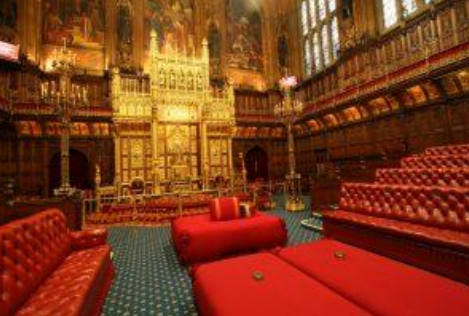
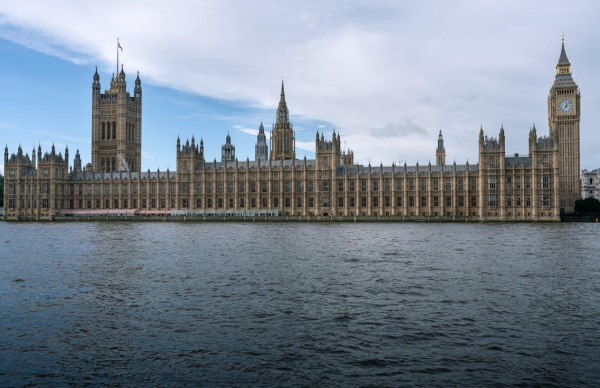
The House Of Lords – Should It Stay Or Should It Go? Part 2.
.

The House of Lords has its origins in the early medieval period, around the 14th century. During this time, the monarch on the throne was King Edward III of England, who reigned from 1327 to 1377. (Picture credit: Free image from alchetron.com)

IN DECEMBER we noted that opinions about the future of the House of Lords can be sharply divided.

.
There are those who’re in awe of its history & uniqueness. They also (quite reasonably) question what would replace it. Others believe that the House of Lords is an anachronism and should be replaced.
.
Despite these differences, we believe that most people would agree that there needs to be a system of checks & balances available to act as a counterweight to the House of Commons. (This is particularly so when a government has an overwhelming majority & can easily steamroller legislation through.)
.
With all the above in mind, it’s clear that any decision about the future of the House of Lords shouldn’t be based on kneejerk reactions.  Indeed, any decision requires deep analysis, thought and debate.
.
To this end, it’d be useful to know what oversight body preceded it (if any) and when & why the House of Lords came into being.
.
To examine this in forensic detail will require a completely new series of historically-based articles – and we hope to do this soon. However, for the purposes of this series, the following brief history lesson will suffice.
.
The House of Lords, the upper chamber of the UK Parliament, was formally established in the early 14th century. Its origins can be traced back to the medieval councils and assemblies that advised the monarch.
.
These assemblies were comprised of nobles, bishops, and other high-ranking officials. The primary role here was to both advise the monarch and provide consent for legislation.
.
Over time, these gatherings evolved into a more structured body with defined powers. Thus, the main role of the House of Lords was to offer counsel to the king and to act as a judicial authority.
.
During its early years, the Lords played a crucial role in the legislative process, reviewing and amending bills proposed by the House of Commons. It also served as the highest court of appeal in the land.
.
The 19th century saw significant reforms which began to shape the House of Lords into its modern form.
.
It was originally dominated by hereditary peers – nobles who inherited their titles and seats from their ancestors. However, reforms in the 20th and 21st centuries introduced life peers, appointed based on merit, and bishops representing the Church of England.
.
Also, the Parliament Act of 1911 marked a pivotal point, reducing the power of the Lords to veto legislation, allowing them only to delay bills.
.
Further reforms in 1958 and 1999 introduced life peers and significantly reduced the number of hereditary peers (although they didn’t eliminate them entirely). These reforms aimed to make the House more reflective of contemporary society while still retaining a connection to its historical roots.
.
A significant milestone in the history of the House of Lords was the inclusion of women. In 1958, with the passing of the Life Peerages Act. Here women were allowed to become life peers and, thus, members of the House of Lords for the first time. This was a transformative step towards gender equality within the British legislative system, marking the beginning of a more inclusive approach to governance.
.
The first woman to join the House of Lords was Baroness Irene Curzon in 1958. She was one of the first life peers appointed following the passage of the Life Peerages Act 1958, which allowed women to be appointed to the House of Lords.
.
•  To be continued.
.
•  THIS ARTICLE should be read in conjunction with The House Of Lords – Should It Stay Or Should It
Go? Part 1 https://nationalliberal.org/the-house-of-lords-should-it-stay-or-should-it-go-part-1
Share:
  • Print
  • Digg
  • StumbleUpon
  • del.icio.us
  • Facebook
  • Yahoo! Buzz
  • Twitter
  • Google Bookmarks
  • Add to favorites
  • blogmarks
  • Blogosphere
  • Google Buzz
  • PDF
  • email
  • Live
  • MSN Reporter
  • MyShare
  • MySpace
  • Technorati
  • Webnews.de

By continuing to use the site, you agree to the use of cookies. more information

The cookie settings on this website are set to "allow cookies" to give you the best browsing experience possible. If you continue to use this website without changing your cookie settings or you click "Accept" below then you are consenting to this.

Close