













Who Was José María Arizmendiarrie?
.
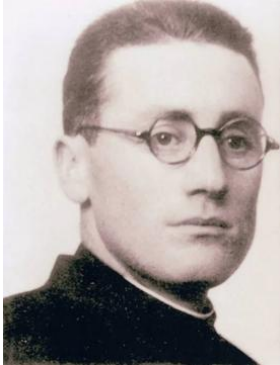
José María Arizmendiarrie (1915 – 1976) was the founder of the Mondragón Corporation. Based in the Basque Country, it is the world’s largest worker cooperative network.
Picture Credit: https://en.wikipedia.org/wiki/José_María_Arizmendiarrieta#/media/File:José_María_Arizmendiarrieta.jpg Fair Use.
EARLY LAST MONTH we featured a brief article called Worker Co-Operatives & The Mondragón Corporation. It noted, in passing, that this ‘federation of worker cooperatives, was founded in 1956 by a Catholic priest named José María Arizmendiarrieta.’
Arizmendiarrieta strongly believed in the values of solidarity, democracy, and education as fundamental pillars for building a more equitable society. Thanks to his vision and leadership, the Mondragón Group has become one of the largest cooperative groups in the world, demonstrating that it is possible to combine business efficiency with social responsibility.
So who was José María Arizmendiarrieta & what inspired him to create a series of co-operatives in this part of the Basque Country?
José María Arizmendiarrieta was born on 22nd April, 1915, in the Barinaga neighborhood of Markina-Xemein (Biscay province) in the Basque Country. His surname is sometimes shortened to Arizmendi or spelt slightly differently (like Arizmendiarrie).
He was the eldest of four siblings. As a child he lost the sight in one eye due to a accident. He entered the seminary at age 12 and was ordained in 1941.
.
During the Spanish Civil War (1936–1939), he worked as a journalist for Basque-language publications on the Republican side (but avoided direct combat).
POSTWAR POVERTY
Arizmendiarrieta came to Mondragón in 1941. He was a parish curate and youth chaplain for Catholic Action. In this role, he addressed postwar poverty and lack of opportunities by promoting technical education and community initiatives.
(Catholic Action itself was a worldwide lay movement in the Catholic Church. It was particularly active in the early to mid-20th century. Its purpose was to encourage ordinary Catholics to participate more actively in the Church’s mission and social teachings. In Spain, Catholic Action focused on promoting education, charity, and social justice. It often worked through parish groups and youth organisations to address the needs of local communities. It also supported moral and spiritual development. The movement played a significant role in community rebuilding and social outreach, particularly in the aftermath of the Spanish Civil War.)
.
As a priest and social thinker, he dedicated his life to promoting a social economy and cooperation. He believed that community development would create social justice in the Basque Country.
His efforts led to the creation of numerous industrial, educational, and financial cooperatives. This led to the Mondragón area becoming an internationally recognised model of cooperative success.
Indeed, in 1943 – just two years after he’d arrived – Arizmendiarrieta established a professional technical school (now part of Mondragón University) to train young workers in skills like engineering.
FIRST CO-OPERATIVE
In 1956, he encouraged five graduates – from the technical school he’d set up – to found first industrial co-operative in Mondragón. It was called ULGOR, and produced stoves & household appliances, such as cookers and heaters.
(ULGOR was an acronym formed from the surnames of its five founders: Usatorre, Larrañaga, Gorroñogoitia, Ormaetxea, and Ortubay.)
Over time, the co-operative expanded its production to include a wider range of domestic appliances, including washing machines, refrigerators, and other kitchen equipment.
ULGOR grew into a major cooperative within the Mondragón Corporation. This pioneering co-operative marked the beginning of what would later become a vast network of worker-owned enterprises in the Basque Country.
This diversification also helped establish ULGOR – which later became part of Fagor – become one of the largest producers of home appliances in Spain and beyond.
.
In 1959, Arizmendiarrieta helped to create Caja Laboral Popular (a cooperative bank). Its main objective was to provide economic support and banking services to the region’s emerging cooperatives. Financing further cooperatives led to a rapid growth in manufacturing, finance, retail, and education.
SOLIDARITY & SOCIAL ECONOMY
Unlike traditional banks, its model was based on the democratic participation of its members and the reinvestment of profits into the local community. Caja Laboral Popular therefore strengthen the values of solidarity and the social economy that existed – and still exists – in Mondragón.
.
All of his work was inspired by encyclicals like Rerum Novarum and Quadragesimo Anno. In total contrast to both capitalism and state socialism, Arizmendiarrieta emphasised worker dignity, solidarity, democratic management, and co-operation. His model prioritised human development, job creation, and equitable wealth distribution.
.
(Encyclicals are formal letters or teaching documents issued by the Pope, typically addressed to the bishops of the Catholic Church and, by extension, to the wider faithful. They are used to communicate important teachings, clarify doctrine, or address pressing social, moral, or theological issues. Encyclicals often serve as authoritative guidance on matters of faith and social responsibility within the Catholic tradition.)
.
José María Arizmendiarrieta died on 29th November, 1976. He will always remembered as the founder of – and spiritual inspiration behind – the Mondragón Corporation, the world’s largest worker cooperative network.


Date: December 6, 2025
Categories: Articles